

© 2026 All Rights Reserved. 粤ICP备14051456号
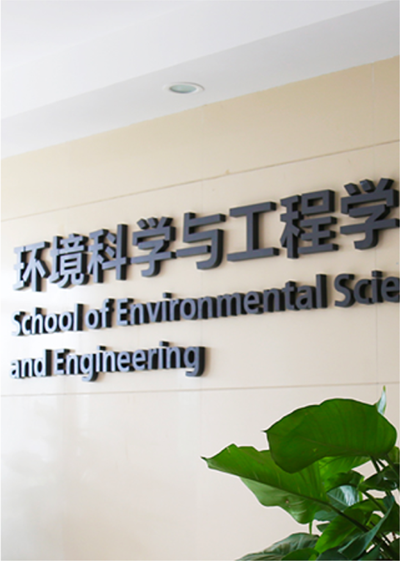
Established in June 2015, the School of Environmental Science and Engineering has spent the past decade carving out a distinct identity in Environmental Geosciences and Environmental Information Technology. Research and talent development at the school currently converge on four frontier domains: Global Change and Sustainable Development, Low-Carbon and Resource Recycling Technologies, Environmental Water Science and Water Security, and Environment and Health. This mission is bolstered by the newly funded State Key Laboratory of Soil Pollution Control and Safety, which drives innovation in groundwater remediation technologies. Situated in the heart of the Guangdong-Hong Kong-Macao Greater Bay Area, the school leverages regional industrial clusters to prepare a new generation of professionals committed to the "Beautiful China" initiative and global sustainability.
Mission
Educate future leaders and problem-solvers
Advance fundamental research across Earth’s environmental systems for protection of human and ecosystem health
Develop scalable technology and engineering solutions for sustainability
Educational Goals
Train undergraduate and graduate students to become game-changers with ability to bridge basic science and engineering for sustainable development.
Undergraduate Programs
The school currently offers two undergraduate programs officially approved by the Ministry of Education: Environmental Science and Engineering and Hydrology and Water Resources Engineering. Notably, the former is recognized as a Superior Key Discipline of Guangdong Province and has been selected for the "Double Ten Thousand Plan", a national initiative for the development of first-class undergraduate programs. The undergraduate curriculum emphasizes individualized interest-based cultivation, encouraging students to build a robust foundational knowledge base by selecting a core discipline from Mathematics, Physics, Chemistry, Biology, or Geosciences. Simultaneously, rigorous training in hands-on capabilities and critical thinking is highly prioritized.
Graduate Programs
The school currently offers Doctoral and Master's degree programs in the first-level discipline of Environmental Science and Engineering, alongside a Professional Master's degree program in Resources and Environment.
After a decade of development, the school has formed distinct disciplinary features in Environmental Geoscience and Environmental Information Technology. Specifically, Environmental Geoscience, based on the perspective of Earth system science, addresses scientific challenges such as environmental pollution, ecological protection and disaster prevention, proposes engineering and technical solutions, and facilitates the sustainable development of human society. Environmental Information Technology leverages AI to empower environment-health big data, develops model simulation, early warning and forecasting, and visualization technologies required for water-soil-air environmental management, leads technological innovation in the field of AI-enabled ecological environment.
Four Featured Research Areas
Environmental Water Science and Water Security: The research area focuses on changes in the water cycle driven by climate change and human activities, along with their environmental, ecological, and resource effects. Major topics include hydrodynamic and biogeochemical processes across various interfaces in the Earth's hydrosphere (e.g., land-sea, surface-groundwater, water-sediment, etc.), the ecological and environmental impacts of large-scale water resource exploitation and management, and the use of big data analysis and artificial intelligence for global water environment forecasting.
Global Change and Sustainable Development: We investigate the impact of human activities on the atmospheric environment and their underlying mechanisms, the interactions between climate and ecological systems, the prediction and management of atmospheric pollutant exposure and climate disaster risks, and the assessment of carbon reduction potential and benefits across industries. Our work is distinguished by its Earth system perspective, leveraging data and information engineering technologies to develop innovative observation techniques, emission inventories, and multi-scale, multi-sphere coupled models. It aims to comprehensively study the mechanisms, impacts, and risks associated with atmospheric environments and global change.
Low-Carbon and Resource Recycling Technologies: This research direction is dedicated to the theoretical and technical studies of low-carbon resource recycling, carbon capture and storage, resource-environment interactions, and green low-carbon urban development. It leverages regional industrial advantages to deeply explore urban mineral resource utilization and low-carbon development technologies. At the same time, it builds a carbon emission monitoring and carbon capture technology system based on regional big data and artificial intelligence foundations.
Environment and Health: This research direction focuses on the detection and identification, migration and transformation, toxic mechanisms, and risk prevention of organic and inorganic pollutants across multiple media, including water, soil, air, and biological systems within the ecological environment. Its defining characteristics include an emphasis on the sources, sinks, and transformation pathways of emerging pollutants; pollution exposure and toxicological mechanisms within ecosystems; and the development of risk management technologies centered on the exposure process.
The SUSTech Engineering Innovation Center (Beijing) draws on the expertise of the School of Environmental Science and Engineering at Southern University of Science and Technology (SUSTech). In response to the needs of China’s environmental protection industry, the Center works to bridge the gap between scientific research and industrial application. By bringing together academic and industry partners, it promotes the translation of environmental research into practical solutions that benefit society, support talent development, and meet the needs of enterprises. The Center strives to serve as an internationally connected platform for innovation and collaboration in environmental protection.
Drawing on digital technologies and circular economy approaches, the Center focuses on the development of key environmental protection technologies, engineering development, and system integration. It supports the demonstration and wider application of research outcomes in real-world settings. The Center also contributes to the formulation of environmental policies, standards, and technical guidelines, providing technical support and professional services for environmental management, regulatory oversight, and decision-making. In addition, it offers training for students, environmental professionals, and technical staff from enterprises, while building an international platform for collaboration among universities, research institutes, industry, and end users.
 |