

© 2026 All Rights Reserved. 粤ICP备14051456号
2021-12-23
View:6
Flooding of forest habitats caused by hydropower development poses an important threat to tiger and jaguar populations. New research suggests that hydroelectric reservoirs may have caused the loss of more than one-fifth of the global population of tigers.
The damming of rivers to generate electricity has recently expanded worldwide. Currently, at least 3,700 hydroelectric dams are planned or under construction, many in tropical forest areas. Although the impacts of these dams on freshwater biodiversity are known to be great, the effects on terrestrial species are less well understood.

Associate Professor Luke Gibson and Dr. Ana Filipa Palmeirim from the Southern University of Science and Technology (SUSTech) have examined the impacts of hydropower development on two apex predator species: tigers and jaguars. They identified the locations of existing and planned hydropower dams within the geographic distributions of both species. Then, they used published records of the population densities of the species to estimate the number of individuals lost due to the flooding of the forest habitat by hydropower reservoirs.
Their study, entitled “Impacts of hydropower on the habitat of jaguars and tigers,” was published in Communications Biology, a high-quality research and Nature series journal across all areas of biology.
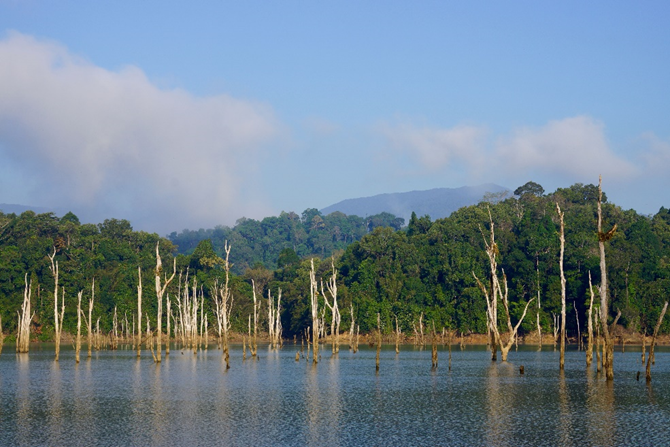
Figure 1. Chiew Larn reservoir flooded 165 square kilometers of tropical forests in southern Thailand. Shortly after the inundation of this hydroelectric reservoir, tigers disappeared from the landscape.
In total, the authors found 164 dams intersecting the distribution of jaguars, flooding a total of 25,397 km2 of jaguar habitat. For tigers, a total of 421 dams were found, amounting to a total of 13,750 km2 habitat lost. Assuming tigers or jaguars could not survive in the aftermath of the flooding of these habitats, this habitat loss is equivalent to 915 individual jaguars, or 0.53% of the global population, and 729 individual tigers, or 20.8-22.8% of the global population.
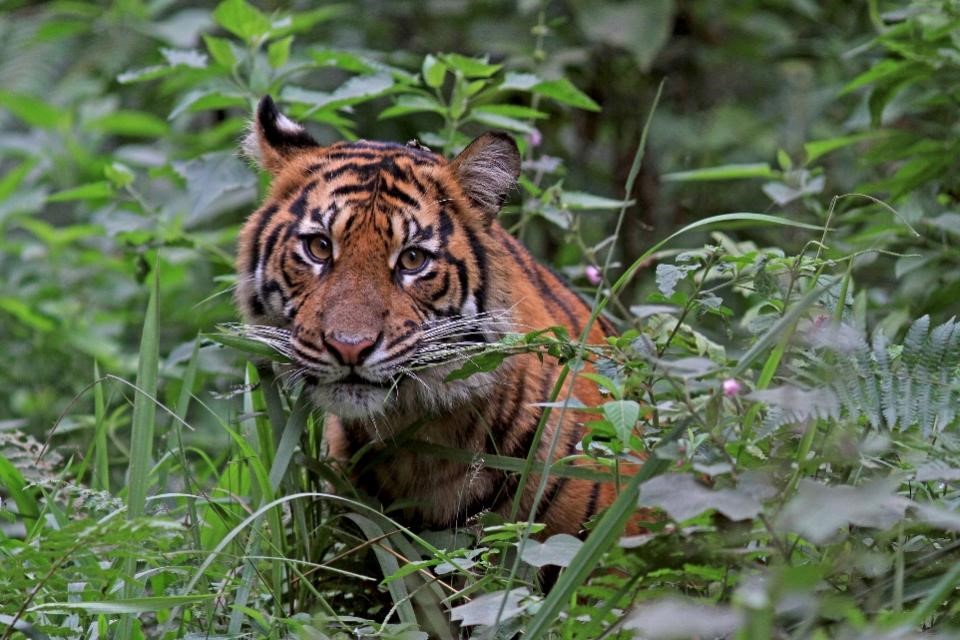
Figure 2. Tigers in Sumatra are a critically endangered subspecies, which face additional threats from two hydropower dams planned to be constructed within their habitat.
While existing hydropower projects disproportionately affect tigers, future hydropower growth will more strongly affect jaguars, with 10x more dams (429 vs. 41) planned or under construction within the distribution of jaguars compared to those within tiger habitats.
The authors of this study also examined the trade-off between hydroelectricity generation and population losses for jaguars in Brazil. For existing hydropower dams, every 100 MW or hydroelectricity was found to cause the loss of 0.54 jaguars. However, in the future, this ratio will nearly double (0.97 jaguars per 100 MW) as dams must be positioned in flatter areas where the footprint of hydroelectric reservoirs will be greater.
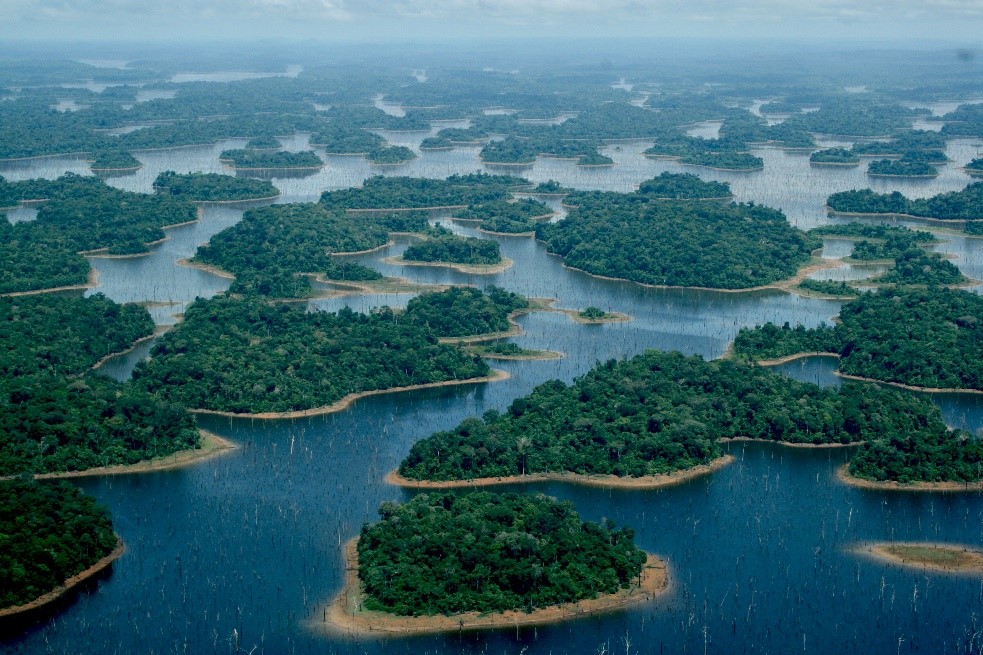
Figure 3. Balbina Dam flooded 3,129 square kilometers of tropical rainforest in the Brazilian Amazon. This hydroelectric reservoir is located in the core of the distribution of jaguars.
In conclusion, the researchers recommend that hydropower development should avoid topographically flat areas such as the Amazon basin, where hydropower reservoirs have flooded expansive jaguar habitats, and priority conservation areas for tigers, where several hydroelectric dams are planned.
Dr. Ana Filipa Palmeirim, a former postdoctoral researcher in Associate Prof. Luke Gibson’s team, is the first author of this paper. Associate Prof. Luke Gibson is the corresponding author.
This study was supported by the National Talent Program and the Shenzhen Government.
Paper link: https://www.nature.com/articles/s42003-021-02878-5
2026-03-10
2026-09-08
A delegation of 13 students from Southern University of Science and Technology (SUSTech), Zhejiang University and the University of Science and Technology of China (USTC), accompanied by four SUSTech faculty members including including two affiliated with the State Key Laboratory of Soil Pollution Control and Safety, concluded a 12-day summer school at Flinders University in August, 2026, hosted by the University’s National Centre for Groundwater Research and Training (NCGRT).Throughout the program, the students participated in a wide range of educational activities covering water resources, environmental health, groundwater modeling, managed aquifer recharge, salinity management, mining sites management, virtual reality hydrology, and nature-based solutions for surface water, groundwater and soil pollution.A highlight of the visit was a series of field trips showcasing South Australia’s unique natural environments. These included an overnight excursion to a global showcase of integrated surface and groundwater management exemplified by the Murray-Darling Basin. Visits to the St Kilda Mangroves highlighted ecohydrological approaches to coastal mangrove conservation. While Hallett Cove featured the most famous glacial striation on pre-Cambrian rocks. Happy Valley Reservoir, Oaklands Wetland, and Port Willunga Beach, with their wildlife, water management and well-exposed sedimentary rock formations, left strong impressions on our students. Students also attended research seminars and explored Flinders University’s teaching and research facilities.This summer school provided an excellent opportunity for students to engage with Flinders University staff, students, and researchers, experience Australian approaches to soil and groundwater pollution control and safety research, and strengthen the institutional ties between SUSTech and Flinders University, while fostering international connections and cross-cultural learning. The visit was made possible through a combination of support provided by SUSTech and the Fundamental and Interdisciplinary Disciplines Breakthrough Plan of the Ministry of Education of China(JYB2025XDXM909).During the visit, Chair Professor Yan ZHENG from SUSTech delivered a research seminar on arsenic detection in the developed and developing world. Flinders University noted that its academic community was privileged to learn from her expertise.SUSTech expresses its gratitude for the incredible partnership with Flinders University at the conclusion of the program.
2026-04-22
On April 22, the Frontiers Planet Prize announced its list of 25 National Champions for 2026. Hong WANG, a 2025 graduate of the School of Environmental Science and Engineering at the Southern Universi
2026-04-20
On the morning of April 17, 2026, a delegation from Flinders University (Australia), led by Professor Colin Stirling, President of Flinders University, visited the Southern University of Science and T
2026-04-08
Hydrological models are foundational tools for water resource management, agricultural planning, flood and drought mitigation, and ecosystem protection. A long-standing challenge in hydrology is devel
 |