

© 2026 All Rights Reserved. 粤ICP备14051456号
2022-08-19
View:7
Carbon and nitrogen losses from degraded wetlands and methane emissions from flooded wetlands are both important sources of greenhouse gas emissions. However, the net-exchange dependence on hydrothermal conditions and wetland integrity remains unclear.
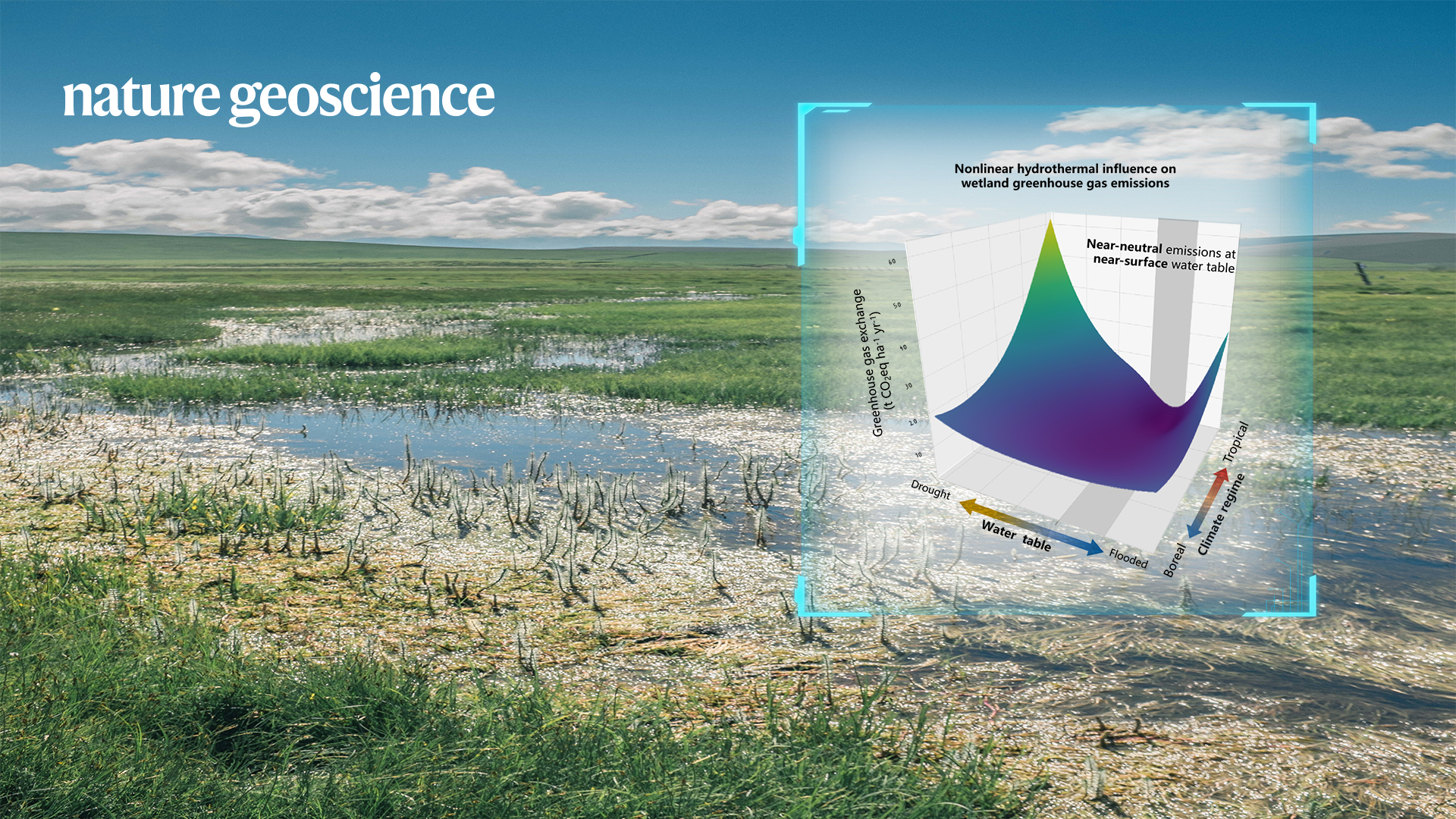
Associate Professor Zhenzhong Zeng’s research team in the School of Environmental Science and Engineering at the Southern University of Science and Technology (SUSTech) has recently published their findings on how global wetlands can reduce greenhouse gas emissions. Using global wetland in-situ observations of CO2, CH4, and N2O exchanges, they showed a nonlinear hydrothermal influence on total CO2-equivalent emissions, whereby a near-surface water table produces near neutral greenhouse gas flux across broad temperature gradients.
By extrapolating the current trajectory of degradation, the researchers estimate that between 2021 and 2100, wetlands could result in greenhouse gas emissions equivalent to around 408 gigatons of CO2. However, a volume equivalent to 10% of anthropogenic CO2 emissions could be reduced through wetland restoration, such that the radiative forcing caused by CH4 and N2O is fully compensated by CO2 uptake.
Their research, entitled “Rewetting global wetlands effectively reduces major greenhouse gas emissions”, was published in Nature Geoscience, a journal covering all aspects of the Earth sciences, including theoretical research, modelling, and field work.
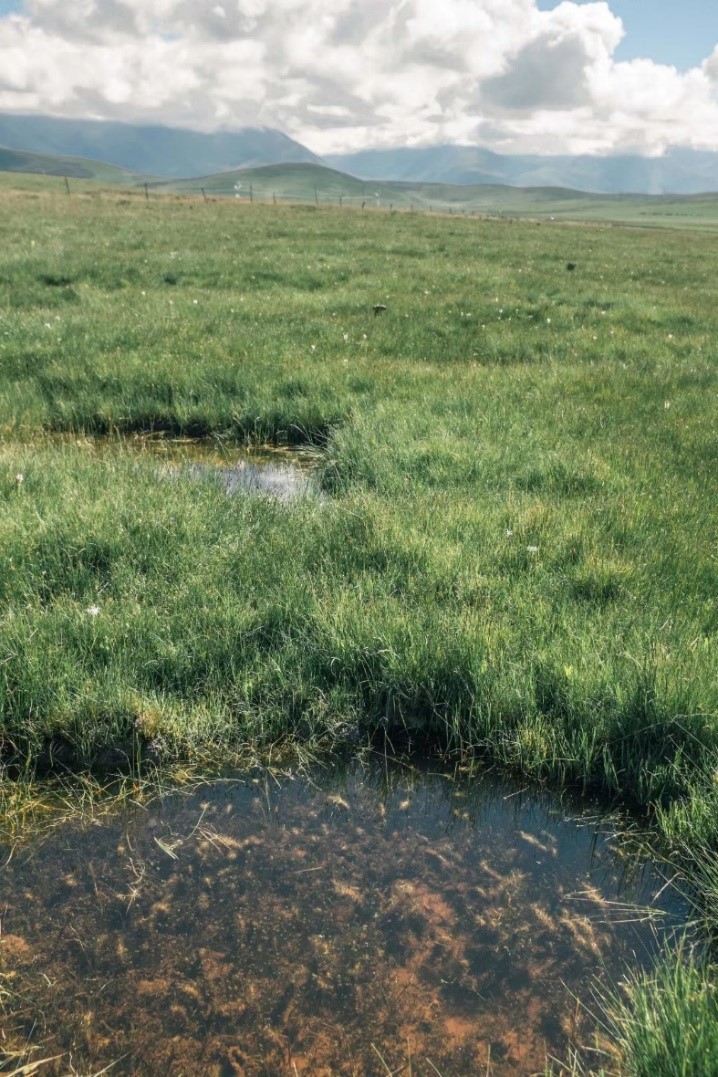
Figure 1. An alpine meadow at Qinghai-Tibet Plateau, China
Prof. Zeng’s group constructed a GHG net-flux database to investigate the impact of global widespread wetland degradation on the GHG budget. They were surprised to discover that wetland degradation (i.e., draining/desiccation) resulted in a total GHG emission of 276 gigatons CO2eq from 1950 to 2020. In recent years, CO2, CH4, and N2O emissions from degraded wetlands are equal to 10.8%, -0.5%, and 30.5% of anthropogenic sources for each gas, respectively.
Junyu Zou, a member of the research team, said that the decline in water level changes the anaerobic conditions created by the saturated soil water. The massive organic matter that has been sequestered for a long time will continue to decompose until depletion, a process accompanied by the emission of substantial carbon dioxide and nitrous oxide.
Wetlands host one-third of the global soil organic matter in only 6% of the land surface, yet they have been degrading rapidly during the past half-century. By extrapolating the current trajectory of degradation, wetlands could result in greenhouse gas emissions equivalent to around 408 gigatons of CO2eq from 2021 to 2100.
Compared to the last 70 years, Zou said the geographical pattern of outflow would change in tropical regions. Along with the loss of most soil organic carbon stock, emissions will reduce from 155 Gt to 99 Gt (the percentage decreased from 55% to 24%). At the same time, boreal regions will become the dominant emissions source, increasing from 108 Gt to 290 Gt (39% to 71%).
Prof. Zeng said the nonlinear thermal-wetness influence on wetland GHG fluxes, whereby a near-surface water table produces near-neutral GHG flux across broad temperature gradients, suggests that rewetting wetlands is an effective nature-based solution to mitigate climate change. Two emission reduction scenarios are simulated here: reverse the trend of wetland degradation by only rewetting high soil organic carbon wetlands or rewetting all degraded wetlands to optimum water levels. In doing so, they will reduce emissions by 38% and 63%, respectively. The latter average annual emission reduction is equivalent to 10% of current anthropogenic sources of CO2. The two rewetting scenarios can reduce GHG emissions by 782 tCO2eq ha-1 and 584 tCO2eq ha-1, respectively.
“Considering the limitation of resources invested in the initial stage of wetland conservation at the national or regional level, high organic carbon wetlands (e.g., most peatlands) are a good beginning”, Prof. Zeng said.
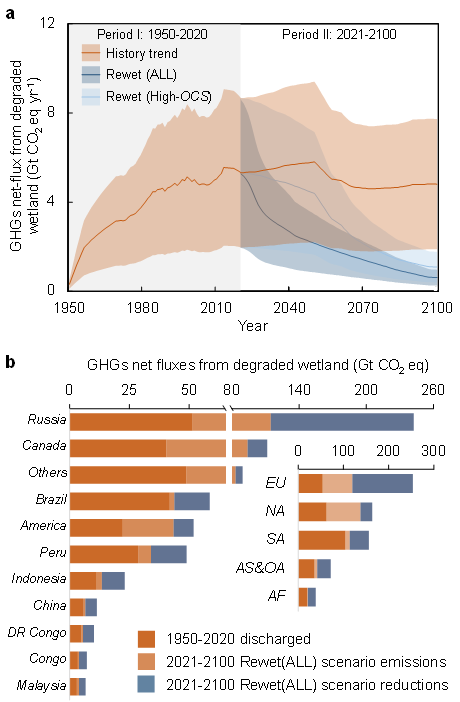
Figure 2. Greenhouse gas emissions from degraded wetlands under different scenarios
Junyu Zou, a Ph.D. candidate at SUSTech, is the first author of this paper. Assoc. Prof. Zhenzhong Zeng is the corresponding author. Other members from the SUSTech team included Prof. Chunmiao Zheng, Prof. Zuotai Zhang, Ms. Xinyue He, Ms. Jie Wu, and Mr. Xin Jiang.
Other researchers that contributed to this work included: Prof. Alan D. Ziegler of Mae Jo University (MJU); Prof. Deliang Chen of the University of Gothenburg; Dr. Gavin McNicol of the University of Illinois; Prof. Philippe Ciais of the Laboratoire des Sciences du Climat et de l’Environnement (LSCE); Prof. Jin Wu and Miss Ziyu Lin of the University of Hong Kong (HKU); Prof. Lee E. Brown and Prof. Joseph Holden of the University of Leeds; Dr. Sorain J. Ramchunder of the Singapore Botanic Gardens; and Prof. Anping Chen of Colorado State University (CSU).
This study was supported by the National Natural Science Foundation of China (NSFC) and the Start-Up Fund provided by SUSTech.
Paper link: https://www.nature.com/articles/s41561-022-00989-0
2026-03-10
2026-09-08
A delegation of 13 students from Southern University of Science and Technology (SUSTech), Zhejiang University and the University of Science and Technology of China (USTC), accompanied by four SUSTech faculty members including including two affiliated with the State Key Laboratory of Soil Pollution Control and Safety, concluded a 12-day summer school at Flinders University in August, 2026, hosted by the University’s National Centre for Groundwater Research and Training (NCGRT).Throughout the program, the students participated in a wide range of educational activities covering water resources, environmental health, groundwater modeling, managed aquifer recharge, salinity management, mining sites management, virtual reality hydrology, and nature-based solutions for surface water, groundwater and soil pollution.A highlight of the visit was a series of field trips showcasing South Australia’s unique natural environments. These included an overnight excursion to a global showcase of integrated surface and groundwater management exemplified by the Murray-Darling Basin. Visits to the St Kilda Mangroves highlighted ecohydrological approaches to coastal mangrove conservation. While Hallett Cove featured the most famous glacial striation on pre-Cambrian rocks. Happy Valley Reservoir, Oaklands Wetland, and Port Willunga Beach, with their wildlife, water management and well-exposed sedimentary rock formations, left strong impressions on our students. Students also attended research seminars and explored Flinders University’s teaching and research facilities.This summer school provided an excellent opportunity for students to engage with Flinders University staff, students, and researchers, experience Australian approaches to soil and groundwater pollution control and safety research, and strengthen the institutional ties between SUSTech and Flinders University, while fostering international connections and cross-cultural learning. The visit was made possible through a combination of support provided by SUSTech and the Fundamental and Interdisciplinary Disciplines Breakthrough Plan of the Ministry of Education of China(JYB2025XDXM909).During the visit, Chair Professor Yan ZHENG from SUSTech delivered a research seminar on arsenic detection in the developed and developing world. Flinders University noted that its academic community was privileged to learn from her expertise.SUSTech expresses its gratitude for the incredible partnership with Flinders University at the conclusion of the program.
2026-04-22
On April 22, the Frontiers Planet Prize announced its list of 25 National Champions for 2026. Hong WANG, a 2025 graduate of the School of Environmental Science and Engineering at the Southern Universi
2026-04-20
On the morning of April 17, 2026, a delegation from Flinders University (Australia), led by Professor Colin Stirling, President of Flinders University, visited the Southern University of Science and T
2026-04-08
Hydrological models are foundational tools for water resource management, agricultural planning, flood and drought mitigation, and ecosystem protection. A long-standing challenge in hydrology is devel
 |