

© 2026 All Rights Reserved. 粤ICP备14051456号
2022-10-03
View:6
Wind speed data is widely used in many sciences, management, and policy fields to assess renewable energy potential, address wind hazards, investigate biological phenomena, and explore climate change/variability, among other applications. The challenge is obtaining complete and accurate wind datasets, as observations are limited in distribution.
Global-scale weather stations suffer from spatial and temporal discontinuities that limit their utility. While reanalysis products and climate model simulations achieve data continuity, they often fail to reproduce significant wind speed trends because few of them assimilate in-situ wind observations on land.
Data interpolation helps fill gaps, but the high variability of wind speed data, combined with a low distribution of observations worldwide, prevents standard statistical interpolation methods such as kriging or principal component analysis from being accurate for areas with sparse data. As a result, wind speed data has been the bottleneck in related studies.
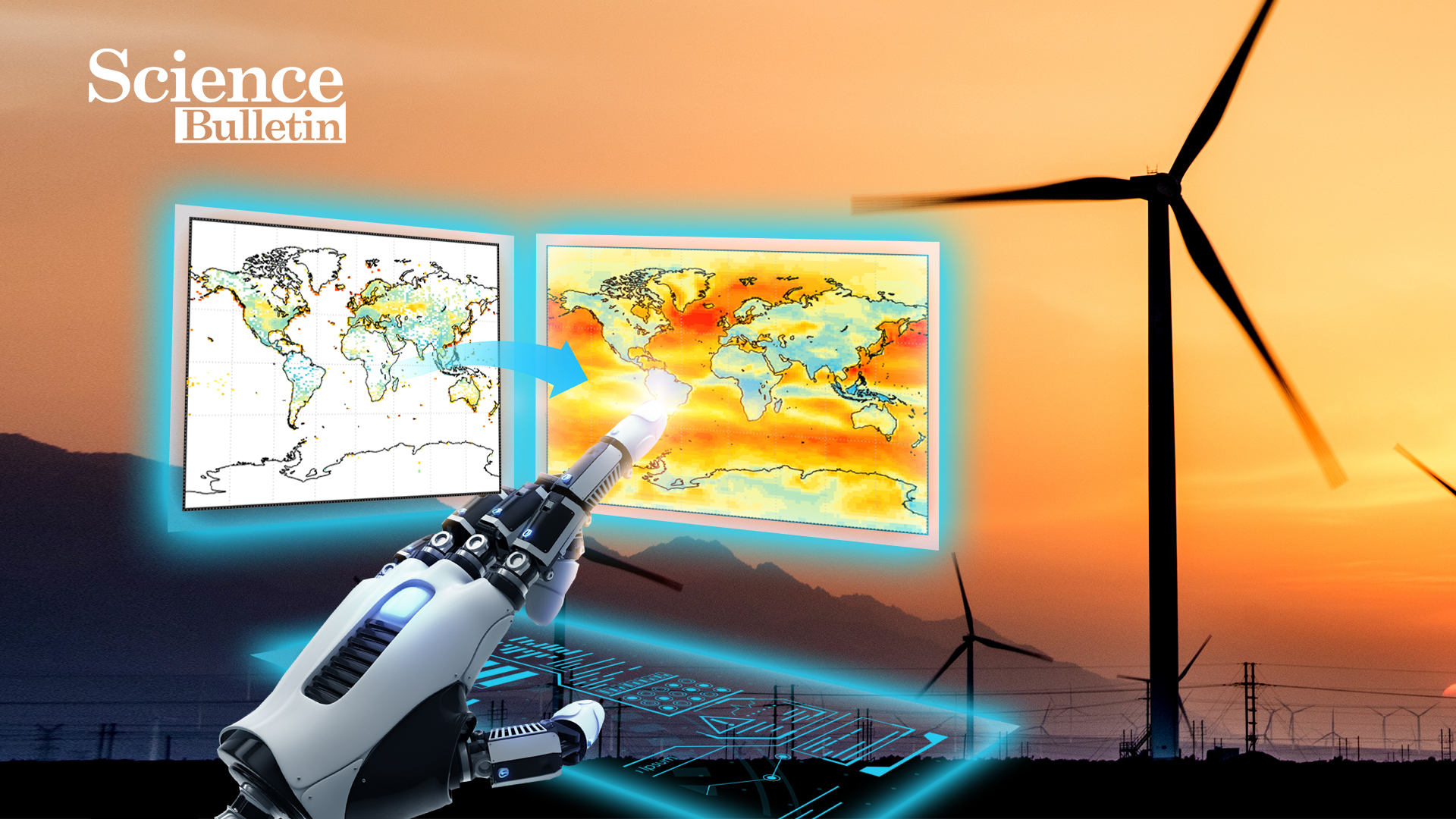
This issue has been addressed by a team co-led by Prof. Zhenzhong Zeng from the School of Environmental Science and Engineering and Prof. Jiang Liu from the Department of Computer Science and Engineering at the Southern University of Science and Technology (SUSTech).
Their paper, entitled “An artificial intelligence reconstruction of global gridded surface winds,” was published in Science Bulletin, a high-impact academic journal covering a broad range of disciplines about natural sciences and high-tech fields.
The team applied an AI algorithm, the partial convolutional neural network (PCNN), to restore observed wind speed datasets. PCNN was first developed by Dr. Guilin Liu to inpaint images with irregular holes and is highly efficient in restoring datasets with a large amount of missing data compared with conventional approaches.
The researchers demonstrated that PCNN could still be applied even when missing values reached 88%. During the validation phase, the reconstructed data from almost all regions (North America, Europe, Asia, South America, and Oceania) captured the variability and trends in the original data.
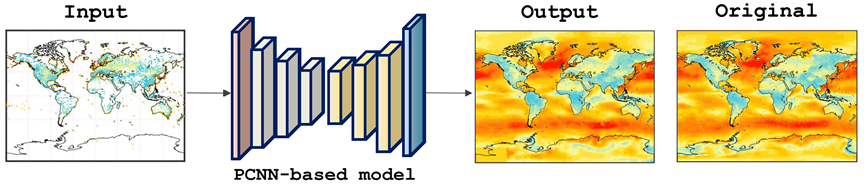
Figure 1. Examples of comparison of before and after reconstruction.
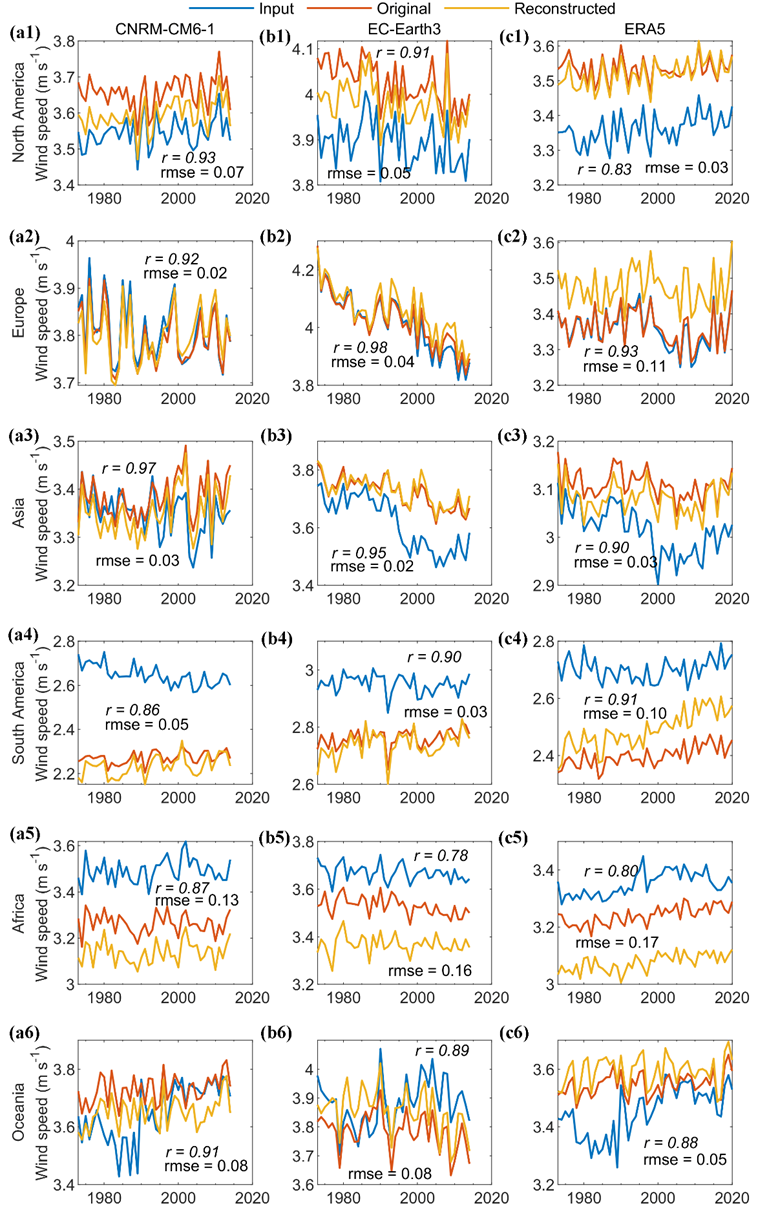
Figure 2. Time series of CNRM-CM6-1 (Left column), EC-Earth3 (middle column), and ERA5 (right column). Correlation (r) and root mean square errors (rmse) were between the original and output data. Note that the original data share the same grids as the reconstructed data, i.e., all terrestrial grids in the corresponding area. The input data (for the PCNN-based model) were from limited grids because some grids have missing values.
After testing the approach, the team used the PCNN-based model to create a global wind speed dataset (GGWS-PCNN), which is derived from the HadISD dataset and 34 climate models from CMIP6. The GGWS-PCNN product provides gridded wind speed from 1973 to 2020 at a resolution of 1.25°×2.5° (Lat×Lon). The product will be available to the research community following the update of the original HadISD dataset, which is based at the Met Office Hadley Center in the UK.
The new GGWS-PCNN dataset improves the ability to investigate global and regional wind speed trends/variabilities during the past five decades. The GGWS-PCNN dataset and associated codes are available on Prof. Zeng Zhenzhong’s group website (link below).
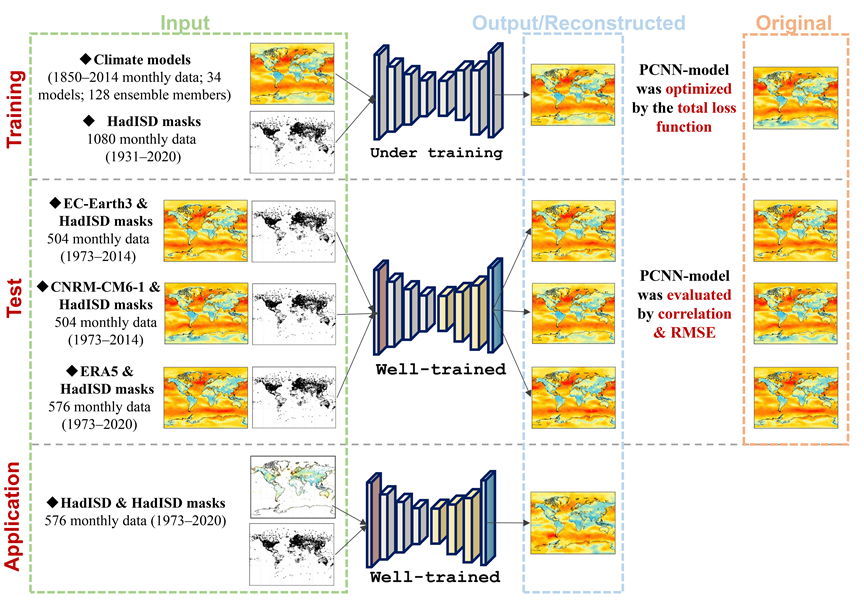
Figure 3. Schematic of the PCNN-based model to reconstruct observed wind speed globally.
Lihong Zhou, Research Assistant at SUSTech, is the first author of this paper. Assoc. Prof. Zhenzhong Zeng is the corresponding author. Other members from the SUSTech team included Prof. Jiang Liu, Mr. Haofeng Liu, and Xin Jiang. Prof. Alan D. Ziegler of Mae Jo University (MJU) and Dr. Cesar Azorin-Molina of Centro de Investigaciones Sobre Desertificación (CIDE) also contributed to this work.
This study was supported by the National Natural Science Foundation of China (NSFC) and the Start-Up Fund provided by SUSTech.
Paper link: https://www.sciencedirect.com/science/article/pii/S2095927322004340
Prof. Zhenzhong Zeng’s group website: https://www.zhenzhongzeng.com/resources/
2026-03-10
2026-09-08
A delegation of 13 students from Southern University of Science and Technology (SUSTech), Zhejiang University and the University of Science and Technology of China (USTC), accompanied by four SUSTech faculty members including including two affiliated with the State Key Laboratory of Soil Pollution Control and Safety, concluded a 12-day summer school at Flinders University in August, 2026, hosted by the University’s National Centre for Groundwater Research and Training (NCGRT).Throughout the program, the students participated in a wide range of educational activities covering water resources, environmental health, groundwater modeling, managed aquifer recharge, salinity management, mining sites management, virtual reality hydrology, and nature-based solutions for surface water, groundwater and soil pollution.A highlight of the visit was a series of field trips showcasing South Australia’s unique natural environments. These included an overnight excursion to a global showcase of integrated surface and groundwater management exemplified by the Murray-Darling Basin. Visits to the St Kilda Mangroves highlighted ecohydrological approaches to coastal mangrove conservation. While Hallett Cove featured the most famous glacial striation on pre-Cambrian rocks. Happy Valley Reservoir, Oaklands Wetland, and Port Willunga Beach, with their wildlife, water management and well-exposed sedimentary rock formations, left strong impressions on our students. Students also attended research seminars and explored Flinders University’s teaching and research facilities.This summer school provided an excellent opportunity for students to engage with Flinders University staff, students, and researchers, experience Australian approaches to soil and groundwater pollution control and safety research, and strengthen the institutional ties between SUSTech and Flinders University, while fostering international connections and cross-cultural learning. The visit was made possible through a combination of support provided by SUSTech and the Fundamental and Interdisciplinary Disciplines Breakthrough Plan of the Ministry of Education of China(JYB2025XDXM909).During the visit, Chair Professor Yan ZHENG from SUSTech delivered a research seminar on arsenic detection in the developed and developing world. Flinders University noted that its academic community was privileged to learn from her expertise.SUSTech expresses its gratitude for the incredible partnership with Flinders University at the conclusion of the program.
2026-04-22
On April 22, the Frontiers Planet Prize announced its list of 25 National Champions for 2026. Hong WANG, a 2025 graduate of the School of Environmental Science and Engineering at the Southern Universi
2026-04-20
On the morning of April 17, 2026, a delegation from Flinders University (Australia), led by Professor Colin Stirling, President of Flinders University, visited the Southern University of Science and T
2026-04-08
Hydrological models are foundational tools for water resource management, agricultural planning, flood and drought mitigation, and ecosystem protection. A long-standing challenge in hydrology is devel
 |