

© 2026 All Rights Reserved. 粤ICP备14051456号
2022-11-24
View:11
Global wind speed has been reported to reverse after a long period of decreasing. Increased wind speed can not only bring additional wind power but also increase the risk of sand-dust storms. The quantifying of the impact is important for wind power development and sand-dust storm prevention.
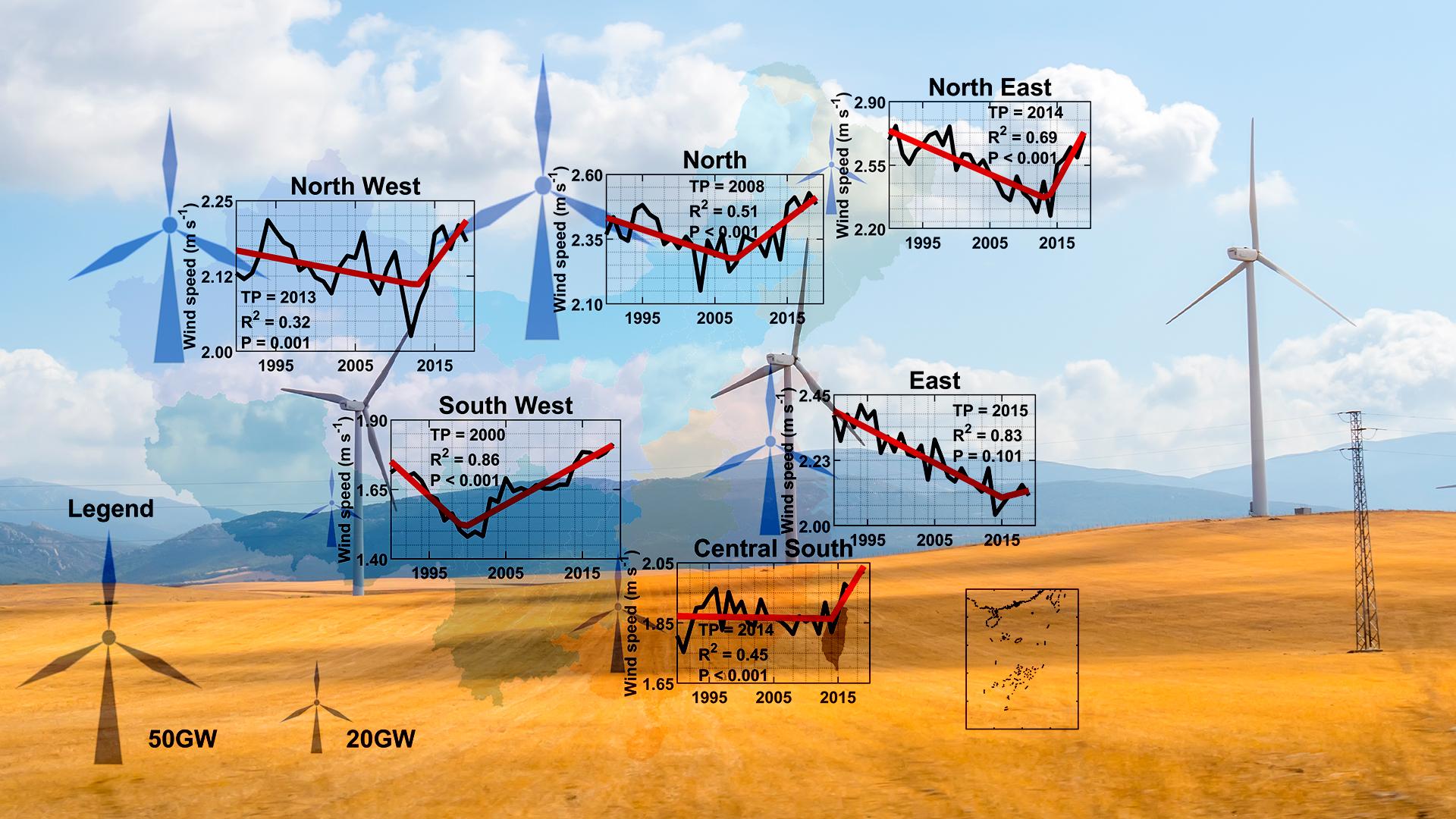
Associate Professor Zhenzhong Zeng’s team from the School of Environmental Science and Engineering at the Southern University of Science and Technology (SUSTech) has recently published new findings about terrestrial wind speed change.
Their studies have been published in high-level journals on environmental studies, including Environmental Research Letters and Environmental Science: Atmospheres. A related review paper was also published as a chapter in the book The Palgrave Handbook of Global Sustainability. Their works contained the quantifying of increased wind speed’s impact on wind power generation and sand-dust storm frequency.
Overview of global wind power development
Originating from the temperature gradient radically caused by solar radiation, wind energy is renewable and emission-free. Besides, the global potential is up to 1,300 PWh per year, about eight times the global annual energy consumption. Therefore, wind power is considered as one of the most important energy sources to replace fossil fuels for achieving sustainable development.
With half a century’s innovation in wind technology, the levelized cost of wind electricity has decreased to around $0.04/kilowatt-hour, which is the same as or even lower than coal-power electricity. The grid connection is also realized by large-scale storage and a super grid. From the beginning of the twenty-first century to now, wind energy has been developing rapidly and accelerated, with a global capacity increasing exponentially from 24 GW in 2001 to 743 GW in 2020. By country, China has installed 286 GW wind turbines, ranking at the top of all countries, and is expected to increase dramatically to achieve its carbon-neutrality goal by 2060. More than 48% of Denmark’s electricity demand is addressed by wind energy, providing a high-renewable-energy-penetration demonstration.
Looking forward, besides the capacity increase, turbine design and management will also be improved for future larger turbines. The energy system will also be smart and suitable for renewable energy by integrating resources, grid, storage, and load management.
This review was published as a chapter entitled “Wind Energy” in the book The Palgrave Handbook of Global Sustainability by Springer Nature.
Undergraduate student Yi Liu is the first author of this review. Prof. Zhenzhong Zeng is the corresponding author, and SUSTech is the first corresponding unit for the paper.
Recovery of wind speed increases China’s wind energy production
China has realized a 56-fold increase in installed wind capacity, from 5.9 GW in 2007 to 328 GW in 2021. In addition to increasing installed capacity, plans to substantially increase wind energy production for climate change mitigation also depend on future wind speeds, which strongly influences the efficiencies of installed turbines within individual wind farms. A reversal in globally decreasing wind speeds over several decades has been reported previously. However, subsequent studies using other data sources reported only a slight increase or no reversal in China. These uncertainties regarding China’s wind energy production hamper estimates of wind energy production potential.
Prof. Zeng’s team’s analysis of quality-controlled wind speed measurements from in-situ stations shows that the wind speed decline in China has reversed significantly since 2012 (P < 0.001), but with substantial spatio-temporal variability. They further estimated the capacity factor (CF) growth and the wind power gain solely associated with the changes in wind speed ranges from 31.6 to 56.5 TWh yr−1 based on the 2019 installed capacity. This estimate explains 22.0%-39.3% of the rapid increase in wind generation CF in China during 2012-2019.
These findings imply that the site selection of wind farms should consider both the current wind situation and future wind speed trends. Further studies are needed to understand the driving factor of wind speed recovery in support of the wind energy industry.
The above work was published in Environmental Research Letters, entitled “Increases in China’s wind energy production from the recovery of wind speed since 2012”.
Yi Liu is the first author of this paper. Prof. Zhenzhong Zeng is the corresponding author, and SUSTech is the first corresponding unit for the paper.
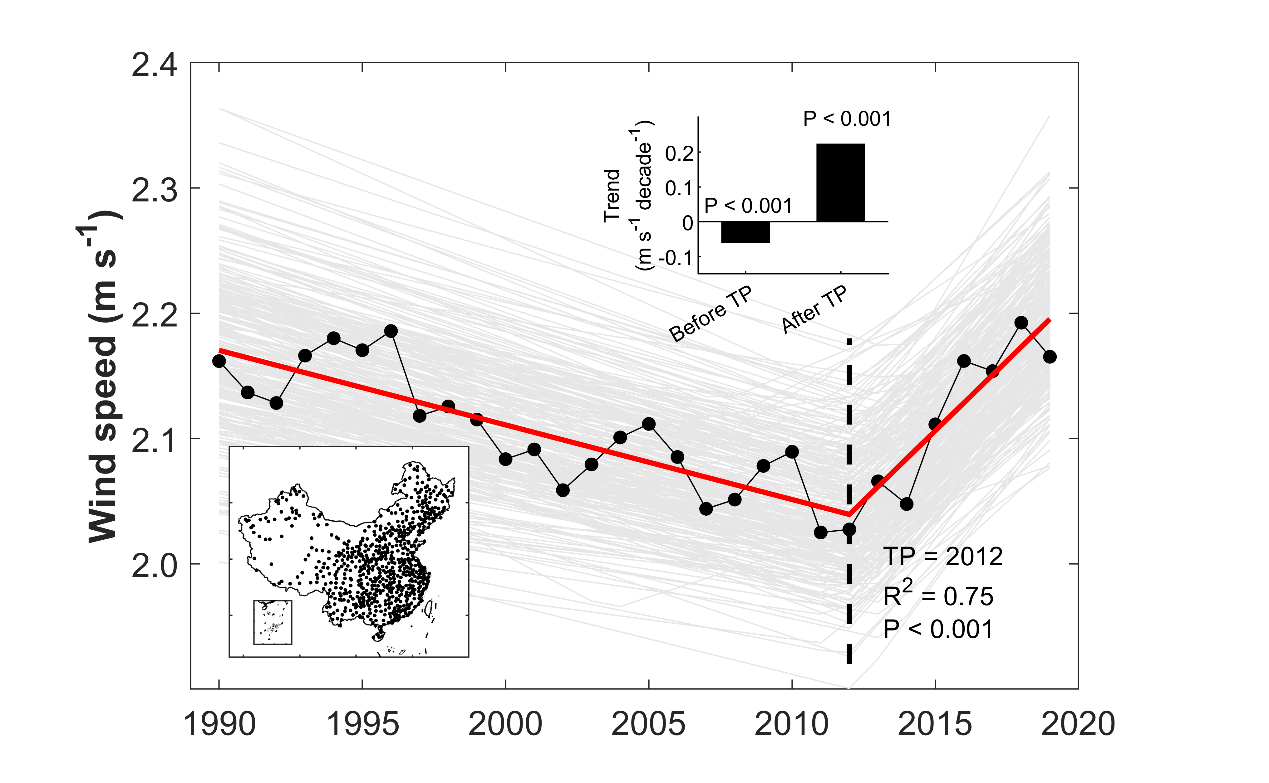
Figure 1. Changes in average terrestrial surface wind speeds for 1990–2019 in China
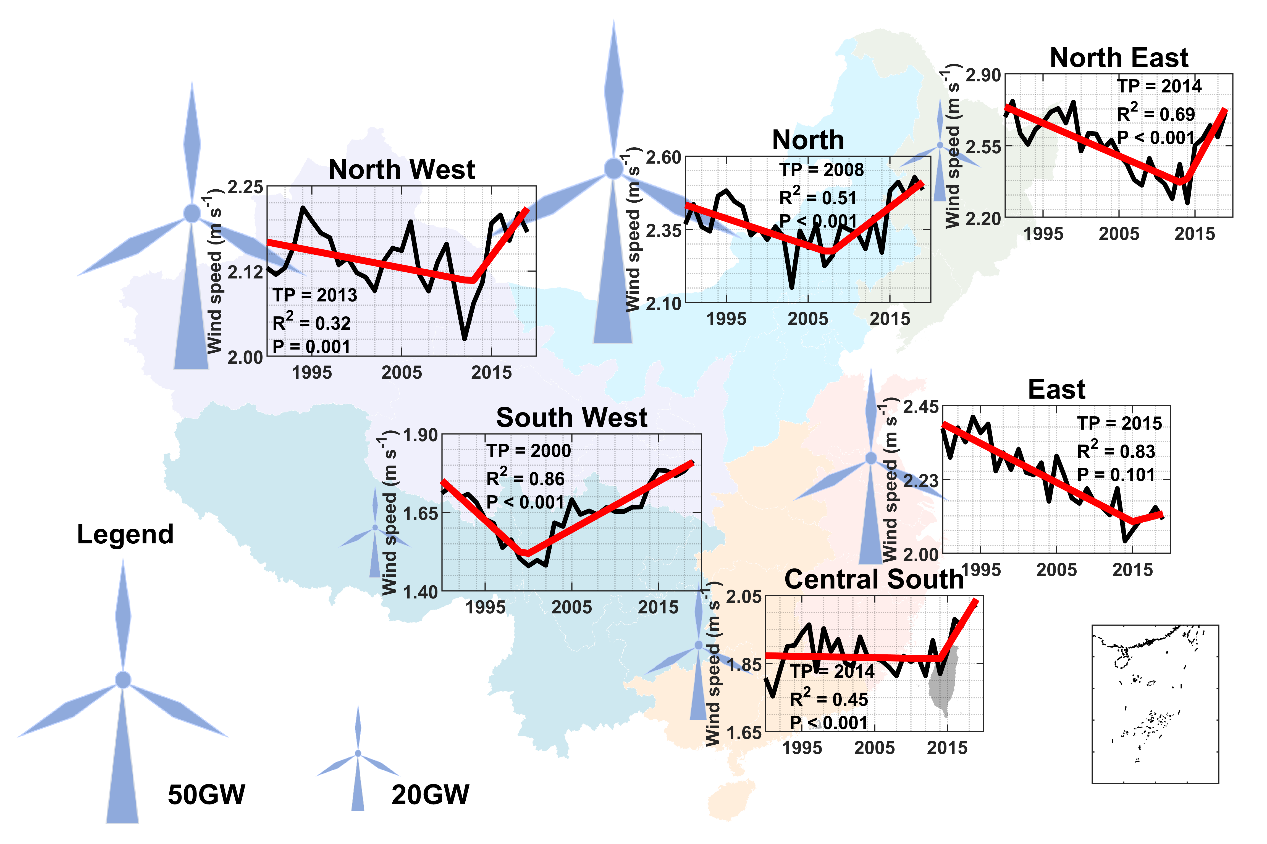
Figure 2. Regional wind speed trends and installed capacity
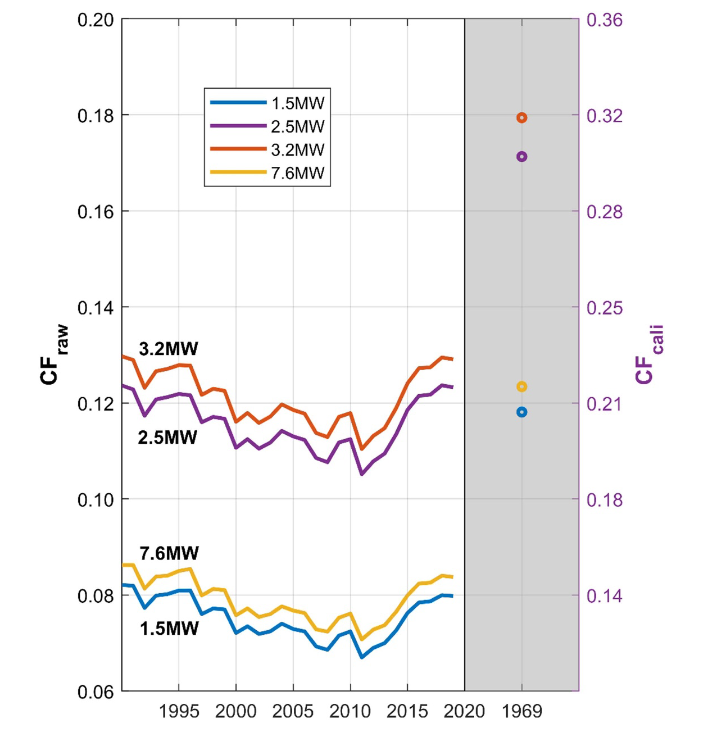
Figure 3. Comparison of CFraws for different turbines
Stronger winds increase the sand-dust storm risk in northern China
The biggest sand-dust storm from Mongolia in the past decade swept across northern China on March 15, 2021. Before this sudden outbreak, the number of sand-dust storms in northern China had been decreasing for 50 years. Wind and sand resources are the two key elements for sand-dust storms to occur. With an abrupt shift to a drier and hotter climate in the past 20 years over inner East Asia providing more sand resources and an increasing wind speed trend, the sand-dust storm in 2021 may herald the beginning of an era with more sand-dust storms.
To answer whether increasing wind speed will significantly influence the sand-dust storm frequency, this study analyzed the relationship between the annual average wind speed and sand-dust storm days in northern China and Mongolia, finding that they have a high correlation (R = 0.94) in northern China and a moderate correlation (R = 0.41) in Mongolia. The researchers further found that the wind speed during sand-dust storms also decreased, which supports that the decrease in sand-dust storm frequency is mainly reasoned from the decrease in wind speed. Therefore, as the wind speed increases, the sandstorm frequency can also increase, which has been seen clearly in Mongolia but may be just beginning in China.
The above research was published in Environmental Science: Atmospheres, entitled “Stronger winds increase the sand-dust storm risk in northern China”.
Yi Liu is the first author of this paper. Prof. Zhenzhong Zeng is the corresponding author, and SUSTech is the first corresponding unit for the paper.
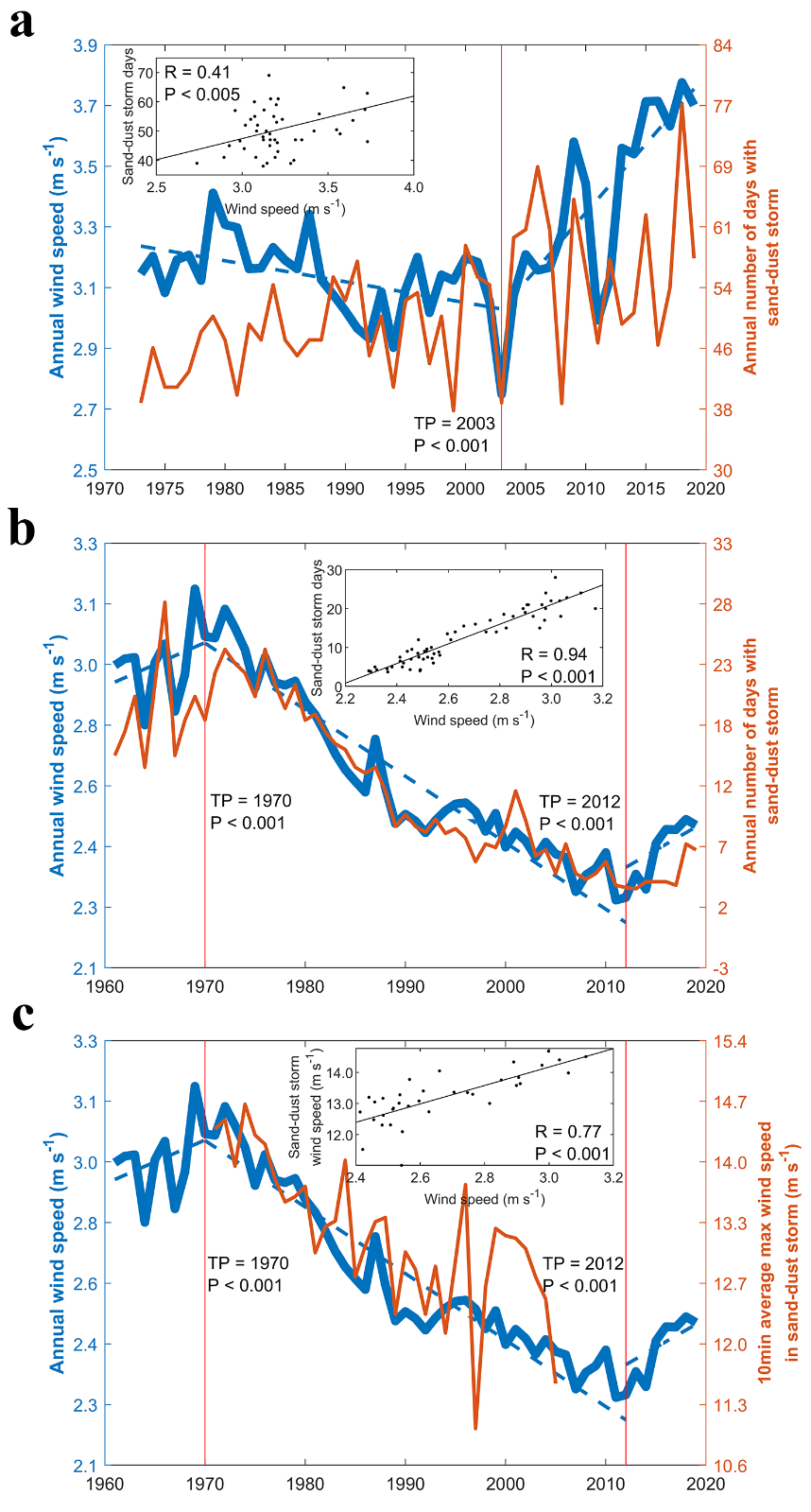
Figure 4. Sand-dust storm frequency is affected by the annual average wind speed in both Mongolia and Northern China
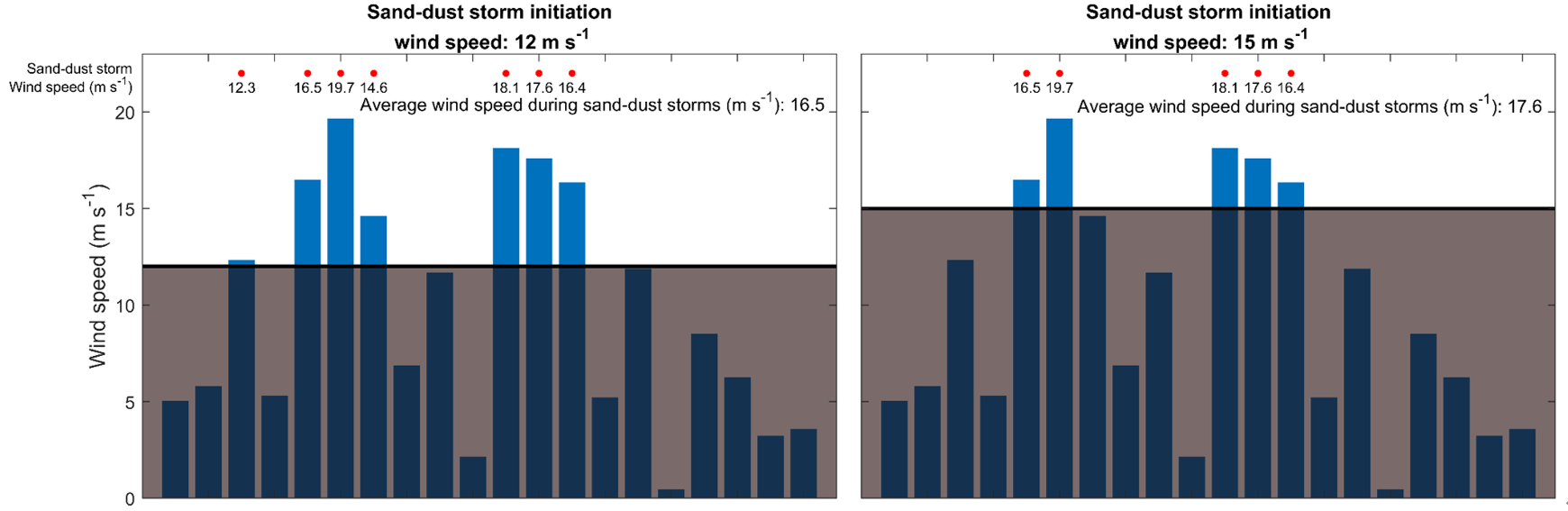
Figure 5. Explanation of how ecological restoration (higher sand-dust storm initiation wind speed) decreases sand-dust storm frequency but increases average sand-dust storm wind speed
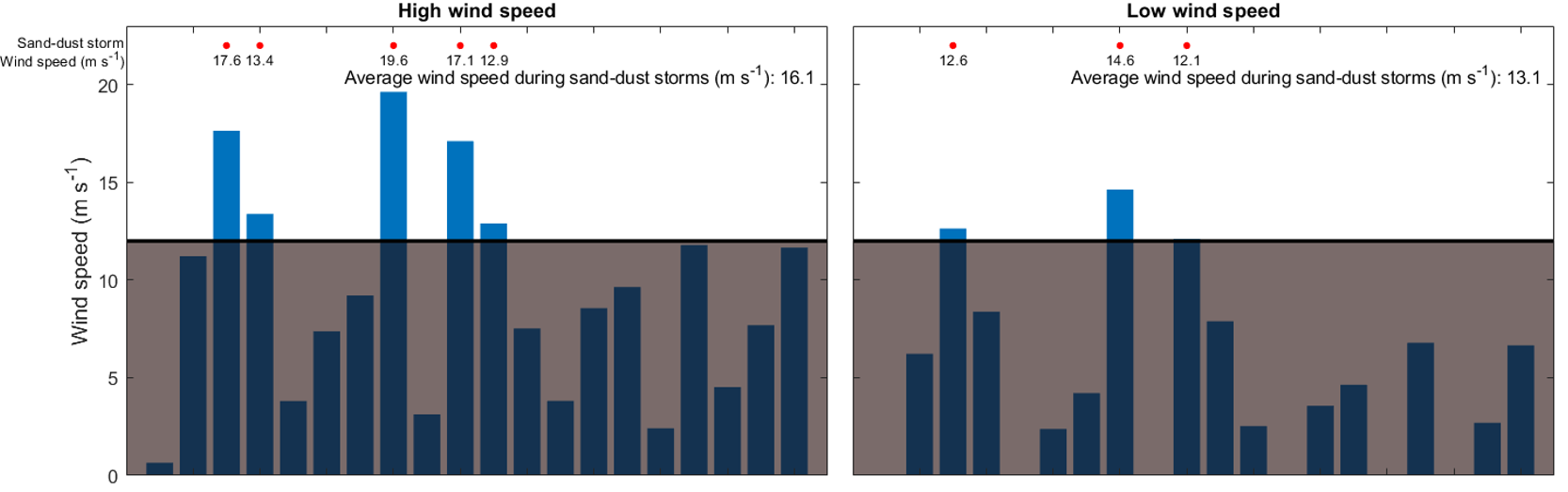
Figure 6. Explanation of how overall wind speed decreases sand-dust storm frequency and average wind speed
All the above works were supported by the National Natural Science Foundation of China (NSFC) and the Start-Up Fund provided by SUSTech.
Paper links (In order of appearance above):
The Palgrave Handbook of Global Sustainability: https://link.springer.com/referenceworkentry/10.1007/978-3-030-38948-2_17-1#citeas
Environmental Research Letters: https://iopscience.iop.org/article/10.1088/1748-9326/ac9cf4
Environmental Science: Atmospheres: https://pubs.rsc.org/en/content/articlelanding/2022/ea/d2ea00058j#!divAbstract
2026-03-10
2026-09-08
A delegation of 13 students from Southern University of Science and Technology (SUSTech), Zhejiang University and the University of Science and Technology of China (USTC), accompanied by four SUSTech faculty members including including two affiliated with the State Key Laboratory of Soil Pollution Control and Safety, concluded a 12-day summer school at Flinders University in August, 2026, hosted by the University’s National Centre for Groundwater Research and Training (NCGRT).Throughout the program, the students participated in a wide range of educational activities covering water resources, environmental health, groundwater modeling, managed aquifer recharge, salinity management, mining sites management, virtual reality hydrology, and nature-based solutions for surface water, groundwater and soil pollution.A highlight of the visit was a series of field trips showcasing South Australia’s unique natural environments. These included an overnight excursion to a global showcase of integrated surface and groundwater management exemplified by the Murray-Darling Basin. Visits to the St Kilda Mangroves highlighted ecohydrological approaches to coastal mangrove conservation. While Hallett Cove featured the most famous glacial striation on pre-Cambrian rocks. Happy Valley Reservoir, Oaklands Wetland, and Port Willunga Beach, with their wildlife, water management and well-exposed sedimentary rock formations, left strong impressions on our students. Students also attended research seminars and explored Flinders University’s teaching and research facilities.This summer school provided an excellent opportunity for students to engage with Flinders University staff, students, and researchers, experience Australian approaches to soil and groundwater pollution control and safety research, and strengthen the institutional ties between SUSTech and Flinders University, while fostering international connections and cross-cultural learning. The visit was made possible through a combination of support provided by SUSTech and the Fundamental and Interdisciplinary Disciplines Breakthrough Plan of the Ministry of Education of China(JYB2025XDXM909).During the visit, Chair Professor Yan ZHENG from SUSTech delivered a research seminar on arsenic detection in the developed and developing world. Flinders University noted that its academic community was privileged to learn from her expertise.SUSTech expresses its gratitude for the incredible partnership with Flinders University at the conclusion of the program.
2026-04-22
On April 22, the Frontiers Planet Prize announced its list of 25 National Champions for 2026. Hong WANG, a 2025 graduate of the School of Environmental Science and Engineering at the Southern Universi
2026-04-20
On the morning of April 17, 2026, a delegation from Flinders University (Australia), led by Professor Colin Stirling, President of Flinders University, visited the Southern University of Science and T
2026-04-08
Hydrological models are foundational tools for water resource management, agricultural planning, flood and drought mitigation, and ecosystem protection. A long-standing challenge in hydrology is devel
 |