

© 2026 All Rights Reserved. 粤ICP备14051456号
2025-09-25
View:24
Coastal groundwater acts like an “invisible waterway” connecting land and sea, with its hydrodynamics and salinity patterns directly shaping coastal ecosystems and biogeochemical processes. Yet, the coupled influences of tides, topography, semi-permeable layers, land reclamation, and seepage-face evaporation have long posed challenges for quantitative characterization.
Chair Professor Hailong Li’s research group from the School of Environmental Science and Engineering at the Southern University of Science and Technology (SUSTech) has made a series of significant breakthroughs in understanding coastal groundwater flow and solute transport. Two recent papers published in Water Resources Research systematically evaluate how tides, seepage-face evaporation, aquitards, slope breaks, and land reclamation jointly regulate groundwater dynamics and salinity transport. The findings uncover multiple previously overlooked mechanisms in tidal flat groundwater systems, offering new scientific evidence for understanding coastal hydrogeological processes and environmental management.
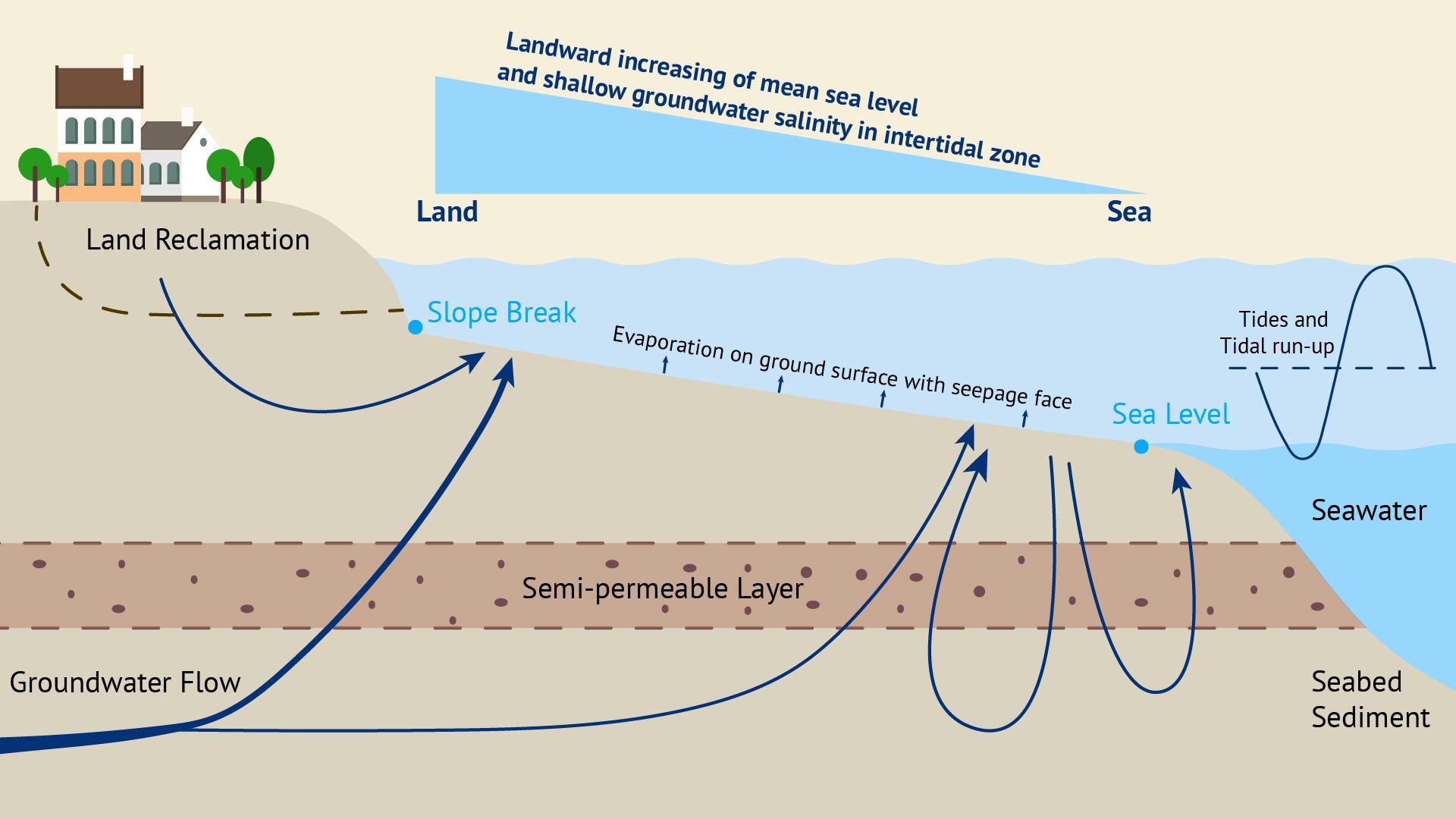
Coastal groundwater revealed: The “invisible waterway” and new insights into salt transport
Tidal groundwater systems are critical interfaces for land-ocean exchanges, where water flow and salinity distribution directly affect coastal ecosystems and biogeochemical processes. However, the combined effects of slope breaks, aquitards, and seepage-face evaporation are highly complex and have long remained difficult to quantify.
After more than a decade of sustained efforts, the team refined their numerical models and integrated extensive field observations from the tidal flats of Laizhou Bay. They developed a multi-layered coastal aquifer system model (Figure 1) to systematically analyze the interplay of tides, slope breaks, and aquitards on groundwater flow and solute transport.
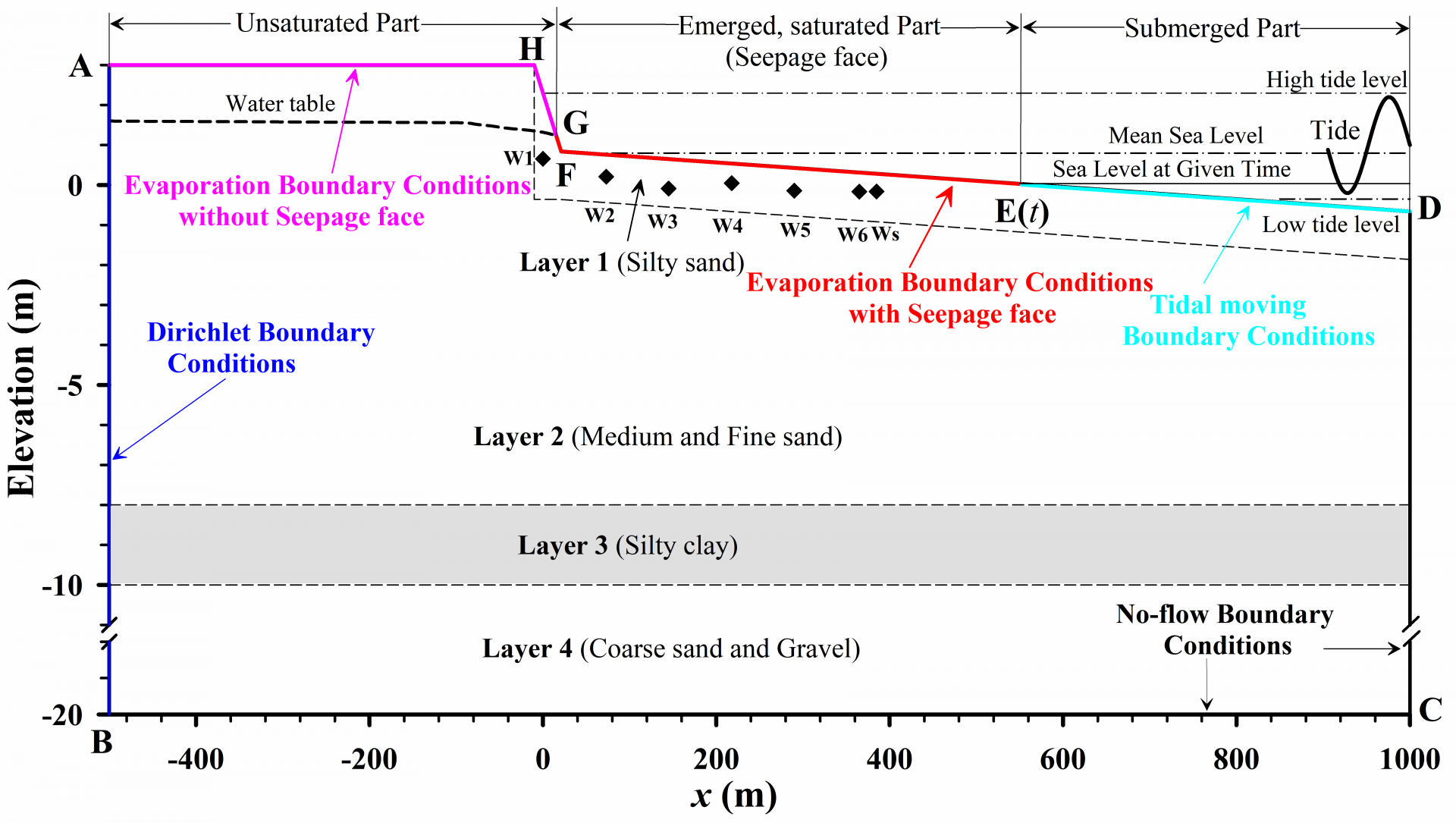
Figure 1. The vertical cross-section of multi-layered aquifer system beneath the tidal flat
The results show that the combined effects of slope breaks, spring-neap tidal cycles, and aquitards lead to the formation of two atypical freshwater discharge tubes and three distinct groundwater circulation cells (Figure 2). These findings highlight the complexity of groundwater dynamics in tidal flat systems.
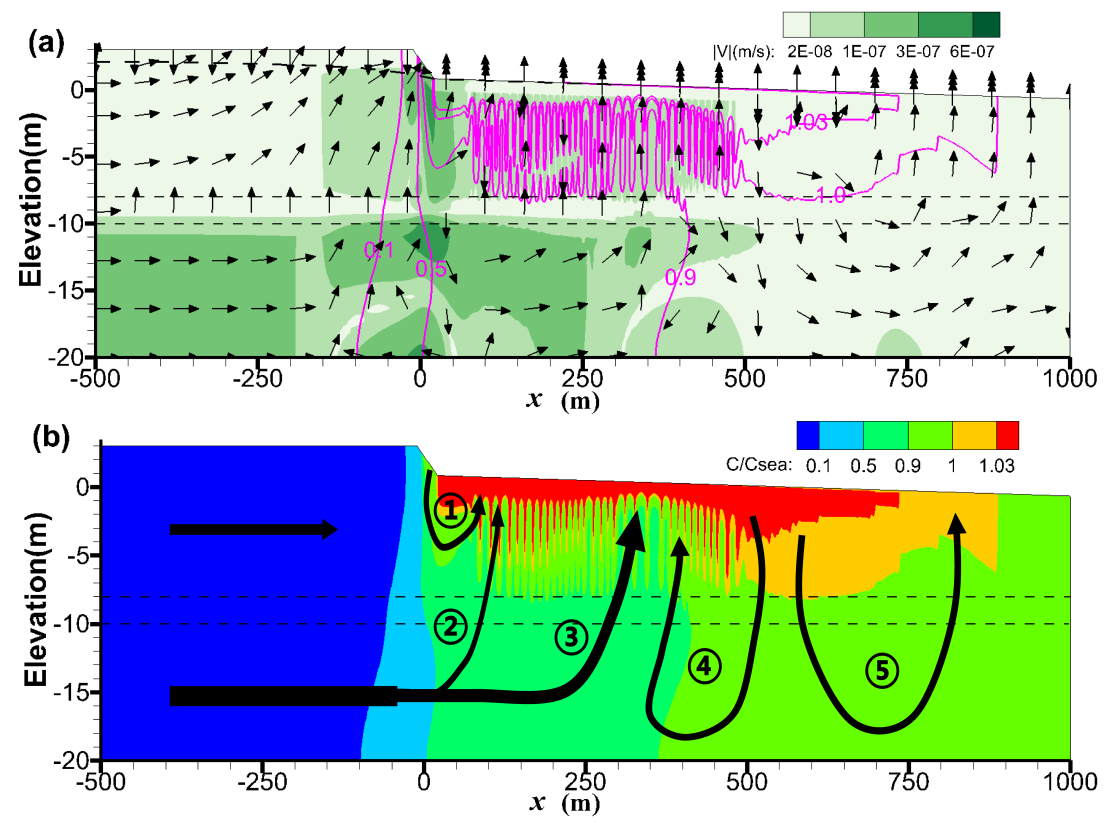
Figure 2. Spatial distributions of (a) the averaged Darcy velocity and (b) major groundwater flow paths over a spring-neap tidal cycle
By integrating field measurements with numerical simulations, the team quantitatively revealed for the first time the critical role of seepage-face evaporation in tidal flats. Previous studies have primarily focused on evaporation in the unsaturated zone, while largely overlooking the process occurring at the seepage face.
Using an improved numerical model, their work shows that seepage-face evaporation not only markedly increases groundwater salinity but also significantly enhances groundwater-seawater exchange. Over a spring-neap tidal cycle, evaporation-induced water loss accounts for nearly 45% of the total outflow flux (Figure 3). This discovery uncovers a key hidden process beneath tidal flat surfaces, providing a new perspective for studying salinization, coastal ecosystem protection, and groundwater geochemistry.
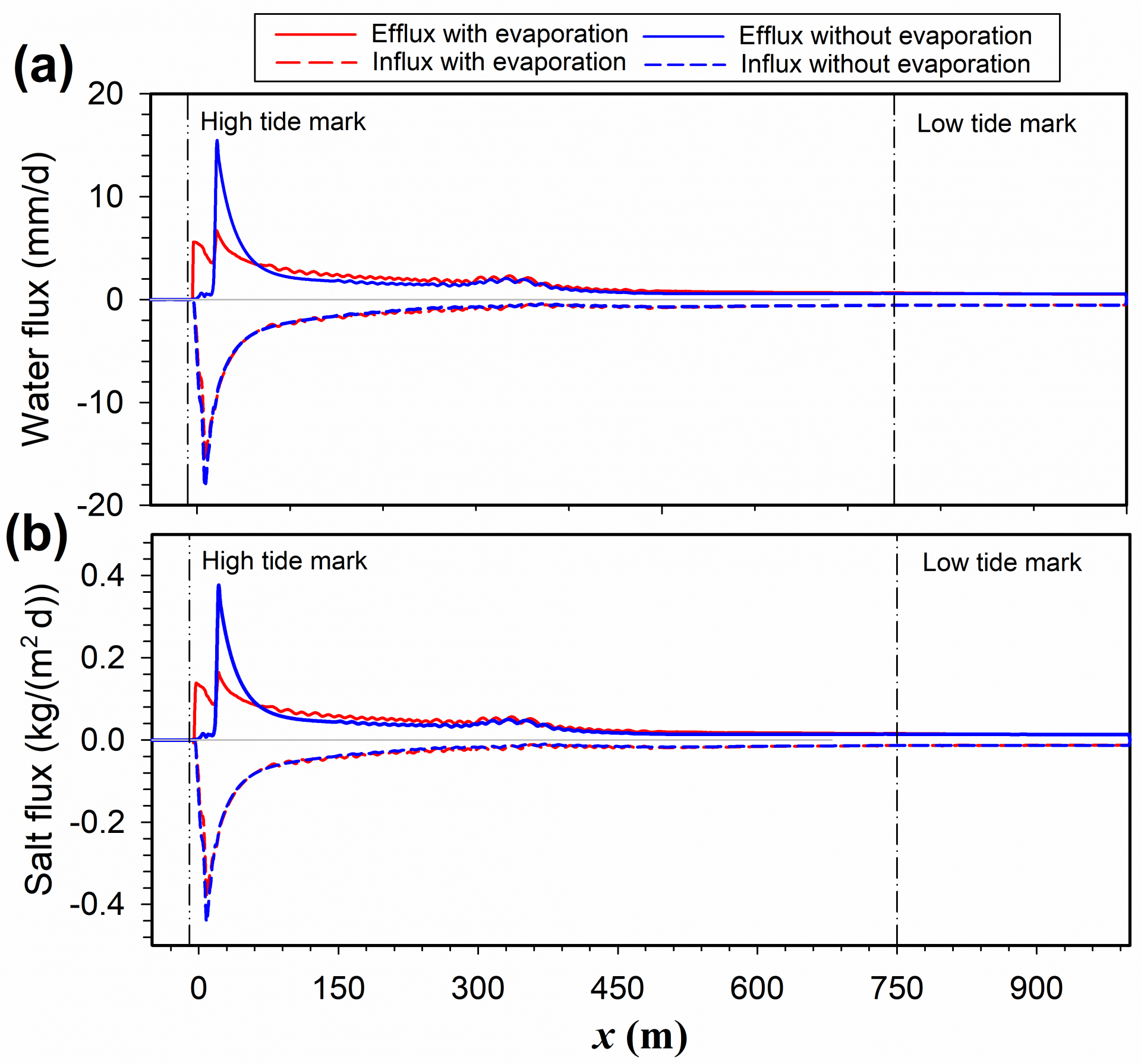
Figure 3. The averaged influx and efflux rates of (a) groundwater and (b) salt mass with evaporation and without evaporation over a spring-neap tidal cycle along the aquifer-ocean interface
The study incorporated a seepage-face evaporation module into the MARUN code, while also accounting for aquitards and slope breaks, to develop a model that more accurately reflects real-world coastal conditions. This enhanced model effectively captures groundwater dynamics and solute transport, offering a valuable reference for future investigations of multi-layered coastal aquifers and their associated biogeochemical processes.
This paper has been titled “The Influences of Evaporation and Aquitard on Groundwater Dynamics and Solute Transport in a Tidal Flat With a Slope Break.”
Postdoctoral researcher Manhua Luo from the School of Environmental Science and Engineering is the first author of the paper. Chair Professor Hailong Li is the corresponding author, with SUSTech serving as the first affiliated institution. Other collaborating institutions include the Technical Centre for Soil, Agriculture and Rural Ecology and Environment of the Ministry of Ecology and Environment (MEE), Tianjin University, and Dalhousie University (Canada).
The hidden dynamics of tidal flats: Evaporation, tidal run-up, and land reclamation
Mudflat tidal zones are vital wetlands where groundwater and seawater interact, delivering essential ecosystem services such as nutrient buffering, pollutant interception, habitat support, and organic carbon regulation. However, large-scale land reclamation in recent decades has profoundly altered coastal hydrogeological conditions and ecological balance.
In Jiaozhou Bay, characterized by low-permeability mudflats with extremely gentle slopes, groundwater flow and salinity transport are influenced shaped by the combined influences of tides, evaporation, and land reclamation. To quantify these processes, the researchers developed conceptual and numerical models for before and after reclamation conditions based on field data and simulations (Figure 4).
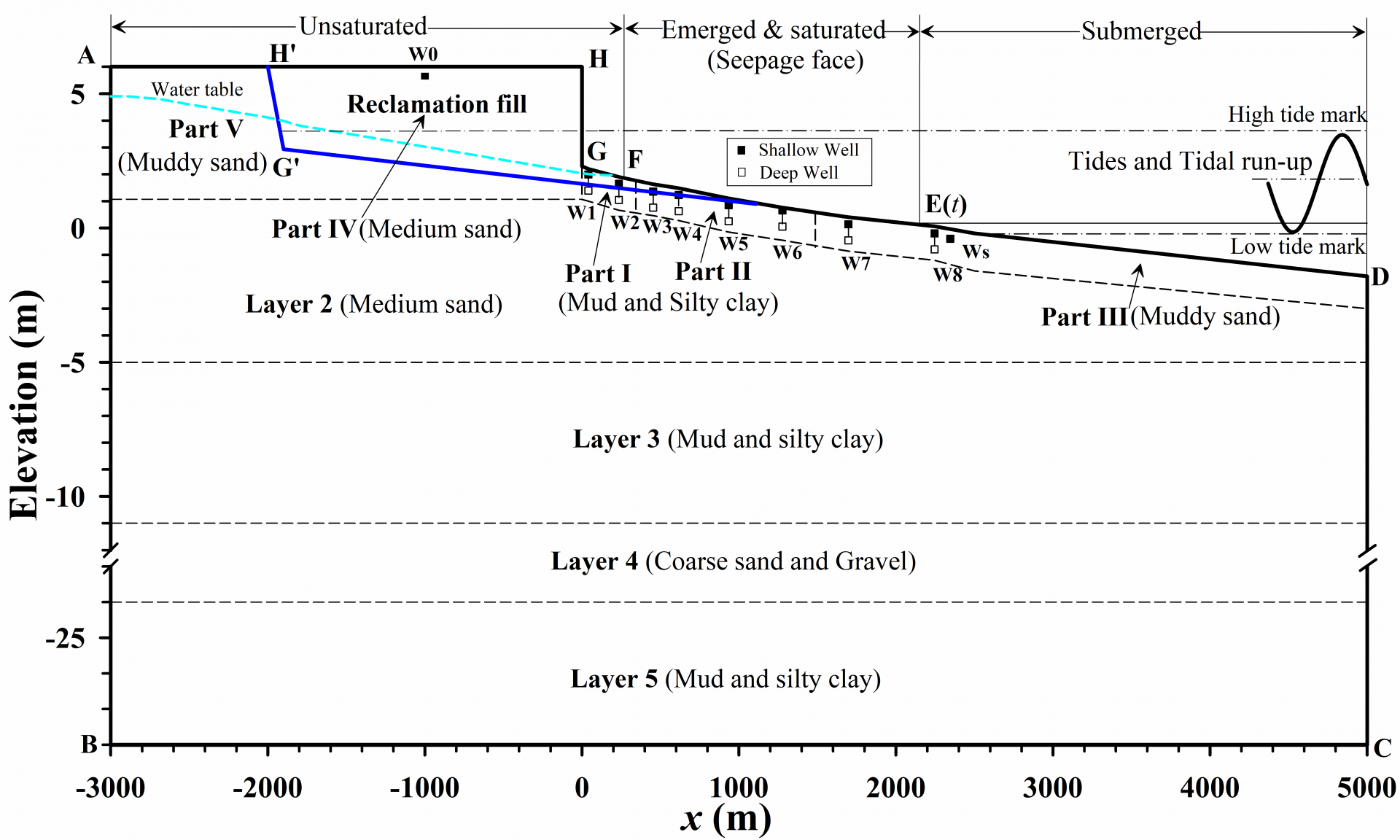
Figure 4. Cross-sections of the multi-layered coastal aquifer system beneath the muddy tidal flat before and after reclamation
The results demonstrate that seepage-face evaporation is a major driver of salinity accumulation, with groundwater salinity in certain areas surpassing that of seawater (Figure 5). The intensity of evaporation also displays pronounced seasonal variability. Land reclamation significantly reshaped the groundwater flow regime, consolidating multiple circulation cells into a single large cell and reducing freshwater discharge to the sea by nearly half. Overall, salinity distribution is controlled by the combined effects of inland freshwater recharge, evaporation, and tidal forcing.
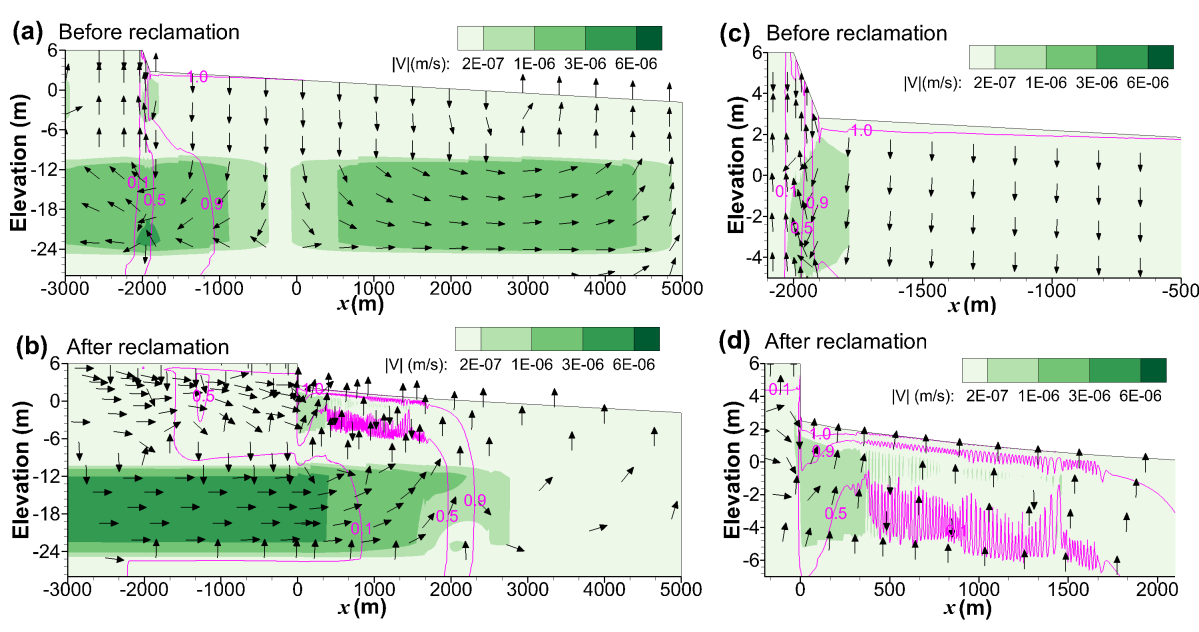
Figure 5. Spatial distributions of average simulated Darcy velocity and groundwater salinity (a) before reclamation and (b) after reclamation over a spring-neap tidal cycle; Panels (c) and (d) are local magnifications of (a) and (b), respectively
Field observations further revealed a “tidal run-up effect” caused by Jiaozhou Bay’s “wide belly, narrow mouth” morphology. During flood tides, seawater currents at the bay mouth can reach several meters per second, generating a landward-rising water slope across the mudflats with gradients of less than 0.1% (Figure 6).
For the first time, this effect was incorporated into numerical models, which showed that neglecting tidal run-up would significantly underestimate groundwater heads on the landward side, leading to model inaccuracies. This new concept advances the theoretical framework of large-scale tidal groundwater hydrodynamics.
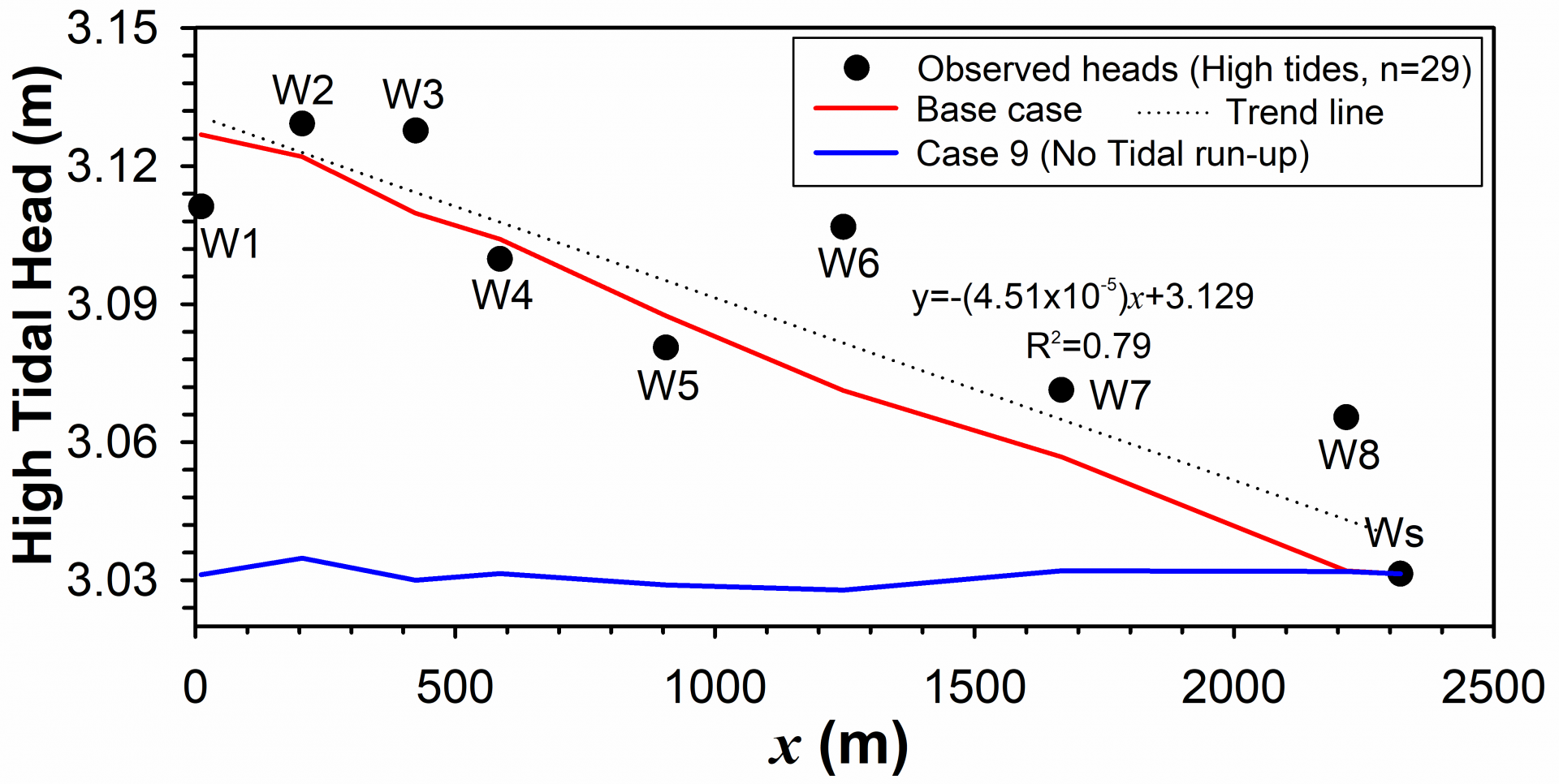
Figure 6. The average observed and simulated high tidal heads at the tidal flat surface for each well over a spring-neap tidal cycle, comparing the Base case and Case 9 (No tidal run-up)
This study is the first to unravel the coupled impacts of seepage-face evaporation, tidal run-up, and land reclamation on groundwater flow and salinity dynamics in mudflat systems. It challenges traditional assumptions, extends coastal hydrogeological theory, and provides scientific guidance for addressing environmental risks related to reclamation, wetland degradation, and salinization.
This paper has been titled “Groundwater and Salinity Responses to Land Reclamation in Jiaozhou Bay (China): Field Observations and Modeling.”
Postdoctoral researcher Manhua Luo is the first author of the paper. Chair Professor Hailong Li is the corresponding author, with SUSTech serving as the first affiliated institution. Other collaborating institutions include the Yantai Institute of Coastal Zone Research of the Chinese Academy of Sciences (CAS), Hebei GEO University, and the University of Hong Kong.
Paper links (In order of appearance above):
Water Resources Research: https://agupubs.onlinelibrary.wiley.com/doi/10.1029/2024WR038231
Water Resources Research: https://agupubs.onlinelibrary.wiley.com/doi/10.1029/2025WR039936
2026-03-10
2026-09-08
A delegation of 13 students from Southern University of Science and Technology (SUSTech), Zhejiang University and the University of Science and Technology of China (USTC), accompanied by four SUSTech faculty members including including two affiliated with the State Key Laboratory of Soil Pollution Control and Safety, concluded a 12-day summer school at Flinders University in August, 2026, hosted by the University’s National Centre for Groundwater Research and Training (NCGRT).Throughout the program, the students participated in a wide range of educational activities covering water resources, environmental health, groundwater modeling, managed aquifer recharge, salinity management, mining sites management, virtual reality hydrology, and nature-based solutions for surface water, groundwater and soil pollution.A highlight of the visit was a series of field trips showcasing South Australia’s unique natural environments. These included an overnight excursion to a global showcase of integrated surface and groundwater management exemplified by the Murray-Darling Basin. Visits to the St Kilda Mangroves highlighted ecohydrological approaches to coastal mangrove conservation. While Hallett Cove featured the most famous glacial striation on pre-Cambrian rocks. Happy Valley Reservoir, Oaklands Wetland, and Port Willunga Beach, with their wildlife, water management and well-exposed sedimentary rock formations, left strong impressions on our students. Students also attended research seminars and explored Flinders University’s teaching and research facilities.This summer school provided an excellent opportunity for students to engage with Flinders University staff, students, and researchers, experience Australian approaches to soil and groundwater pollution control and safety research, and strengthen the institutional ties between SUSTech and Flinders University, while fostering international connections and cross-cultural learning. The visit was made possible through a combination of support provided by SUSTech and the Fundamental and Interdisciplinary Disciplines Breakthrough Plan of the Ministry of Education of China(JYB2025XDXM909).During the visit, Chair Professor Yan ZHENG from SUSTech delivered a research seminar on arsenic detection in the developed and developing world. Flinders University noted that its academic community was privileged to learn from her expertise.SUSTech expresses its gratitude for the incredible partnership with Flinders University at the conclusion of the program.
2026-04-22
On April 22, the Frontiers Planet Prize announced its list of 25 National Champions for 2026. Hong WANG, a 2025 graduate of the School of Environmental Science and Engineering at the Southern Universi
2026-04-20
On the morning of April 17, 2026, a delegation from Flinders University (Australia), led by Professor Colin Stirling, President of Flinders University, visited the Southern University of Science and T
2026-04-08
Hydrological models are foundational tools for water resource management, agricultural planning, flood and drought mitigation, and ecosystem protection. A long-standing challenge in hydrology is devel
 |