

© 2026 All Rights Reserved. 粤ICP备14051456号
2023-09-06
View:13
Mountain treelines are important indicators of the impact of climate change on upland ecosystems. A new satellite data analysis of global treelines across >240 mountain ranges shows that treelines are shifting upwards due to climate change, which provides further evidence of the impacts of climate change on ecosystems around the world.
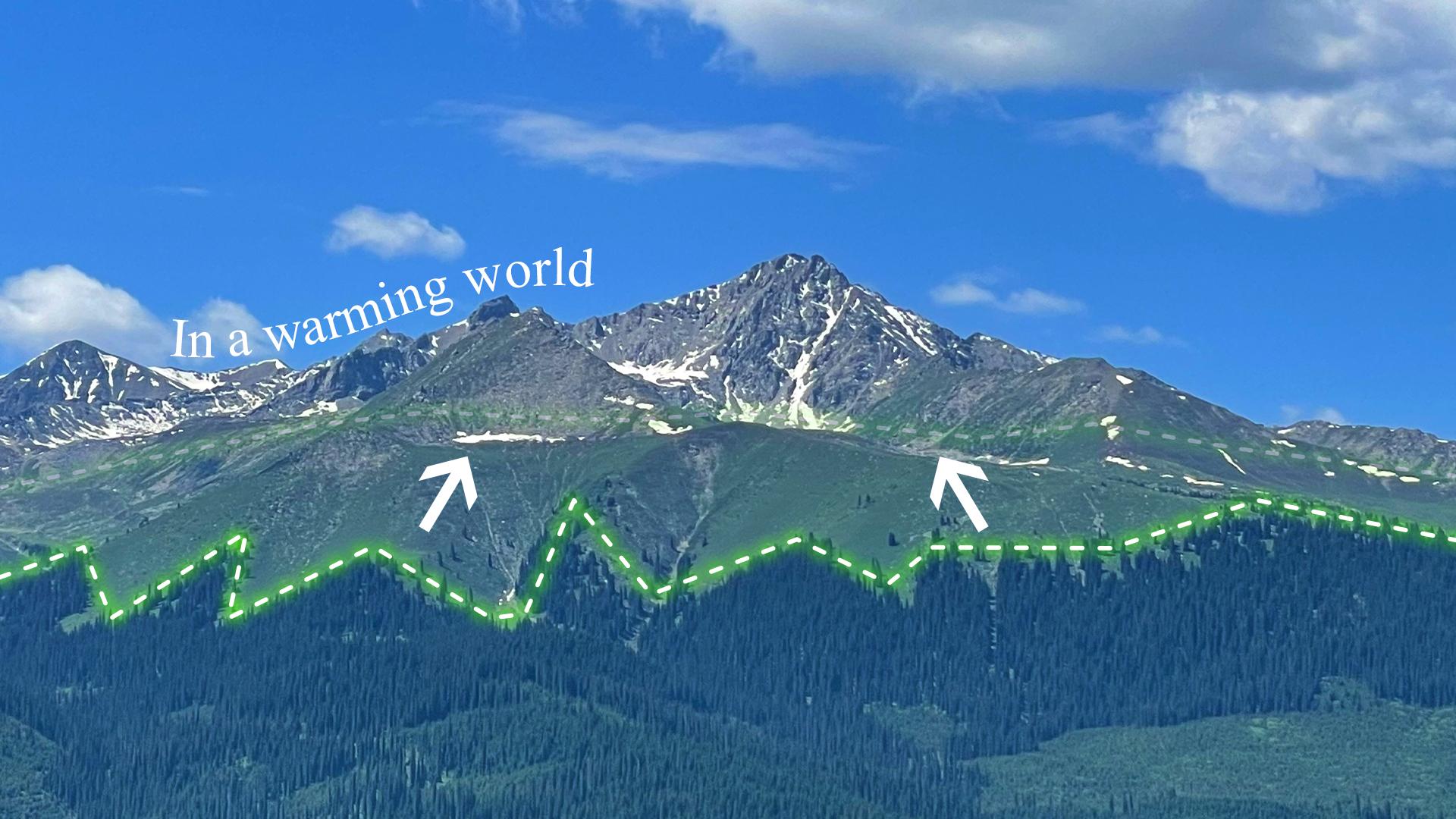
Associate Professor Zhenzhong Zeng’s research team from the School of Environmental Science and Engineering at the Southern University of Science and Technology (SUSTech) has recently developed a novel remote sensing-based algorithm to map closed-loop mountain treelines, as a proxy for natural treelines, enabling to identify the impacts of climate and climate change on the treelines.
Their research work, entitled “Global distribution and climatic controls of natural mountain treelines”, has been published in Global Change Biology, a top journal in the field of ecology.
The analysis detected nearly one million kilometres of closed-loop treelines across 243 mountain ranges using data from satellite images. Temperatures were the dominant controls on treeline positions in boreal and tropical regions, whereas rainfall played a key role in temperate zones.
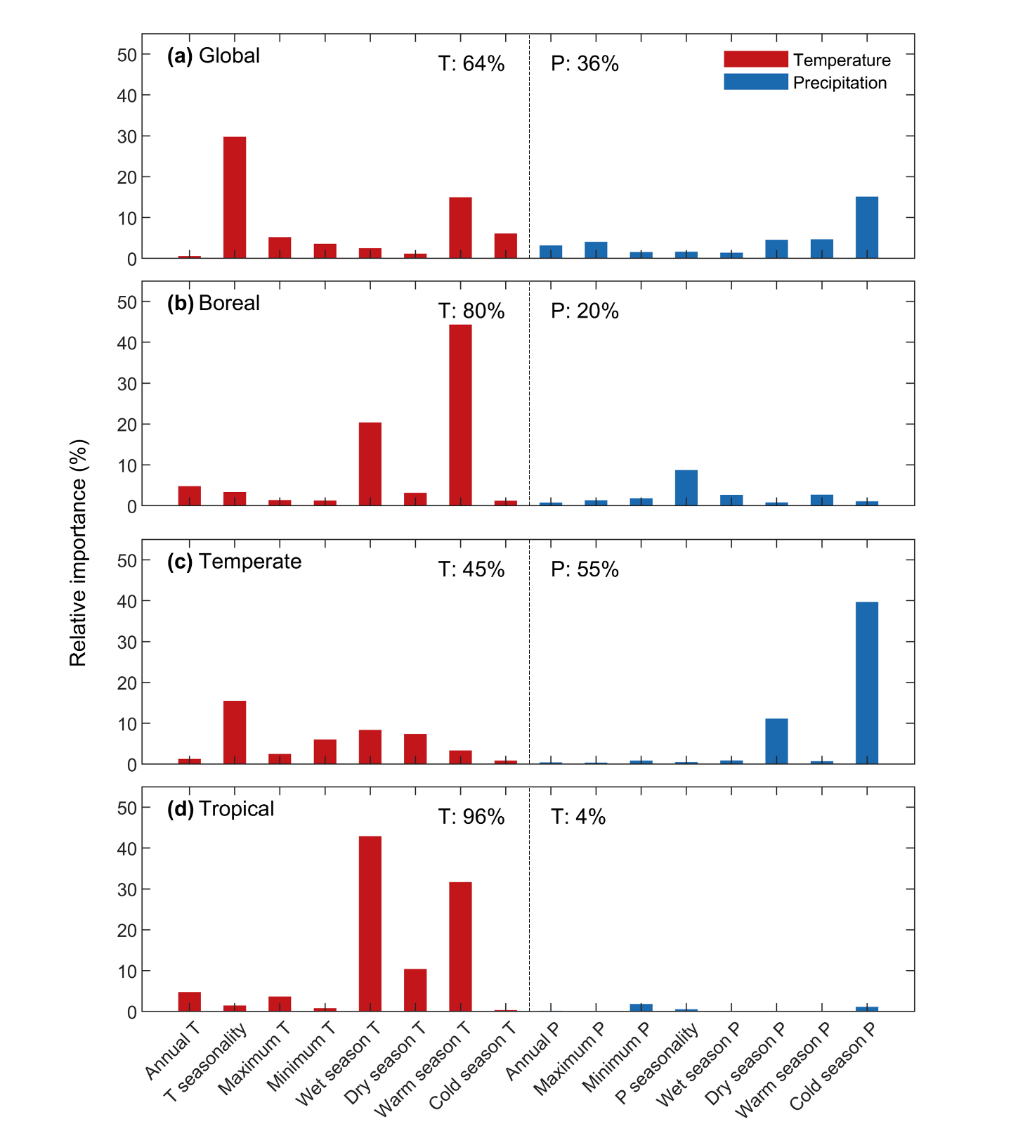
Figure 1. Climate drivers controlling the variability in treeline elevation for the globe (a), boreal (≥50°N, b), temperate (23.5° – 50°N/S, and c) tropical (23.5°N – 23.5°S, d) regions
The research team further found that 70% of treelines have moved upwards over the first decade of the 21st century. Especially, treelines are shifting fastest in the tropics (mean of 3.1 m/year), but with greater variability.
“We found that treelines are moving upwards fastest in regions where temperature is the dominant control of treeline position. In temperate regions where rainfall is more important, treelines are not changing so fast”, the authors said. Treelines are moving up in response to climate change, putting the plants and animals that exist at high altitudes at risk.
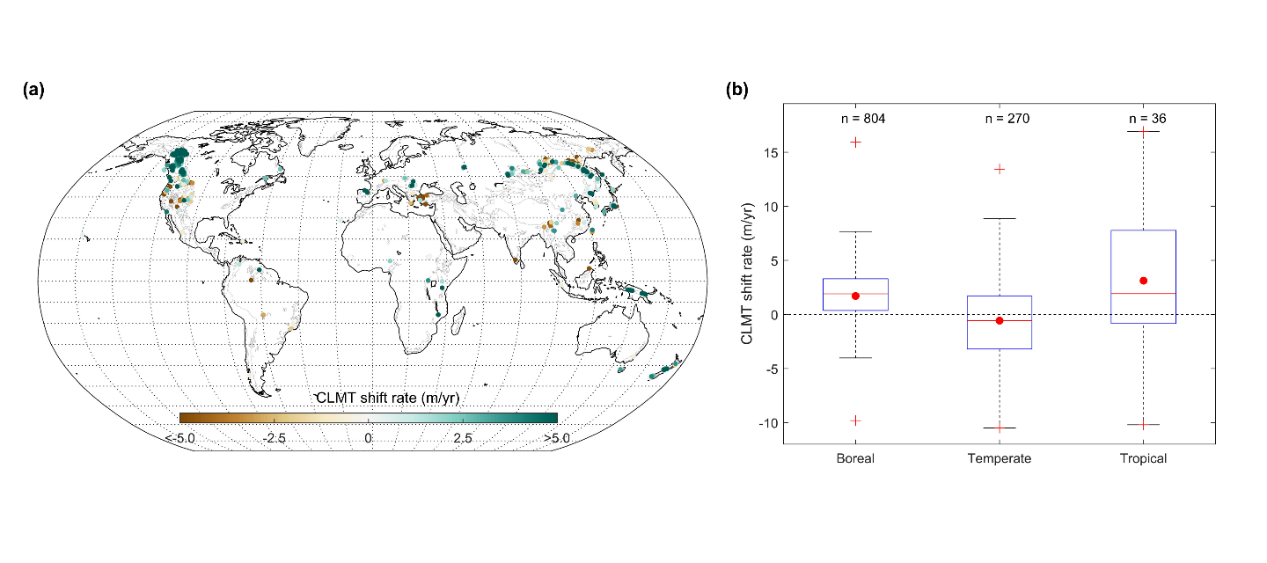
Figure 2. Treeline shift rate during 2000-2010
The new global treeline database produced in this study provides a useful tool for biodiversity and carbon assessments, ecological modelling, and analyses of the adaptation of species to future climate change. The authors also emphasized the importance of high-resolution remote sensing products for a longer period and more field data in alpine treeline zones for cross-validation in future studies.
Xinyue He, a joint Ph.D. student of SUSTech and the University of Leeds, is the first author of this paper. Assoc. Prof. Zhenzhong Zeng is the corresponding author. SUSTech is the first correspondent of the paper.
Other researchers that contributed to the project included Ph.D. student Xin Jiang from SUSTech; Prof. Dominick V. Spracklen and Prof. Joseph Holden from the University of Leeds; Prof. Eryuan Liang from the Chinese Academy of Sciences; Prof. Hongyan Liu and Dr. Chongyang Xu from Peking University; Prof. Jianhui Du from Sun Yat-Sen University; Prof. Kai Zhu from the University of Michigan; Dr. Paul R. Elsen from the Wildlife Conservation Society (WCS).
This study was supported by the National Natural Science Foundation of China (NSFC) and SUSTech.
Paper link: http://doi.org/10.1111/gcb.16885
2026-03-10
2026-09-08
A delegation of 13 students from Southern University of Science and Technology (SUSTech), Zhejiang University and the University of Science and Technology of China (USTC), accompanied by four SUSTech faculty members including including two affiliated with the State Key Laboratory of Soil Pollution Control and Safety, concluded a 12-day summer school at Flinders University in August, 2026, hosted by the University’s National Centre for Groundwater Research and Training (NCGRT).Throughout the program, the students participated in a wide range of educational activities covering water resources, environmental health, groundwater modeling, managed aquifer recharge, salinity management, mining sites management, virtual reality hydrology, and nature-based solutions for surface water, groundwater and soil pollution.A highlight of the visit was a series of field trips showcasing South Australia’s unique natural environments. These included an overnight excursion to a global showcase of integrated surface and groundwater management exemplified by the Murray-Darling Basin. Visits to the St Kilda Mangroves highlighted ecohydrological approaches to coastal mangrove conservation. While Hallett Cove featured the most famous glacial striation on pre-Cambrian rocks. Happy Valley Reservoir, Oaklands Wetland, and Port Willunga Beach, with their wildlife, water management and well-exposed sedimentary rock formations, left strong impressions on our students. Students also attended research seminars and explored Flinders University’s teaching and research facilities.This summer school provided an excellent opportunity for students to engage with Flinders University staff, students, and researchers, experience Australian approaches to soil and groundwater pollution control and safety research, and strengthen the institutional ties between SUSTech and Flinders University, while fostering international connections and cross-cultural learning. The visit was made possible through a combination of support provided by SUSTech and the Fundamental and Interdisciplinary Disciplines Breakthrough Plan of the Ministry of Education of China(JYB2025XDXM909).During the visit, Chair Professor Yan ZHENG from SUSTech delivered a research seminar on arsenic detection in the developed and developing world. Flinders University noted that its academic community was privileged to learn from her expertise.SUSTech expresses its gratitude for the incredible partnership with Flinders University at the conclusion of the program.
2026-04-22
On April 22, the Frontiers Planet Prize announced its list of 25 National Champions for 2026. Hong WANG, a 2025 graduate of the School of Environmental Science and Engineering at the Southern Universi
2026-04-20
On the morning of April 17, 2026, a delegation from Flinders University (Australia), led by Professor Colin Stirling, President of Flinders University, visited the Southern University of Science and T
2026-04-08
Hydrological models are foundational tools for water resource management, agricultural planning, flood and drought mitigation, and ecosystem protection. A long-standing challenge in hydrology is devel
 |