

© 2026 All Rights Reserved. 粤ICP备14051456号
2024-04-24
View:19
Concerns regarding the interactions between vegetation and climate extend over a century and endure in the present era. Acting as biotic pumps, vegetation transports water from the land and releases moisture into the atmosphere through evapotranspiration (ET), a process referred to as the “nexus of water, heat, and carbon flux”. The dynamics of vegetation play an increasingly dominant role in shaping global ET patterns. A profound understanding of how the vegetation dynamics shape land-atmosphere flux exchanges, and their intricate interplay with the climate system, is of paramount importance for reasonable climate predictions and the development of effective mitigation strategies.
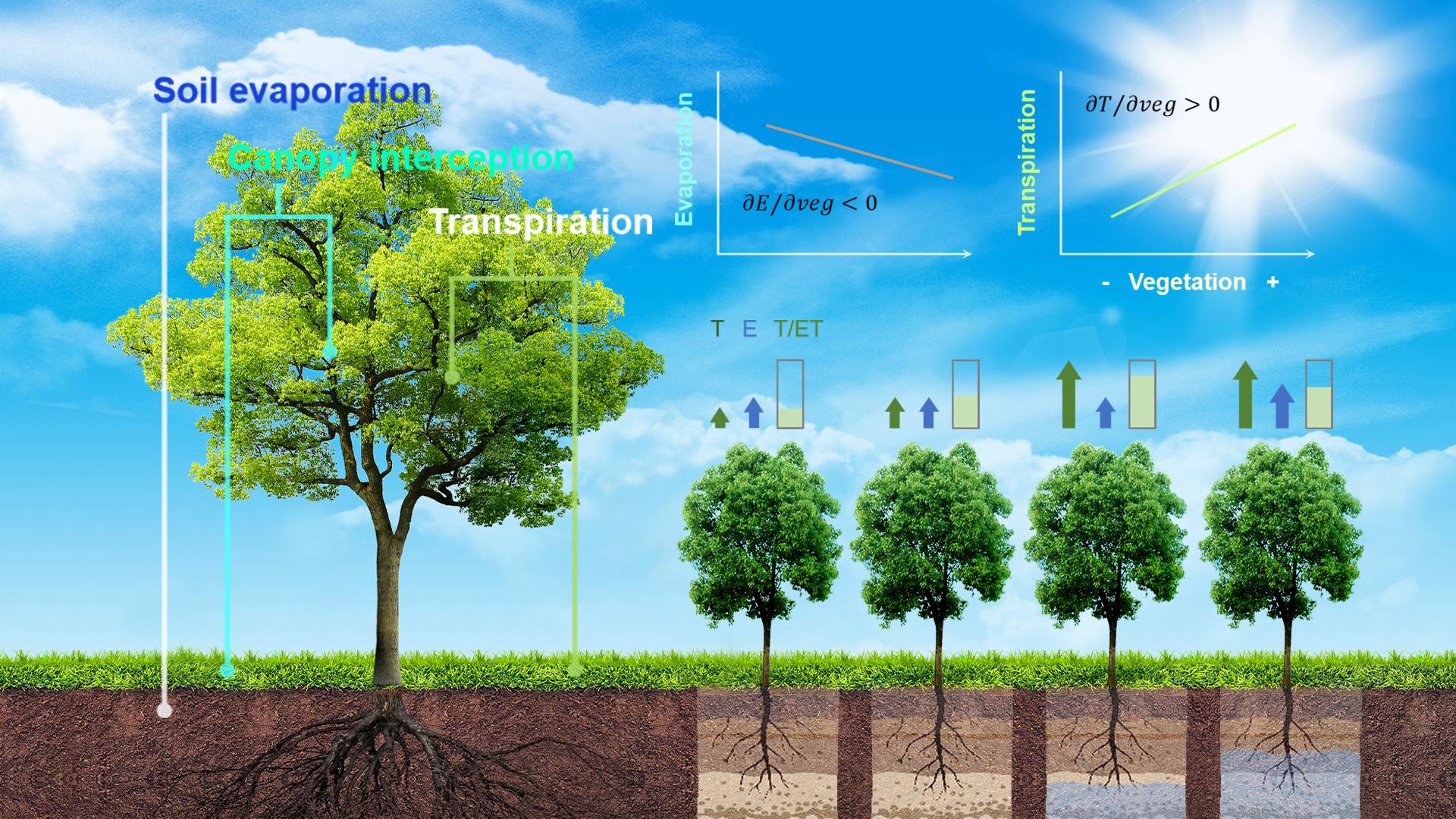
Associate Professor Zhenzhong Zeng’s research group from the School of Environmental Science and Engineering at the Southern University of Science and Technology (SUSTech) has recently published a paper addressing a critical issue within Earth system modeling: inaccuracies in the projection of evaporation sensitivity to vegetation changes. They systematically dissected the deficiencies in current Earth system model projections concerning vegetation-climate feedback, proposing a promising avenue for improvement, advocating for the refinement of transpiration partitioning parameterizations and the integration of groundwater connections into the models.
Their work, entitled “Urgent need to improve modelled sensitivity of evaporation to vegetation change”, has been published in Nature Water.
Earth System Models (ESM) have emerged as indispensable tools for simulating relationships between vegetation and climate. Despite remarkable progress in recent years, the current state of ESM simulations lacks consensus on the directions and magnitudes of the response of evaporation to vegetation change, perpetuating ongoing debates and inquiries. By analyzing the simulated response of surface temperature to global deforestation using models that participated in the idealized deforestation experiment (deforest-glob) of the Land Use Model Intercomparison Project (LUMIP), it becomes evident that the various ESMs participating in the LUMIP exhibit substantial disparities (Fig. 1). Notably, inaccuracies in the sensitivity of evapotranspiration to vegetation change would directly contribute to incorrect temperature sensitivity in ESM simulations.
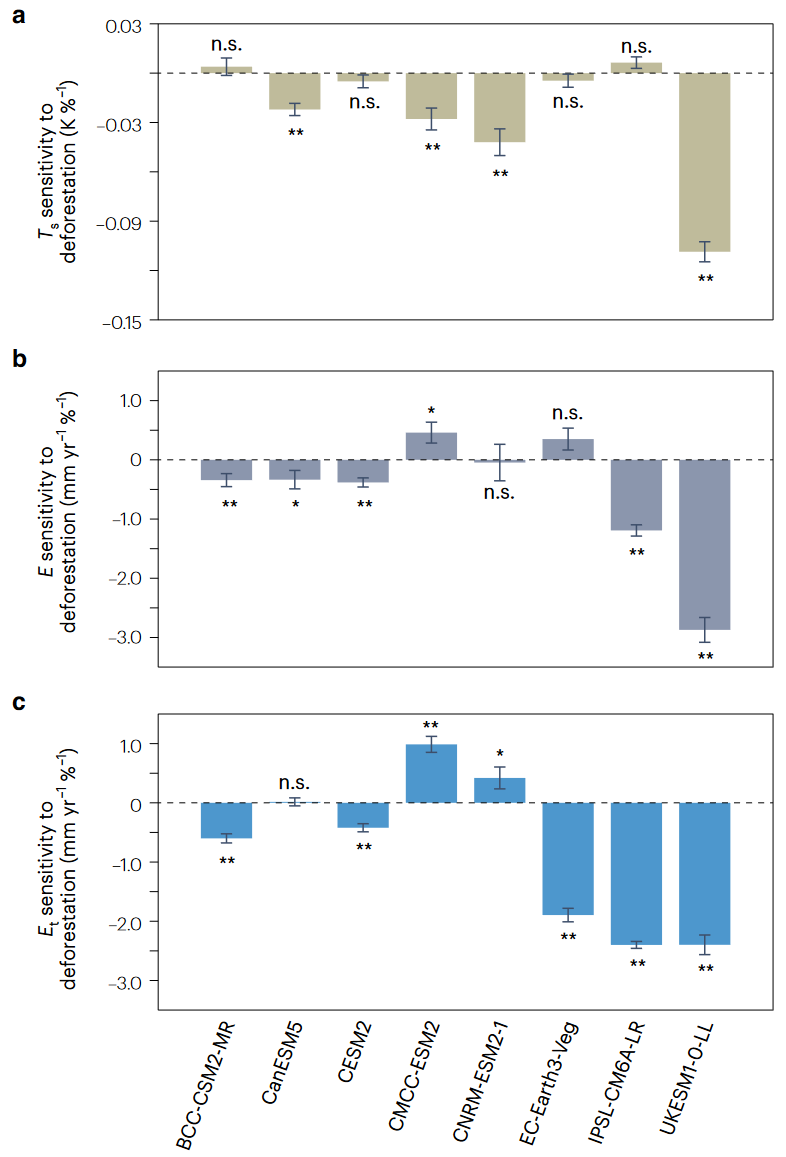
Figure 1. Disparities in climate responses to idealized deforestation within the deforest-glob experiment of LUMIP
Evaporation consists primarily of two fundamental processes: physical evaporation and biological transpiration. These processes respond differently to changes in vegetation dynamics and physical stresses due to their distinct dependencies (Fig. 2a). Therefore, transpiration partitioning significantly modulates the sign and magnitude of vegetation-climate feedback. Unfortunately, transpiration partitioning in recent CMIP6 model simulations is notably lower than observation-based estimates (Fig. 2b), contributing to low sensitivities of modelled ET to prescribed vegetation changes. Such discrepancies result in models demonstrating insensitivity or even a reversal of sensitivity to vegetation changes, inaccurately representing the climate impact associated with vegetation dynamics, thus affecting our scientific understanding of their influence on the climate system.
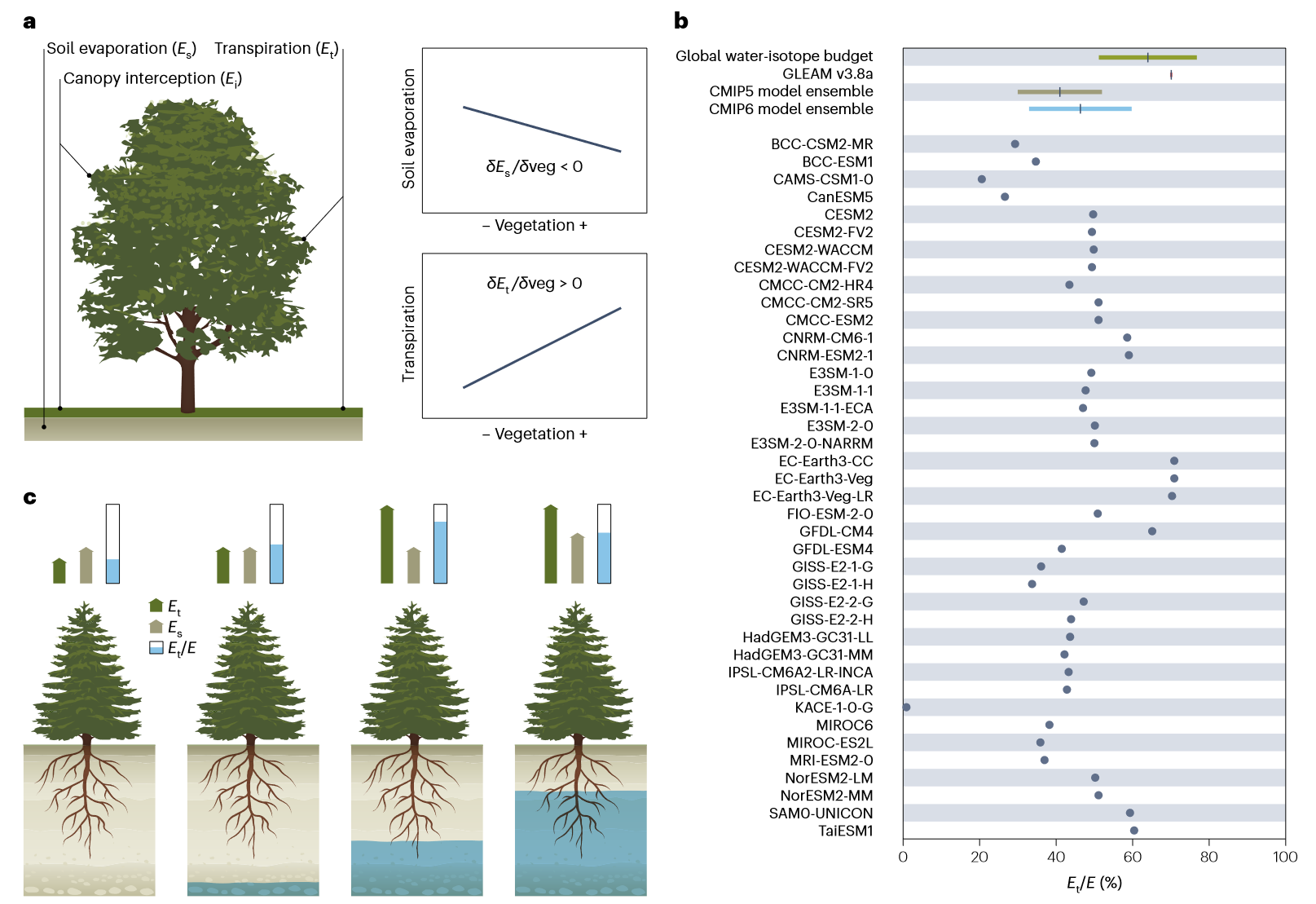
Figure 2. Schematic diagram highlighting problems in transpiration partitioning in ESMs
The researchers suppose that the inadequate representation of groundwater processes in current ESMs constitutes a crucial factor contributing to the underestimated transpiration partitioning values (Fig. 2c). Naturally, transpiration partitioning is shaped by distinct water table depths, influencing water availability for physical evaporation and biological transpiration processes, where evaporation interacts with shallow soil moisture, while transpiration pumps water from the deeper reaches of the root zone. Therefore, the connectivity between surface and sub-surface water tables plays a primary role in governing latent heat fluxes and ET partitioning.
Current ESMs commonly incorporate soil depth maps estimated from soil survey observations, often limited to depths less than 2 meters, resulting in missing values for deeper layers. Additionally, ESMs often oversimplify or neglect groundwater connections, leading to inadequate water supply for soil moisture and vegetation transpiration. This, in turn, affects the accuracy and reliability of the entire Earth system simulation.
Urgent collaboration is needed to deepen our understanding of the intricate dynamics inherent in vegetation-climate feedback. Moving forward, a combination of strategies should be considered, including observation-based constraint analyses, refinement of plant parameterizations, and the integration of groundwater hydrological processes.
Research Assistant Professor Dashan Wang from the School of Environmental Science and Engineering at SUSTech is the first author of the paper. Associate Professor Zhenzhong Zeng is the corresponding author.
This study was supported by the National Natural Science Foundation of China (NSFC) and the Start-Up Fund of SUSTech.
Paper link: https://doi.org/10.1038/s44221-024-00203-y
To read all stories about SUSTech science, subscribe to the monthly SUSTech Newsletter.
2026-03-10
2026-09-08
A delegation of 13 students from Southern University of Science and Technology (SUSTech), Zhejiang University and the University of Science and Technology of China (USTC), accompanied by four SUSTech faculty members including including two affiliated with the State Key Laboratory of Soil Pollution Control and Safety, concluded a 12-day summer school at Flinders University in August, 2026, hosted by the University’s National Centre for Groundwater Research and Training (NCGRT).Throughout the program, the students participated in a wide range of educational activities covering water resources, environmental health, groundwater modeling, managed aquifer recharge, salinity management, mining sites management, virtual reality hydrology, and nature-based solutions for surface water, groundwater and soil pollution.A highlight of the visit was a series of field trips showcasing South Australia’s unique natural environments. These included an overnight excursion to a global showcase of integrated surface and groundwater management exemplified by the Murray-Darling Basin. Visits to the St Kilda Mangroves highlighted ecohydrological approaches to coastal mangrove conservation. While Hallett Cove featured the most famous glacial striation on pre-Cambrian rocks. Happy Valley Reservoir, Oaklands Wetland, and Port Willunga Beach, with their wildlife, water management and well-exposed sedimentary rock formations, left strong impressions on our students. Students also attended research seminars and explored Flinders University’s teaching and research facilities.This summer school provided an excellent opportunity for students to engage with Flinders University staff, students, and researchers, experience Australian approaches to soil and groundwater pollution control and safety research, and strengthen the institutional ties between SUSTech and Flinders University, while fostering international connections and cross-cultural learning. The visit was made possible through a combination of support provided by SUSTech and the Fundamental and Interdisciplinary Disciplines Breakthrough Plan of the Ministry of Education of China(JYB2025XDXM909).During the visit, Chair Professor Yan ZHENG from SUSTech delivered a research seminar on arsenic detection in the developed and developing world. Flinders University noted that its academic community was privileged to learn from her expertise.SUSTech expresses its gratitude for the incredible partnership with Flinders University at the conclusion of the program.
2026-04-22
On April 22, the Frontiers Planet Prize announced its list of 25 National Champions for 2026. Hong WANG, a 2025 graduate of the School of Environmental Science and Engineering at the Southern Universi
2026-04-20
On the morning of April 17, 2026, a delegation from Flinders University (Australia), led by Professor Colin Stirling, President of Flinders University, visited the Southern University of Science and T
2026-04-08
Hydrological models are foundational tools for water resource management, agricultural planning, flood and drought mitigation, and ecosystem protection. A long-standing challenge in hydrology is devel
 |