

© 2026 All Rights Reserved. 粤ICP备14051456号
2024-09-25
View:17
While overseas coal-fired power plants (OCPs) help meet the energy demands of emerging economies, they have also become a significant driver of global carbon emissions. Although developed countries are gradually reducing their investments in coal power, the expansion of coal projects in developing countries remains notable. In particular, in emerging economies, these OCPs not only directly contribute to significant carbon emissions but also indirectly promote the development of local coal power industries, posing a challenge to global climate goals.

A research team led by Associate Professor Huizhong Shen from the School of Environmental Science and Engineering at the Southern University of Science and Technology (SUSTech) has published a study that offers an in-depth analysis of investment data from 908 global OCPs. This work provides, for the first time, a detailed quantification of both the direct carbon emissions caused by overseas investments between 1960 and 2022, and the potential indirect emissions that may drive fossil fuel expansion in emerging economies.
Their findings, titled “Carbon dioxide emissions from global overseas coal-fired power plants”, have been published in the top-tier geoscience journal Nature Climate Change.
A key driver of global carbon emissions: The rise of overseas coal-fired power plants
The study analyzed a total of 9,928 coal-fired power plants globally, of which 908 are overseas coal-fired plants. In 2022, these OCPs had an installed capacity of 127 GW, accounting for 6% of the global coal power capacity, with carbon dioxide emissions reaching 0.53 Gt, or 7% of the total emissions from global coal plants (Figure 1).
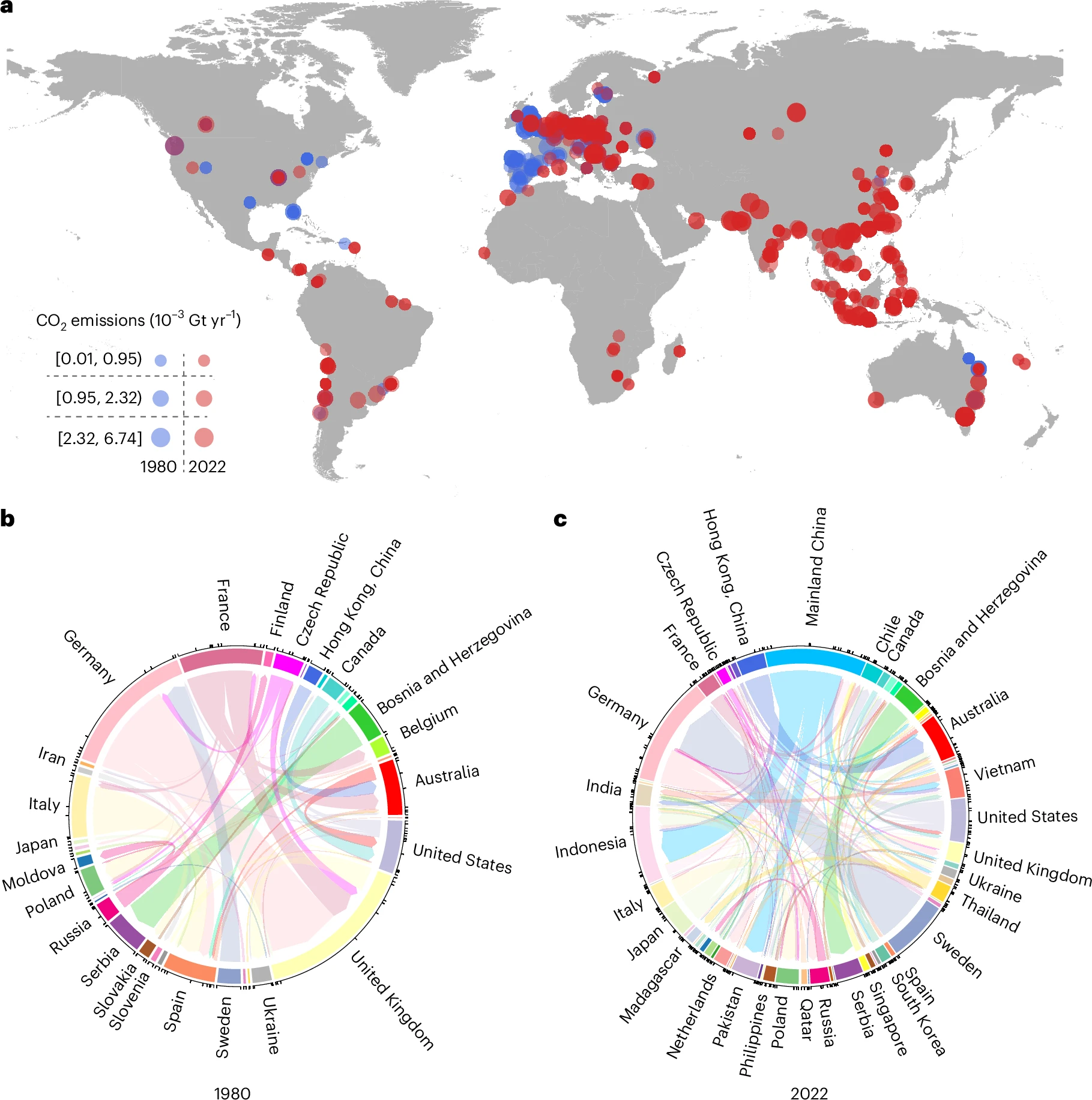
Figure 1. The spatial distribution and investment flows of global OCPs
Cumulative historical emissions of overseas coal-fired power plants and the growth of developing country shares
Historically, the cumulative emissions from OCPs have reached 26 Gt since 1960. Developed countries have dominated these emissions, contributing 78%. However, since 2000, the share of emissions from OCPs invested by developing countries has steadily increased, reaching 39% by 2022. Despite investment restrictions on OCPs imposed by some countries, global investments and emissions have not significantly decreased, especially in emerging economies (Figure 2).
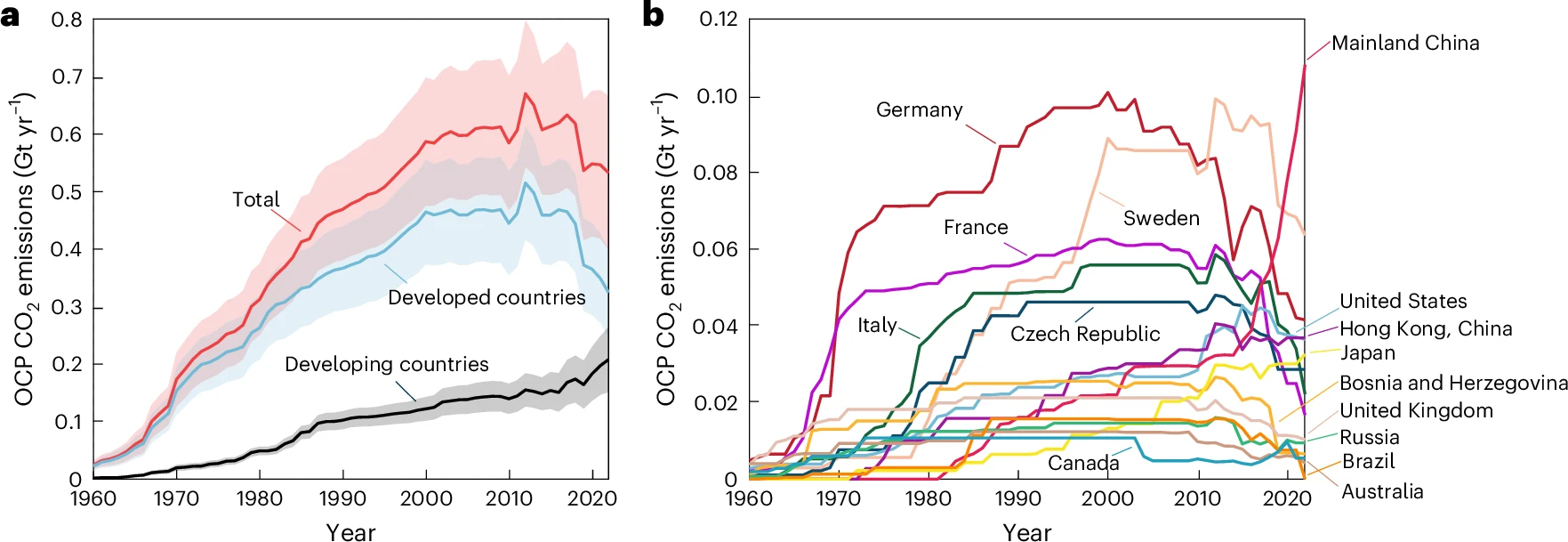
Figure 2. Temporal trends of CO2 emissions from OCPs
Future projections: Policies in emerging economies will determine the trajectory of global coal power emissions
Based on current policies and technological assumptions, this study predicts that OCPs will contribute an additional 15 to 30 Gt of carbon emissions by 2060. At the same time, these projects in developing countries may indirectly increase carbon emissions by 6.3 to 45 Gt. This highlights that, without policy intervention, emerging economies will become the main driver of global coal power emissions growth (Figure 3).
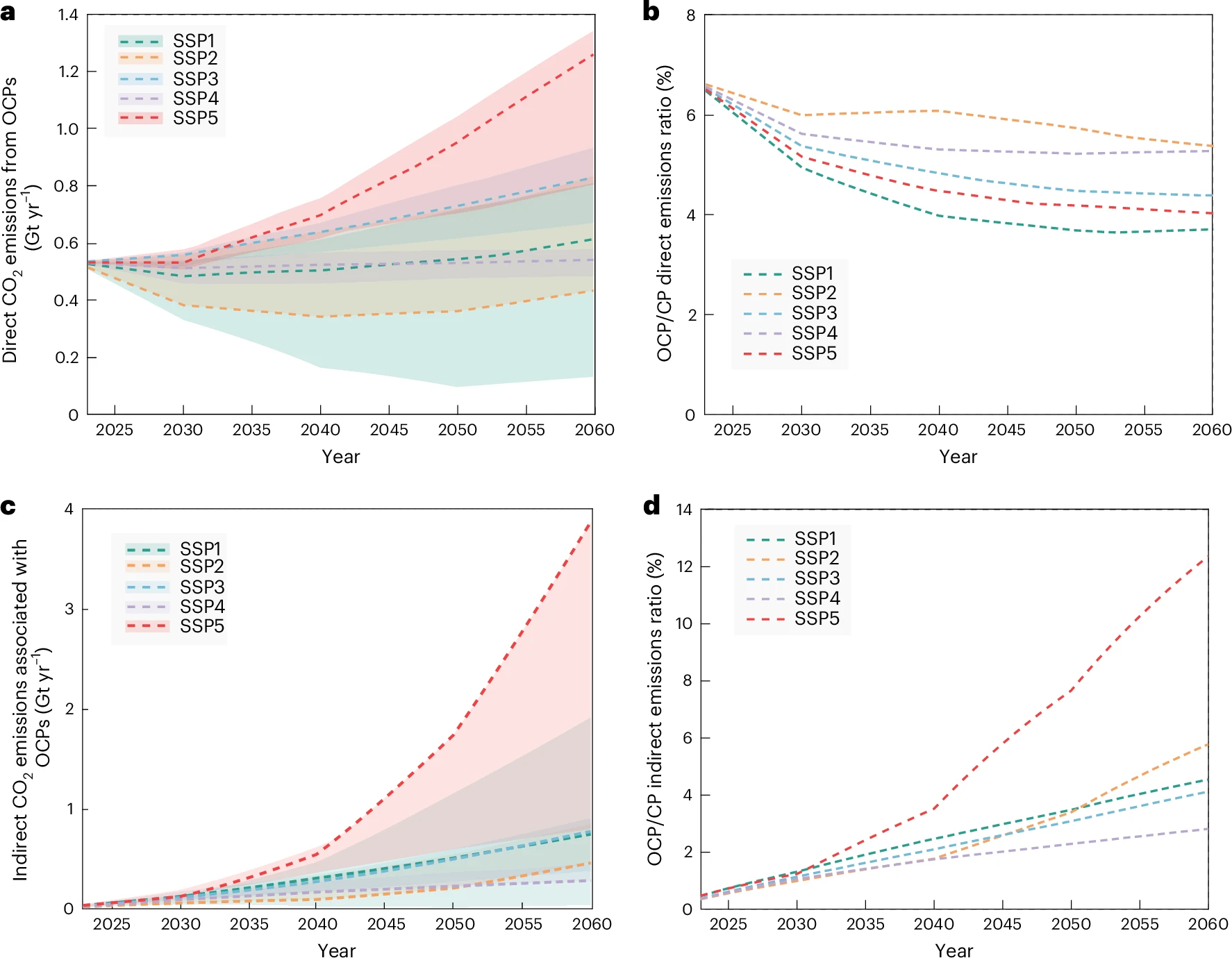
Figure 3. Future projections of CO2 emissions from overseas coal-fired plants (OCPs)
Promoting green finance and cross-border capital cooperation to support sustainable development
This work emphasizes the critical role of emerging countries in both the investment and demand sides in driving global carbon emissions related to overseas investments. Furthermore, it stresses the importance of international green finance and cross-border capital cooperation. Only through global collaboration can the continuous growth of overseas coal-fired power plants be effectively curbed. In September 2021, China ceased funding overseas coal power projects and continued to enhance its investments in renewable energy power generation, setting a significant precedent in curbing coal power aid and promoting low-carbon development in the global power sector.
Ph.D. student Peng Guo is the first author of the paper. Associate Professor Huizhong Shen is the corresponding author, with SUSTech serving as the primary institution.
This research was supported by the National Natural Science Foundation of China, Ministry of Science and Technology of China, Shenzhen Precision Measurement and Early Warning Technology Laboratory for Urban Environmental Health Risks, Shenzhen Science and Technology Plan, Department of Science and Technology of Guangdong Province, and the Department of Education of Guangdong Province.
Paper link: https://www.nature.com/articles/s41558-024-02114-y
2026-03-10
2026-09-08
A delegation of 13 students from Southern University of Science and Technology (SUSTech), Zhejiang University and the University of Science and Technology of China (USTC), accompanied by four SUSTech faculty members including including two affiliated with the State Key Laboratory of Soil Pollution Control and Safety, concluded a 12-day summer school at Flinders University in August, 2026, hosted by the University’s National Centre for Groundwater Research and Training (NCGRT).Throughout the program, the students participated in a wide range of educational activities covering water resources, environmental health, groundwater modeling, managed aquifer recharge, salinity management, mining sites management, virtual reality hydrology, and nature-based solutions for surface water, groundwater and soil pollution.A highlight of the visit was a series of field trips showcasing South Australia’s unique natural environments. These included an overnight excursion to a global showcase of integrated surface and groundwater management exemplified by the Murray-Darling Basin. Visits to the St Kilda Mangroves highlighted ecohydrological approaches to coastal mangrove conservation. While Hallett Cove featured the most famous glacial striation on pre-Cambrian rocks. Happy Valley Reservoir, Oaklands Wetland, and Port Willunga Beach, with their wildlife, water management and well-exposed sedimentary rock formations, left strong impressions on our students. Students also attended research seminars and explored Flinders University’s teaching and research facilities.This summer school provided an excellent opportunity for students to engage with Flinders University staff, students, and researchers, experience Australian approaches to soil and groundwater pollution control and safety research, and strengthen the institutional ties between SUSTech and Flinders University, while fostering international connections and cross-cultural learning. The visit was made possible through a combination of support provided by SUSTech and the Fundamental and Interdisciplinary Disciplines Breakthrough Plan of the Ministry of Education of China(JYB2025XDXM909).During the visit, Chair Professor Yan ZHENG from SUSTech delivered a research seminar on arsenic detection in the developed and developing world. Flinders University noted that its academic community was privileged to learn from her expertise.SUSTech expresses its gratitude for the incredible partnership with Flinders University at the conclusion of the program.
2026-04-22
On April 22, the Frontiers Planet Prize announced its list of 25 National Champions for 2026. Hong WANG, a 2025 graduate of the School of Environmental Science and Engineering at the Southern Universi
2026-04-20
On the morning of April 17, 2026, a delegation from Flinders University (Australia), led by Professor Colin Stirling, President of Flinders University, visited the Southern University of Science and T
2026-04-08
Hydrological models are foundational tools for water resource management, agricultural planning, flood and drought mitigation, and ecosystem protection. A long-standing challenge in hydrology is devel
 |