

© 2026 All Rights Reserved. 粤ICP备14051456号
2024-11-26
View:16
The unsaturated zone, a crucial transition zone linking surface and subsurface flow, plays a significant role in quantifying the hydrological processes of watersheds. However, due to the nonlinearity, traditional groundwater models often neglect its effect.
Assistant Professor Xiuyu Liang’s research group from the School of Environmental Science and Engineering at the Southern University of Science and Technology (SUSTech) has made significant progress in the mechanisms of how the unsaturated zone affects groundwater dynamics. Their findings have been detailed in two recent papers in the international journal Water Resources Research, focusing on assessing the impact of the unsaturated zone in different groundwater dynamic processes.
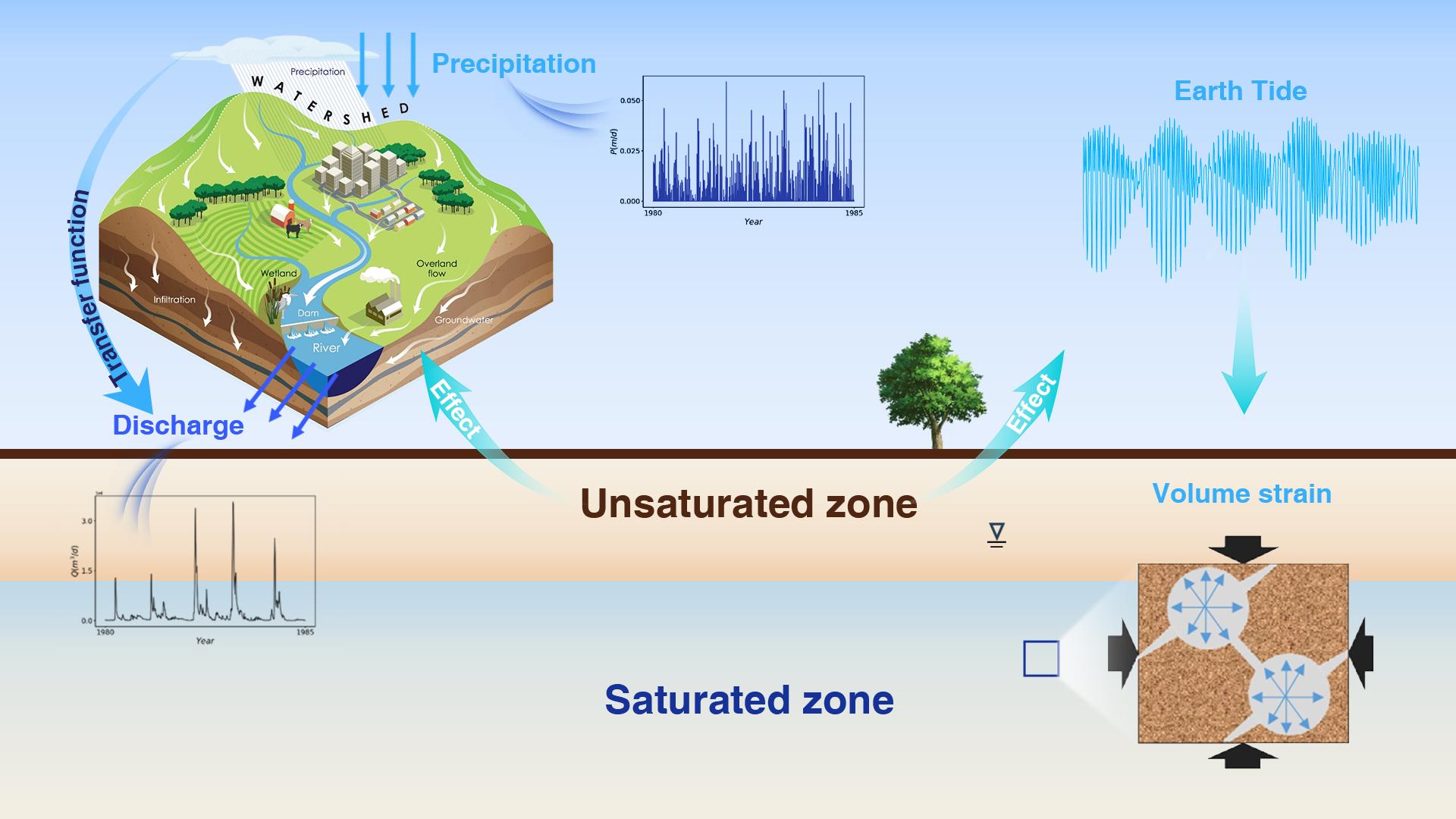
Unveiling the unsaturated zone’s role in watershed hydrology
Understanding the response of watershed discharge to precipitation is an important task in hydrological science research. It not only reflects precipitation patterns but also reveals the hydrological characteristics of the watershed. However, traditional models often ignore or simplify the role of the unsaturated zone.
As an important transitional area connecting surface and groundwater flow, the storage capacity and moisture migration characteristics of the unsaturated zone have a significant impact on the propagation of hydrological signals in the watershed. In this first paper, the research group constructed a coupled model that integrates surface runoff, unsaturated zone infiltration, and groundwater flow (Figure 1), and deeply analyzed the impact of the unsaturated zone on watershed hydrological processes.
Spectral analysis methods were used to derive the analytical solution of the transfer function between precipitation and discharge. The analytical solution was verified by numerical simulation and comparison with traditional models, and was highly consistent with the results of mature watershed hydrological models.
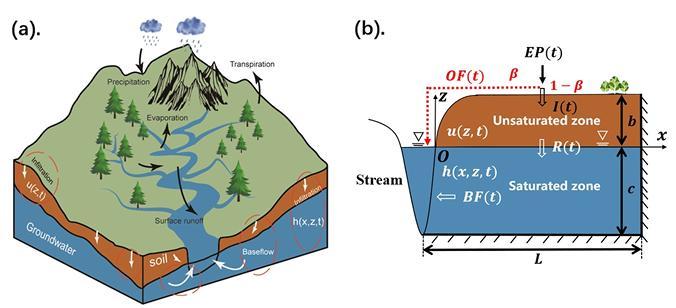
Figure 1. (a). Watershed hydrological processes. (b). Conceptual model.
They found that the hydraulic properties of the unsaturated zone had a significant impact on the transfer function. The amplitude of the transfer function was notably influenced by the relative hydraulic conductivity index (αk) of the unsaturated zone in the soil moisture characteristic curve (Figure 2). A larger αk value reduced the amplitude of the transfer function, indicating a stronger filtering capacity of the unsaturated zone on hydrological signals. Moreover, a thicker unsaturated zone further reduces the amplitude of the transfer function in the high-frequency range.
The results suggest that traditional models that neglect the impact of the unsaturated zone may overestimate the transfer capacity of high-frequency signals, and thus cannot reasonably describe the response of discharge to precipitation. The model developed for this study was applied to four watersheds in Iowa, USA. The theoretical transfer function fitted the measured data well (Figure 3) and successfully estimated the hydraulic parameters of the watershed reasonably. This not only validates its reliability but also demonstrates its broad applicability in watershed management.
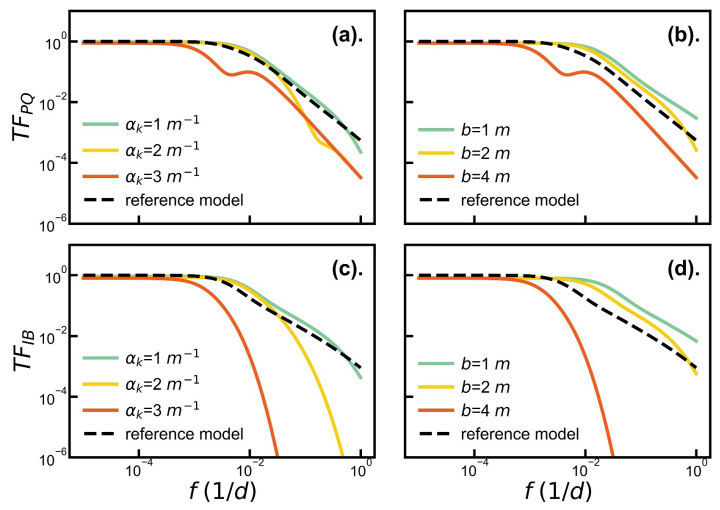
Figure 2. Changes in the precipitation‐discharge and infiltration‐baseflow transfer functions, where the black dashed curve represents the transfer function of the reference model without an unsaturated zone.
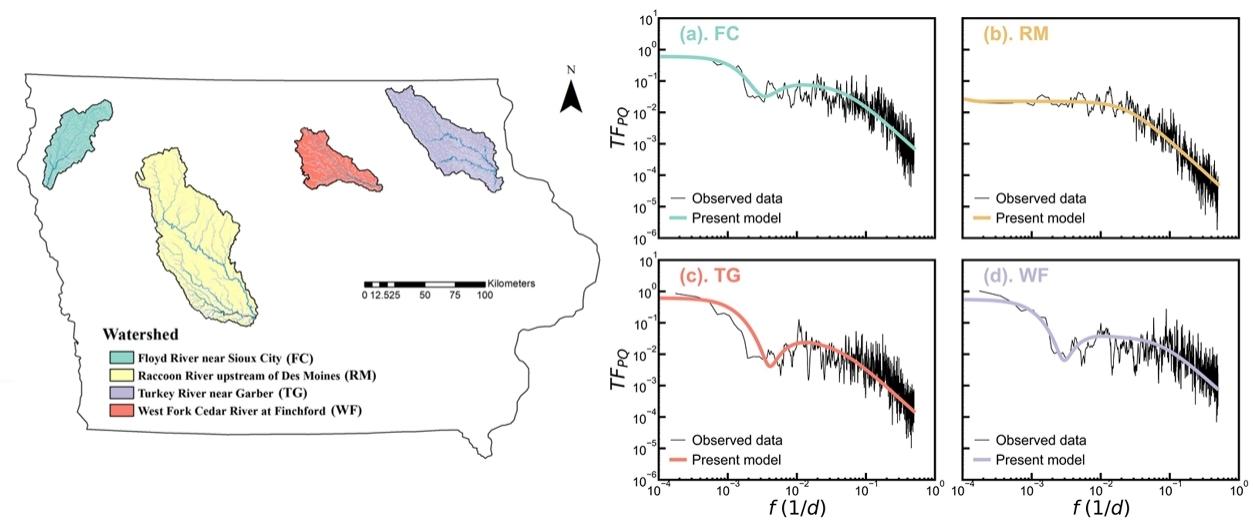
Figure 3. Comparison of the present transfer functions (solid curves) with those calculated using the observation data (black curves) from four watersheds in Iowa.
Considering the impact of the unsaturated zone, the researchers proposed a more reasonable model to analyze watershed hydrological behavior and estimate watershed hydrological parameters. This model can better describe the response of discharge to precipitation and has significant practical implications for understanding and predicting watershed hydrological cycles, improving water resource management, and enhancing flood warning systems.
The study revealed the key role of the unsaturated zone in the precipitation-runoff relationship, providing a new perspective for understanding watershed hydrological processes and offering a method for estimating hydraulic parameters at the watershed scale.
This paper has been titled “Spectral Analysis of Hydrological Signals to Estimate Watershed Properties Considering Impacts of Unsaturated Zone”.
Doctoral student Yunqiu Zhou from the School of Environmental Science and Engineering is the first author of the paper. Assistant Professor Xiuyu Liang is the corresponding author, with SUSTech serving as the first affiliated institution. Other collaborating institutions include the University of Iowa, Ocean University of China, Nanjing University, and Eastern Institute of Technology.
Exploring the unsaturated zone’s impact on groundwater level fluctuations in response to Earth tides
Gravitational interactions between the Earth, the Moon, and the Sun cause periodic deformation of the Earth’s interior (Earth tides) and cause the groundwater level to fluctuate. The phenomenon can reflect the dynamic characteristics of the aquifer and provide a scientific basis for estimating hydrological parameters (e.g., hydraulic conductivity). While traditional models have provided valuable insights to investigate Earth’s tidal phenomena in aquifers, the effect of the unsaturated zone has often been overlooked.
The group’s second paper found that the unsaturated zone serves as an important transition zone connecting the surface and subsurface environments. The moisture characteristics and capillary forces in the unsaturated zone significantly affect the tidal response of groundwater (Liang et al., 2022; Zhang et al., 2023). Additionally, the heterogeneity of aquifers is an inherent property of soils and rocks. The decay of porosity and hydraulic conductivity with depth in the thicker aquifer is prevalent. However, the traditional models usually ignore the heterogeneity of the aquifer, which would limit the generalizability of the traditional models.
To address this issue, the researchers presented an analytical model that includes the unsaturated zones and the decreased hydraulic conductivity with depth to explore their impact on the tidal response. The model used the Richards equation to describe the unsaturated zone and combined it with the groundwater flow equation for the saturated zone (Figure 4), which could derive the analytical solutions for the amplitude ratio and phase shift of the hydraulic head induced by Earth tides. The study validated the present model using numerical simulations and applied the model to data from a field site.
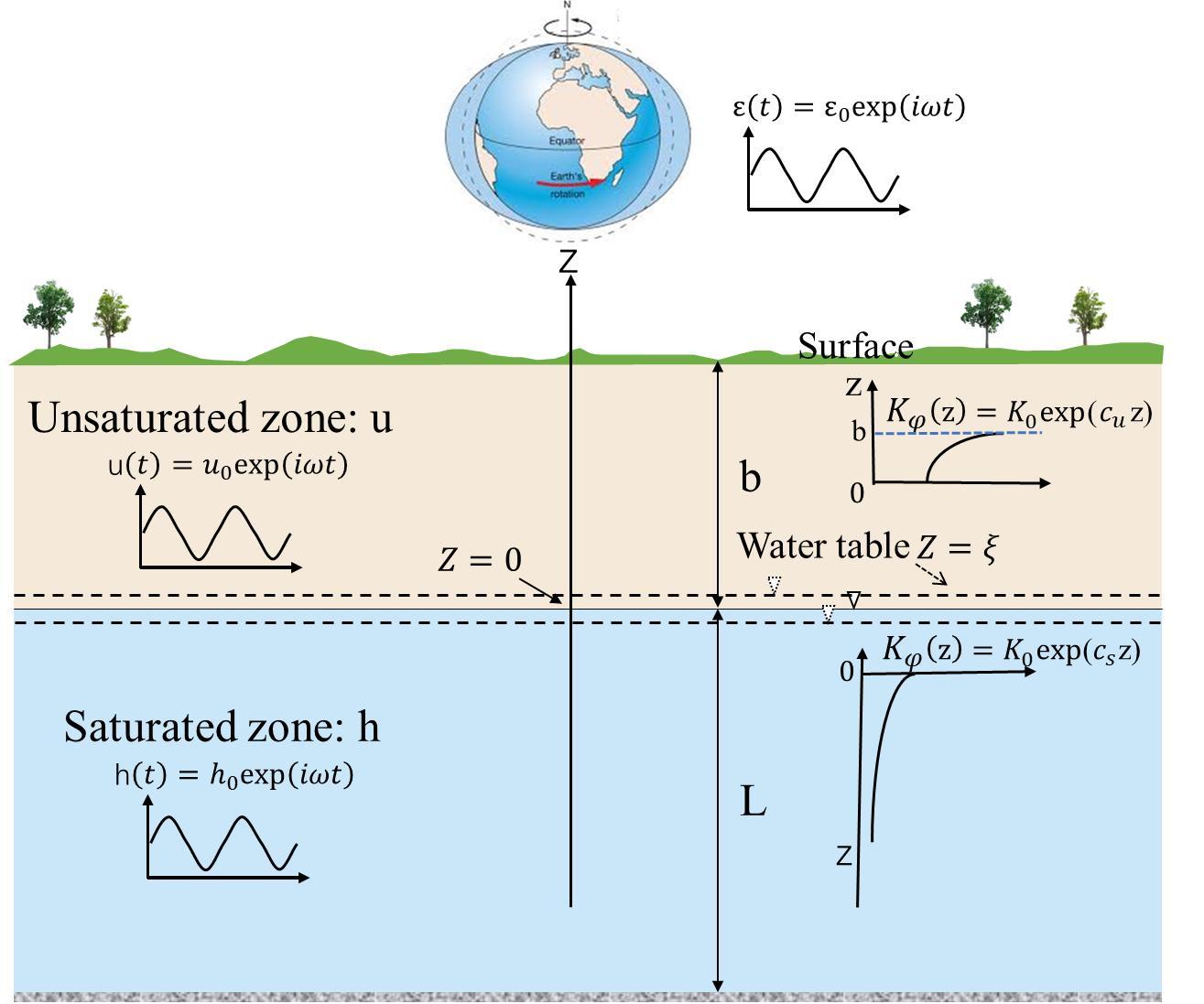
Figure 4. A schematic diagram showing unsaturated-saturated flow induced by Earth tides and the change of hydraulic conductivity with depth.
This finding revealed that the decay in conductivity with depth causes an increase in amplitude ratio and a decrease in phase shift; the influence of capillary zones on tidal responses is restricted to shallow aquifers due to a decrease in conductivity with depth (Figure 5). Neglecting the depth-dependence of conductivity in the traditional models may lead to an underestimation of the amplitude ratio and an overestimation of the phase shift. The present solution can solve this problem and be applied to the field data to effectively estimate the decay in conductivity with depth (Figure 6).
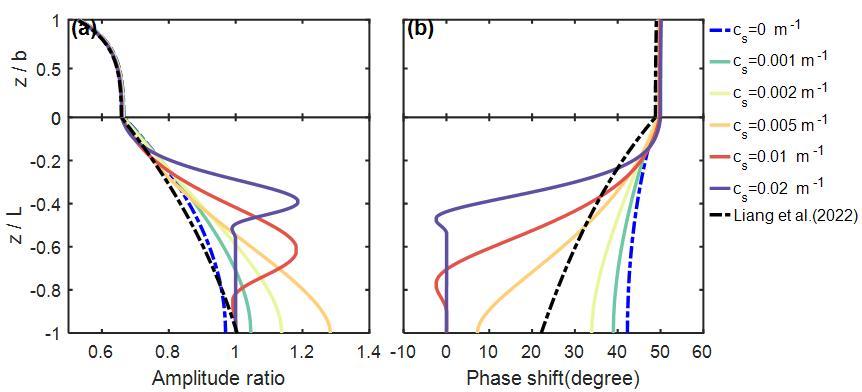
Figure 5. The profiles of the amplitude ratio (a) and phase shift (b) of the tide response of the hydraulic head in the saturated zone for different cs.
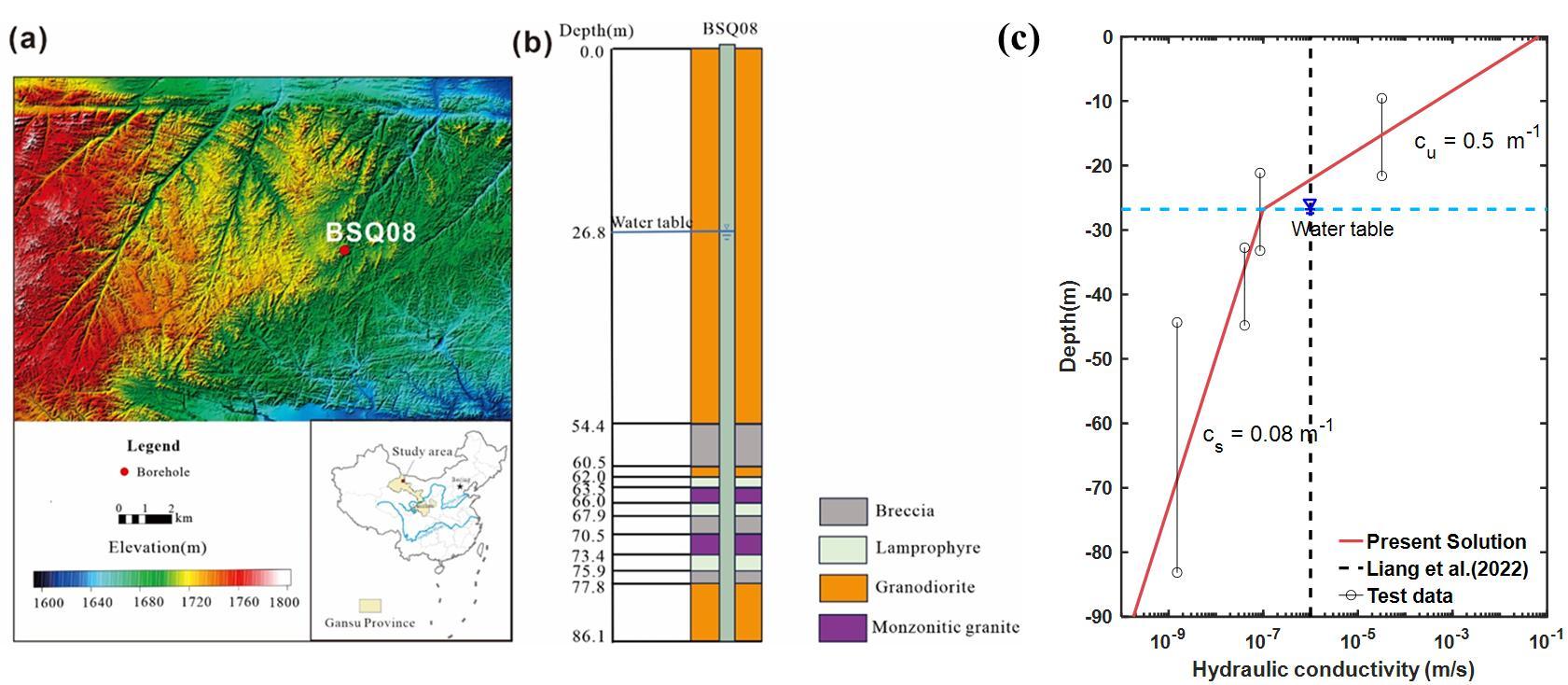
Figure 6. The basic information of the studied boreholes BSQ08: (a) Location and (b) Lithological log; (c) Estimated hydraulic conductivity at varying depths obtained through slug tests conducted and the corresponding estimation results for hydraulic conductivity using the present solution.
This study significantly extends the applicability of the traditional model and emphasizes the crucial role of the unsaturated zone in groundwater dynamics, which provides a theoretical basis for a better understanding of the dynamic behavior of groundwater in an unsaturated-saturated flow system.
This paper has been titled “Impact of depth-dependent heterogeneity in aquifers on the response of unsaturated-saturated flow to Earth tides”.
Doctoral student Guoliang Wang from the School of Environmental Science and Engineering is the first author of the paper. Assistant Professor Xiuyu Liang is the corresponding author, with SUSTech serving as the first affiliated institution. Other collaborating institutions include the University of California (Berkeley) and the Beijing Research Institute of Uranium Geology.
Paper links (In order of appearance above):
Water Resources Research: https://agupubs.onlinelibrary.wiley.com/doi/10.1029/2023WR036680
Water Resources Research: https://agupubs.onlinelibrary.wiley.com/doi/10.1029/2023WR036310
2026-03-10
2026-09-08
A delegation of 13 students from Southern University of Science and Technology (SUSTech), Zhejiang University and the University of Science and Technology of China (USTC), accompanied by four SUSTech faculty members including including two affiliated with the State Key Laboratory of Soil Pollution Control and Safety, concluded a 12-day summer school at Flinders University in August, 2026, hosted by the University’s National Centre for Groundwater Research and Training (NCGRT).Throughout the program, the students participated in a wide range of educational activities covering water resources, environmental health, groundwater modeling, managed aquifer recharge, salinity management, mining sites management, virtual reality hydrology, and nature-based solutions for surface water, groundwater and soil pollution.A highlight of the visit was a series of field trips showcasing South Australia’s unique natural environments. These included an overnight excursion to a global showcase of integrated surface and groundwater management exemplified by the Murray-Darling Basin. Visits to the St Kilda Mangroves highlighted ecohydrological approaches to coastal mangrove conservation. While Hallett Cove featured the most famous glacial striation on pre-Cambrian rocks. Happy Valley Reservoir, Oaklands Wetland, and Port Willunga Beach, with their wildlife, water management and well-exposed sedimentary rock formations, left strong impressions on our students. Students also attended research seminars and explored Flinders University’s teaching and research facilities.This summer school provided an excellent opportunity for students to engage with Flinders University staff, students, and researchers, experience Australian approaches to soil and groundwater pollution control and safety research, and strengthen the institutional ties between SUSTech and Flinders University, while fostering international connections and cross-cultural learning. The visit was made possible through a combination of support provided by SUSTech and the Fundamental and Interdisciplinary Disciplines Breakthrough Plan of the Ministry of Education of China(JYB2025XDXM909).During the visit, Chair Professor Yan ZHENG from SUSTech delivered a research seminar on arsenic detection in the developed and developing world. Flinders University noted that its academic community was privileged to learn from her expertise.SUSTech expresses its gratitude for the incredible partnership with Flinders University at the conclusion of the program.
2026-04-22
On April 22, the Frontiers Planet Prize announced its list of 25 National Champions for 2026. Hong WANG, a 2025 graduate of the School of Environmental Science and Engineering at the Southern Universi
2026-04-20
On the morning of April 17, 2026, a delegation from Flinders University (Australia), led by Professor Colin Stirling, President of Flinders University, visited the Southern University of Science and T
2026-04-08
Hydrological models are foundational tools for water resource management, agricultural planning, flood and drought mitigation, and ecosystem protection. A long-standing challenge in hydrology is devel
 |