

© 2026 All Rights Reserved. 粤ICP备14051456号
2025-02-12
View:19
Forest cover is a crucial driver of boreal forest resilience dynamics, with higher forest cover generally associated with enhanced resilience. However, studies isolating the specific impact of forest cover change on resilience dynamics remain limited.
In recent decades, boreal forest has experienced substantial changes in forest cover. Forest loss, often triggered by wildfires, deforestation, or forest degradation, causes long-lasting and sometimes irreversible ecological damages. Conversely, forest gain, related to forest recovery and forestation, requires time to gradually restore its properties and functions, often failing to fully reverse these damages. Considering the potential unequal impacts of forest gain and loss on resilience, it is imperative to explore the sensitivity of forest resilience to forest cover change, with a particular focus on the impacts of forest gain and loss separately.
Professor Zhenzhong Zeng’s research group from the School of Environmental Science and Engineering at the Southern University of Science and Technology (SUSTech) has recently published a paper highlighting that boreal forest resilience is more sensitive to forest cover losses than to gains, indicating that functional declines due to forest loss outpace improvements following forest recovery.
Their work, entitled “Asymmetric sensitivity of boreal forest resilience to forest gain and loss”, has been published in Nature Ecology & Evolution.
The research team quantified the sensitivities of boreal forest resilience to forest cover gain and loss using a resilience indicator derived from the temporal autocorrelation (TAC) of the kernel Normalized Difference Vegetation Index (kNDVI) from 2000 to 2020. The results reveal an amplified sensitivity to forest loss, in stark contrast with a lower sensitivity to forest gain (Figure 1). Specifically, a 1% decrease in forest cover leads to a substantially greater decline in resilience compared to the increase in resilience resulting from a 1% forest gain. Locally, approximately 73% of boreal forests exhibit negative sensitivity, indicating enhanced resilience with forest cover gain and vice versa.
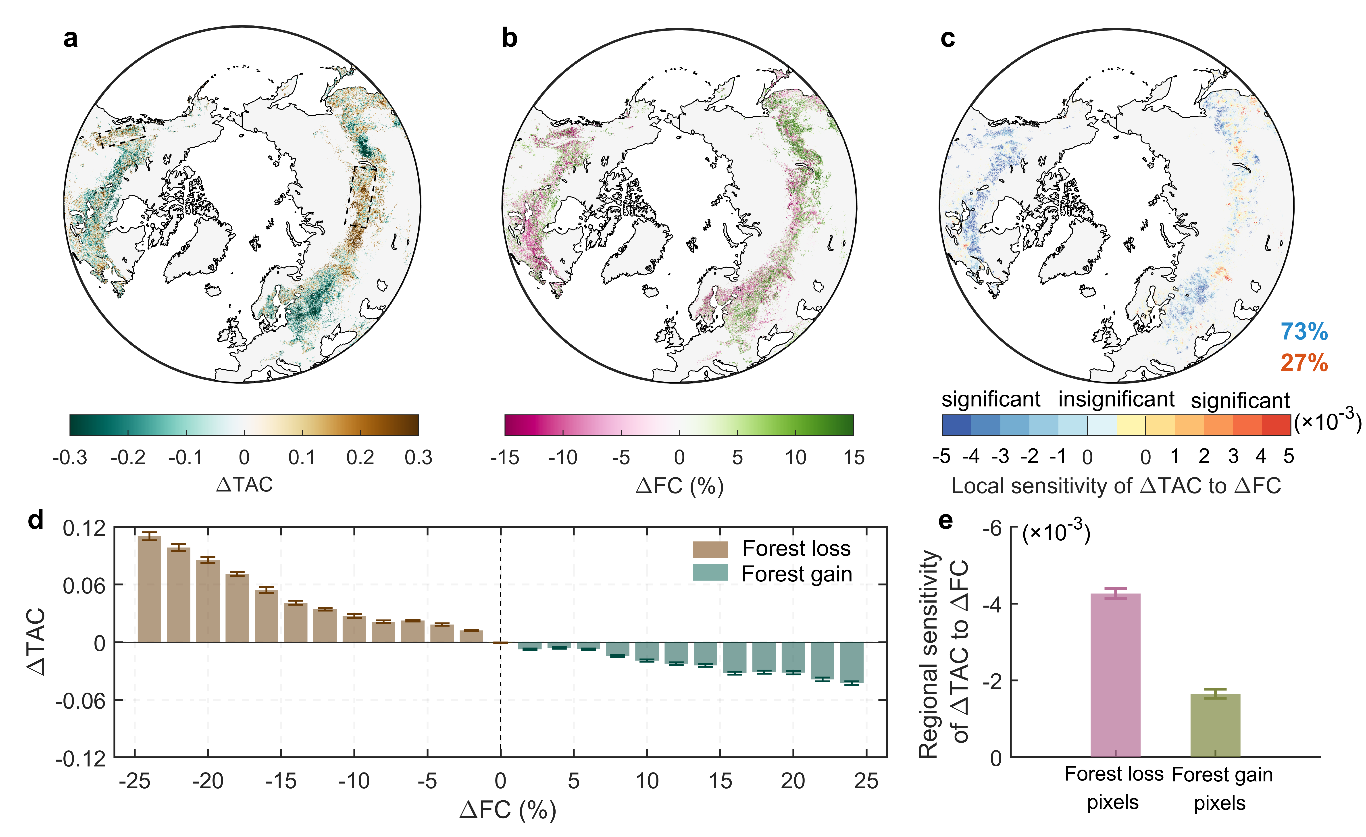
Figure 1. Asymmetric sensitivity of resilience to boreal forest gain and loss
Within the boreal region, the dynamics of forest cover change are profoundly influenced by management practices, particularly clear-cut harvesting. This study further analyzes the responses of forest resilience to forest cover changes across various forest types. Intact forests exhibit the highest sensitivity of resilience to forest cover change, with the most pronounced asymmetry in responses to forest cover gain and loss. In contrast, managed forests, such as regenerating and planted forests, demonstrated lower sensitivity of resilience to forest cover changes, highlighting the discernible imprint of human influence on forest resilience dynamics.
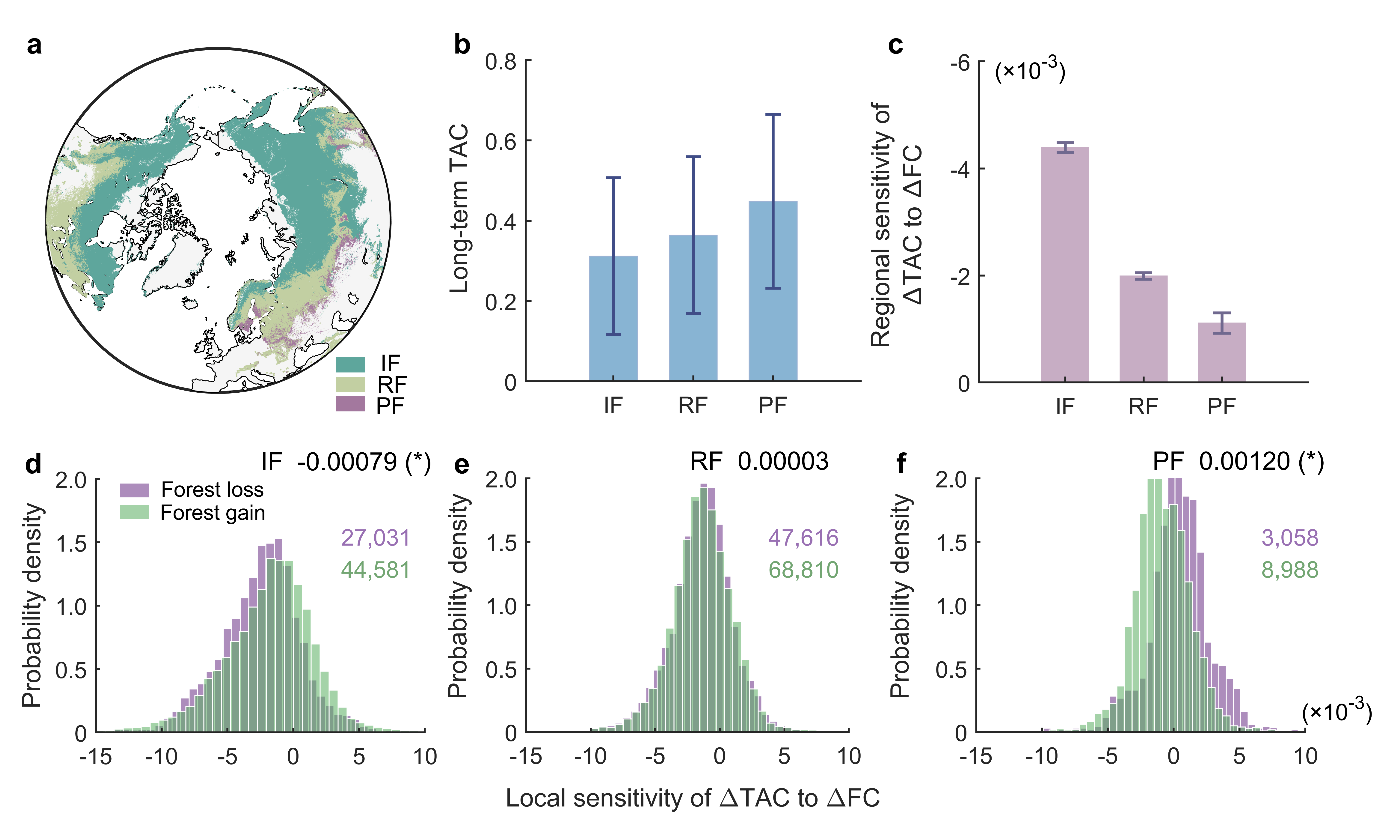
Figure 2. Sensitivity of forest resilience to forest cover change across different forest types
The asymmetry in the sensitivity of resilience to forest loss and gain stems primarily from temporal asynchrony in the recovery rates of various ecosystem functions, carrying profound implications for effective forest management. Due to the prolonged restoration of critical ecological functions during forest regrowth, even prompt afforestation following deforestation cannot entirely offset previous resilience loss. This highlights the critical importance of safeguarding forests before loss occurs, emphasizing the need to prioritize conservation over reactive management strategies.
Master’s student Xiaoye Liu from the School of Environmental Science and Engineering at SUSTech is the first author of this paper. Professor Zhenzhong Zeng and Research Assistant Professor Dashan Wang from SUSTech are the corresponding authors. Other collaborators to this study include Professor Anping Chen from Colorado State University.
Paper link: https://www.nature.com/articles/s41559-024-02631-1
2026-03-10
2026-09-08
A delegation of 13 students from Southern University of Science and Technology (SUSTech), Zhejiang University and the University of Science and Technology of China (USTC), accompanied by four SUSTech faculty members including including two affiliated with the State Key Laboratory of Soil Pollution Control and Safety, concluded a 12-day summer school at Flinders University in August, 2026, hosted by the University’s National Centre for Groundwater Research and Training (NCGRT).Throughout the program, the students participated in a wide range of educational activities covering water resources, environmental health, groundwater modeling, managed aquifer recharge, salinity management, mining sites management, virtual reality hydrology, and nature-based solutions for surface water, groundwater and soil pollution.A highlight of the visit was a series of field trips showcasing South Australia’s unique natural environments. These included an overnight excursion to a global showcase of integrated surface and groundwater management exemplified by the Murray-Darling Basin. Visits to the St Kilda Mangroves highlighted ecohydrological approaches to coastal mangrove conservation. While Hallett Cove featured the most famous glacial striation on pre-Cambrian rocks. Happy Valley Reservoir, Oaklands Wetland, and Port Willunga Beach, with their wildlife, water management and well-exposed sedimentary rock formations, left strong impressions on our students. Students also attended research seminars and explored Flinders University’s teaching and research facilities.This summer school provided an excellent opportunity for students to engage with Flinders University staff, students, and researchers, experience Australian approaches to soil and groundwater pollution control and safety research, and strengthen the institutional ties between SUSTech and Flinders University, while fostering international connections and cross-cultural learning. The visit was made possible through a combination of support provided by SUSTech and the Fundamental and Interdisciplinary Disciplines Breakthrough Plan of the Ministry of Education of China(JYB2025XDXM909).During the visit, Chair Professor Yan ZHENG from SUSTech delivered a research seminar on arsenic detection in the developed and developing world. Flinders University noted that its academic community was privileged to learn from her expertise.SUSTech expresses its gratitude for the incredible partnership with Flinders University at the conclusion of the program.
2026-04-22
On April 22, the Frontiers Planet Prize announced its list of 25 National Champions for 2026. Hong WANG, a 2025 graduate of the School of Environmental Science and Engineering at the Southern Universi
2026-04-20
On the morning of April 17, 2026, a delegation from Flinders University (Australia), led by Professor Colin Stirling, President of Flinders University, visited the Southern University of Science and T
2026-04-08
Hydrological models are foundational tools for water resource management, agricultural planning, flood and drought mitigation, and ecosystem protection. A long-standing challenge in hydrology is devel
 |