

© 2026 All Rights Reserved. 粤ICP备14051456号
2024-05-27
View:15
A reservoir is an artificial lake where water is collected and stored for various purposes, such as flood control, irrigation, hydropower generation, industrial use, etc. In a changing climate, drought events can cause a decline in the natural flow of streams and rivers to the reservoirs. Consequently, many of the functions provided by the reservoir might be halted if the drought continues, just like in the cases of Lake Powell and Lake Mead.
The past decade saw several record‐breaking global annual temperatures, which caused extreme droughts; thus, the reservoir filling up and successful operation (reservoir sustainability) are challenged. How have global reservoirs been affected in terms of the filling up? So far, there is no publicly available in-situ data to answer this question.
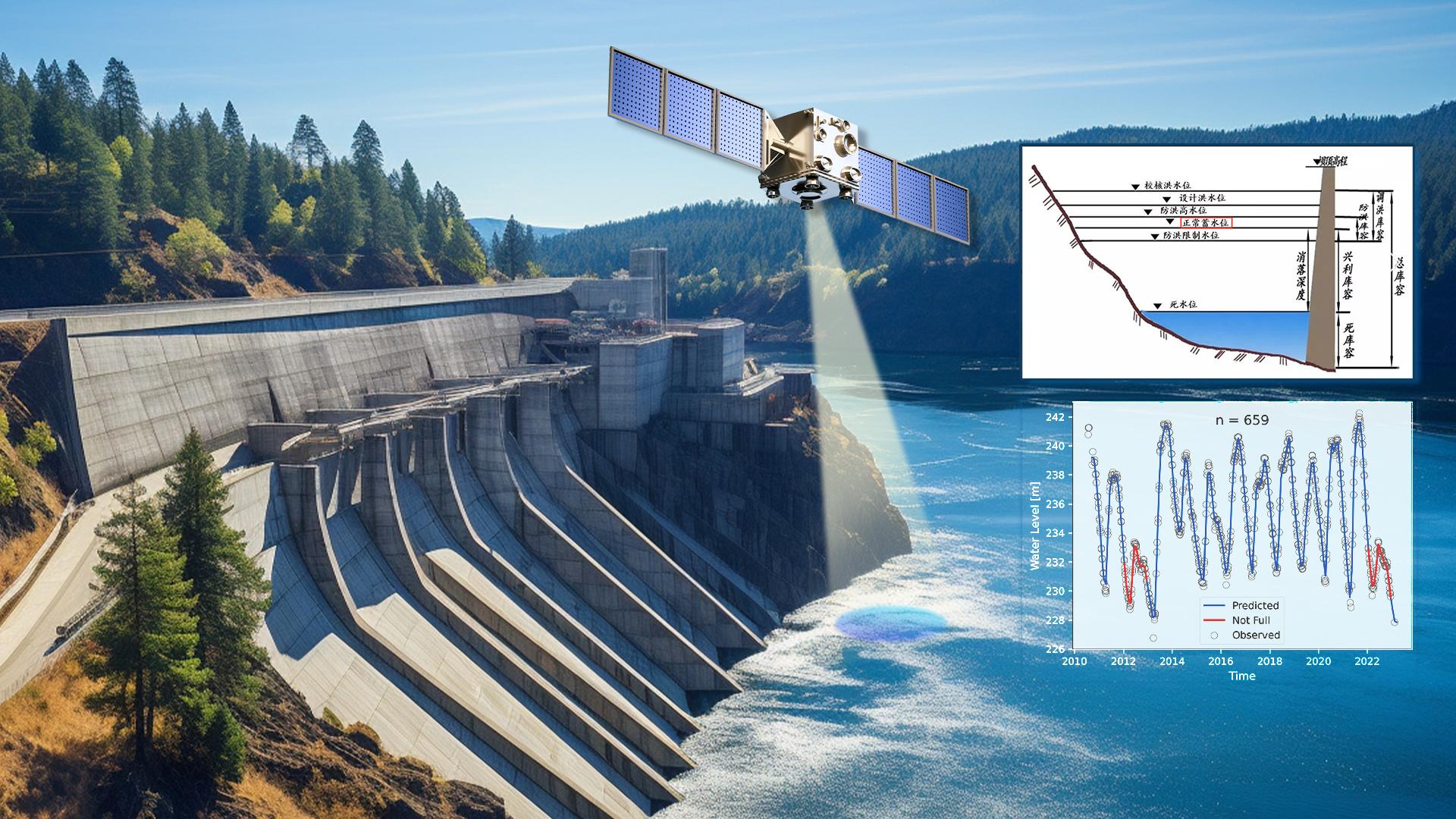
Assistant Professor Liguang Jiang’s research team from the School of Environmental Science and Engineering (ESE) at the Southern University of Science and Technology (SUSTech) has recently published a paper that uses CryoSat-2 measurements to track the reservoir water levels from 2010 till 2022.
Their research work, entitled “Reservoir Filling Up Problems in a Changing Climate: Insights From CryoSat‐2 Altimetry”, has been published in Geophysical Research Letters, a top journal in the field of geophysical research.
Leveraging more than a decade of CryoSat‐2 altimetry observations, they provided a global picture of this issue. The results show that reservoirs with a downward trend are mainly distributed in the Southern Hemisphere (Figure 1a). Furthermore, the fluctuation of reservoir level (Figure 1b) also presents regional characteristics in latitude with an average value of 3.96 m on the global scale.
This pattern is strongly related to the status of socio‐economic development regardless of the main purposes of reservoirs. It is worthwhile to mention that 80.5% of reservoirs with fluctuation of less than 3 m are located in developed economies or economies in transition, and reservoir levels in regions with better socio‐economic development fluctuate less. This may imply that prudent rules of reservoir regulation have been taken in regions with better social economies.
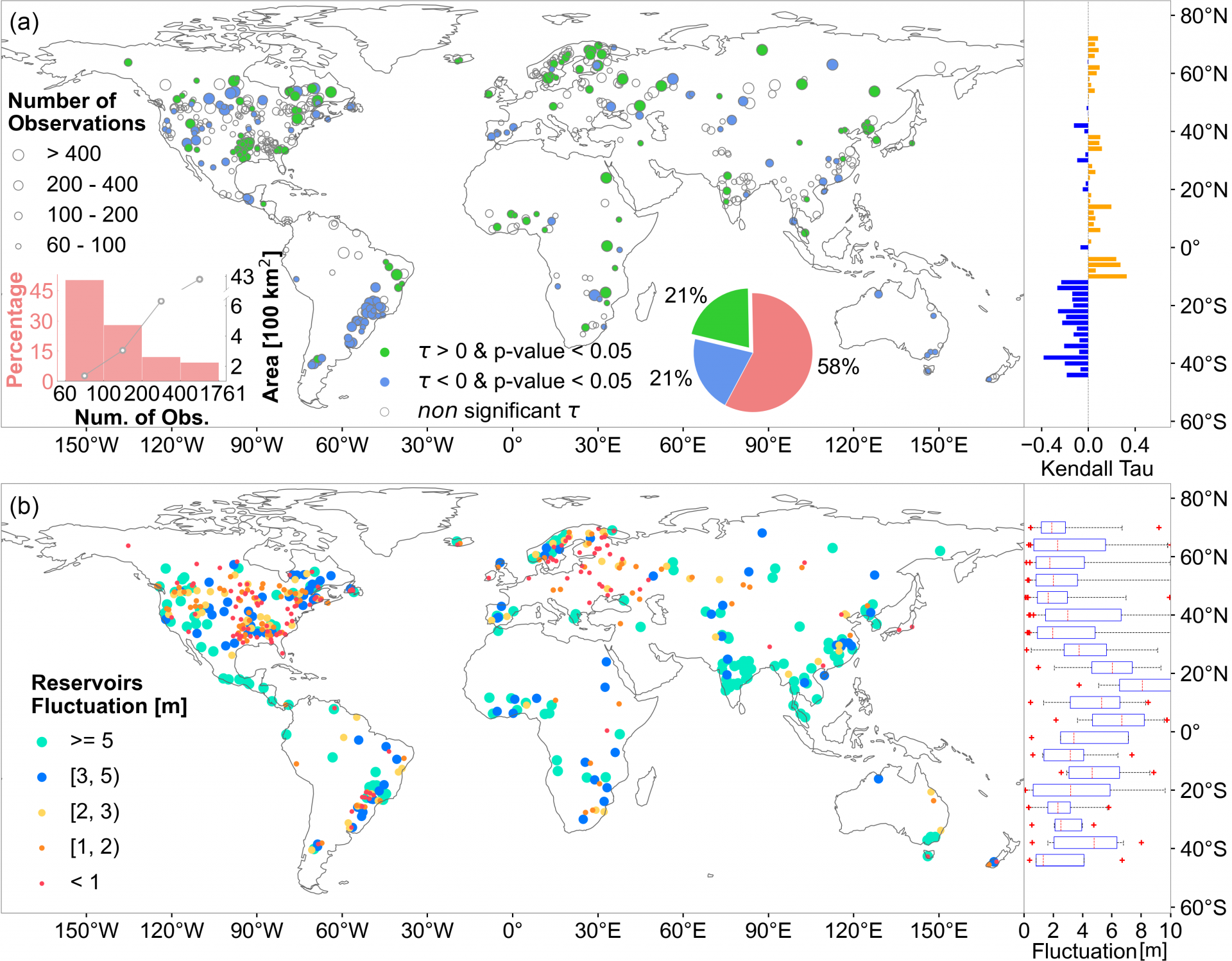
Figure 1. Spatial distribution of trends of reservoir water level and fluctuation
They also found that 93% of studied reservoirs have not been fully filled up at least once during 2010-2022 (Figure 2). Figure 2b shows the proportion and the corresponding average NFI scores based on the reservoir capacity. It seems highly probable that reservoirs with larger capacities have lower NFI. Smaller ones are more prone to be unfilled. This may indicate that smaller reservoirs have lower resilience to climate change or worse water management strategies. Moreover, the number and NFI score of non‐full reservoirs in each year vary. They are relatively lower in 2011 and 2017-2020 but higher in 2012, 2015, 2021, and 2022, concurring with ENSO events.
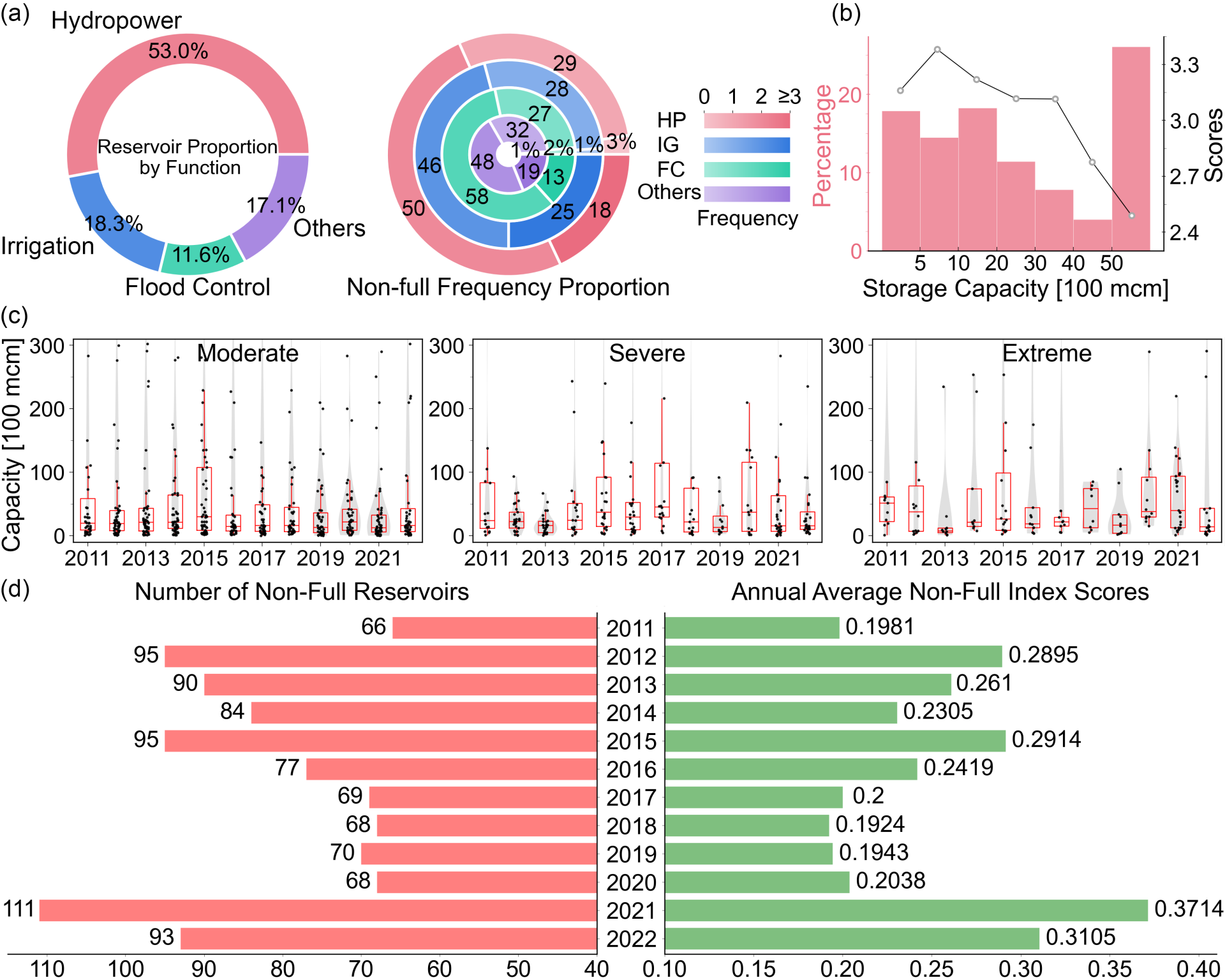
Figure 2. Statistics of reservoirs that were not filled up based on function, capacity, and year
Figure 3 shows that reservoirs in the Southern and Northern Hemispheres have very different behaviors, especially in ENSO years. Their further analyses revealed that droughts are the most probable culprits. About 86% of the 398 reservoirs with accessible SPEI data exhibited significant susceptibility to drought, while 43% of the 525 reservoirs demonstrated notable sensitivity to ENSO events.
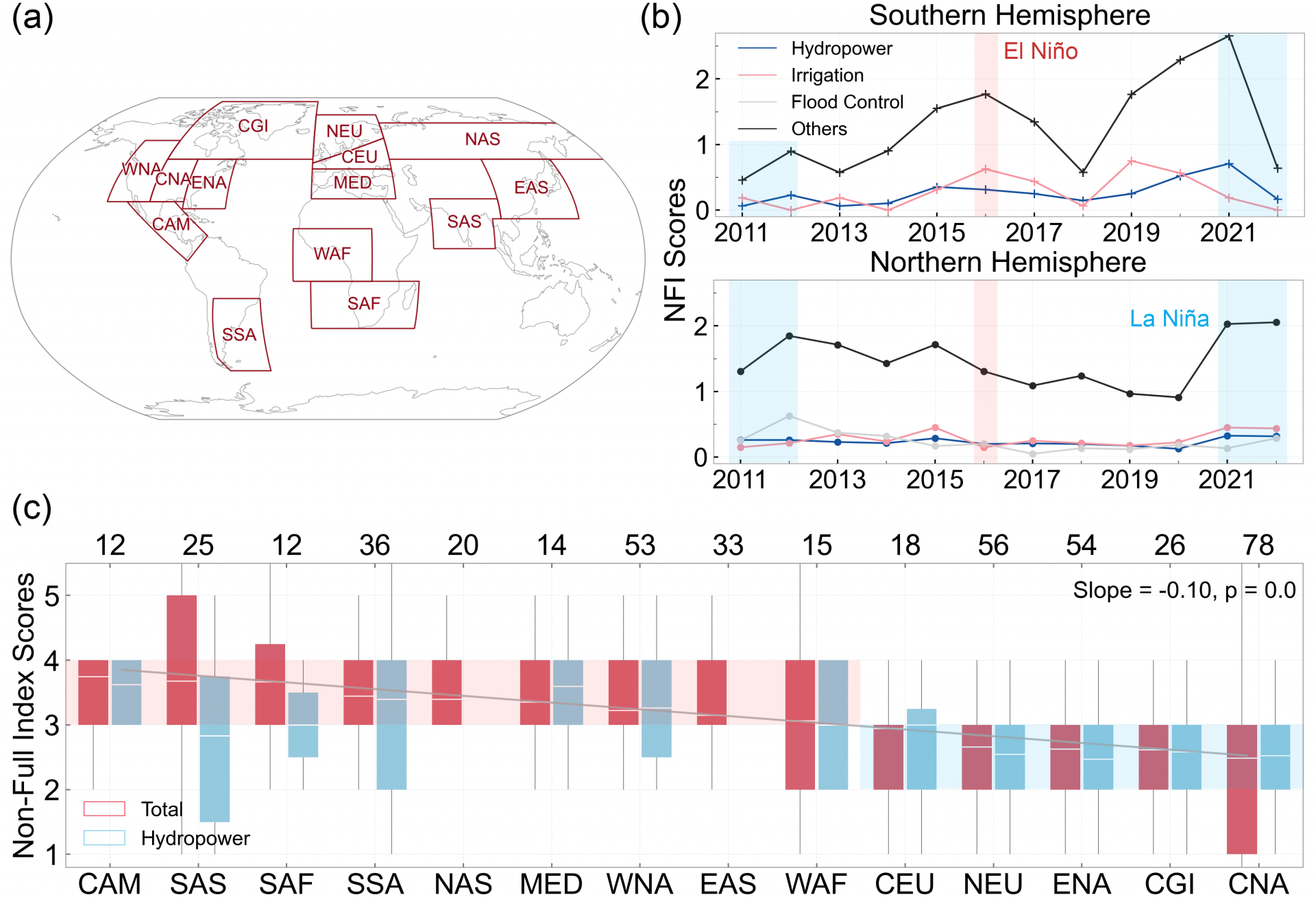
Figure 3. Assessment of Non-full index over different SREX regions
These findings have important implications for future reservoir operations to cope with more intensive drought events. It also means the benefits and costs of both existing and planned reservoirs need to be re‐assessed to take adaptation strategies.
Zhiwei Wang, a master’s student in Assistant Professor Liguang Jiang’s research group, is the first author of the paper. Assistant Professor Liguang Jiang is the corresponding author, and SUSTech is the first affiliation.
This study was supported by the Shenzhen Key Laboratory of Precision Measurement and Early Warning Technology for Urban Environmental Health Risks, the CRSRI Open Research Program, and the SUSTech Research Start‐Up Grants. The computation of this work was supported by the Center for Computational Science and Engineering at SUSTech.
Paper link: https://agupubs.onlinelibrary.wiley.com/doi/10.1029/2024GL108934
2026-03-10
2026-09-08
A delegation of 13 students from Southern University of Science and Technology (SUSTech), Zhejiang University and the University of Science and Technology of China (USTC), accompanied by four SUSTech faculty members including including two affiliated with the State Key Laboratory of Soil Pollution Control and Safety, concluded a 12-day summer school at Flinders University in August, 2026, hosted by the University’s National Centre for Groundwater Research and Training (NCGRT).Throughout the program, the students participated in a wide range of educational activities covering water resources, environmental health, groundwater modeling, managed aquifer recharge, salinity management, mining sites management, virtual reality hydrology, and nature-based solutions for surface water, groundwater and soil pollution.A highlight of the visit was a series of field trips showcasing South Australia’s unique natural environments. These included an overnight excursion to a global showcase of integrated surface and groundwater management exemplified by the Murray-Darling Basin. Visits to the St Kilda Mangroves highlighted ecohydrological approaches to coastal mangrove conservation. While Hallett Cove featured the most famous glacial striation on pre-Cambrian rocks. Happy Valley Reservoir, Oaklands Wetland, and Port Willunga Beach, with their wildlife, water management and well-exposed sedimentary rock formations, left strong impressions on our students. Students also attended research seminars and explored Flinders University’s teaching and research facilities.This summer school provided an excellent opportunity for students to engage with Flinders University staff, students, and researchers, experience Australian approaches to soil and groundwater pollution control and safety research, and strengthen the institutional ties between SUSTech and Flinders University, while fostering international connections and cross-cultural learning. The visit was made possible through a combination of support provided by SUSTech and the Fundamental and Interdisciplinary Disciplines Breakthrough Plan of the Ministry of Education of China(JYB2025XDXM909).During the visit, Chair Professor Yan ZHENG from SUSTech delivered a research seminar on arsenic detection in the developed and developing world. Flinders University noted that its academic community was privileged to learn from her expertise.SUSTech expresses its gratitude for the incredible partnership with Flinders University at the conclusion of the program.
2026-04-22
On April 22, the Frontiers Planet Prize announced its list of 25 National Champions for 2026. Hong WANG, a 2025 graduate of the School of Environmental Science and Engineering at the Southern Universi
2026-04-20
On the morning of April 17, 2026, a delegation from Flinders University (Australia), led by Professor Colin Stirling, President of Flinders University, visited the Southern University of Science and T
2026-04-08
Hydrological models are foundational tools for water resource management, agricultural planning, flood and drought mitigation, and ecosystem protection. A long-standing challenge in hydrology is devel
 |