

© 2026 All Rights Reserved. 粤ICP备14051456号
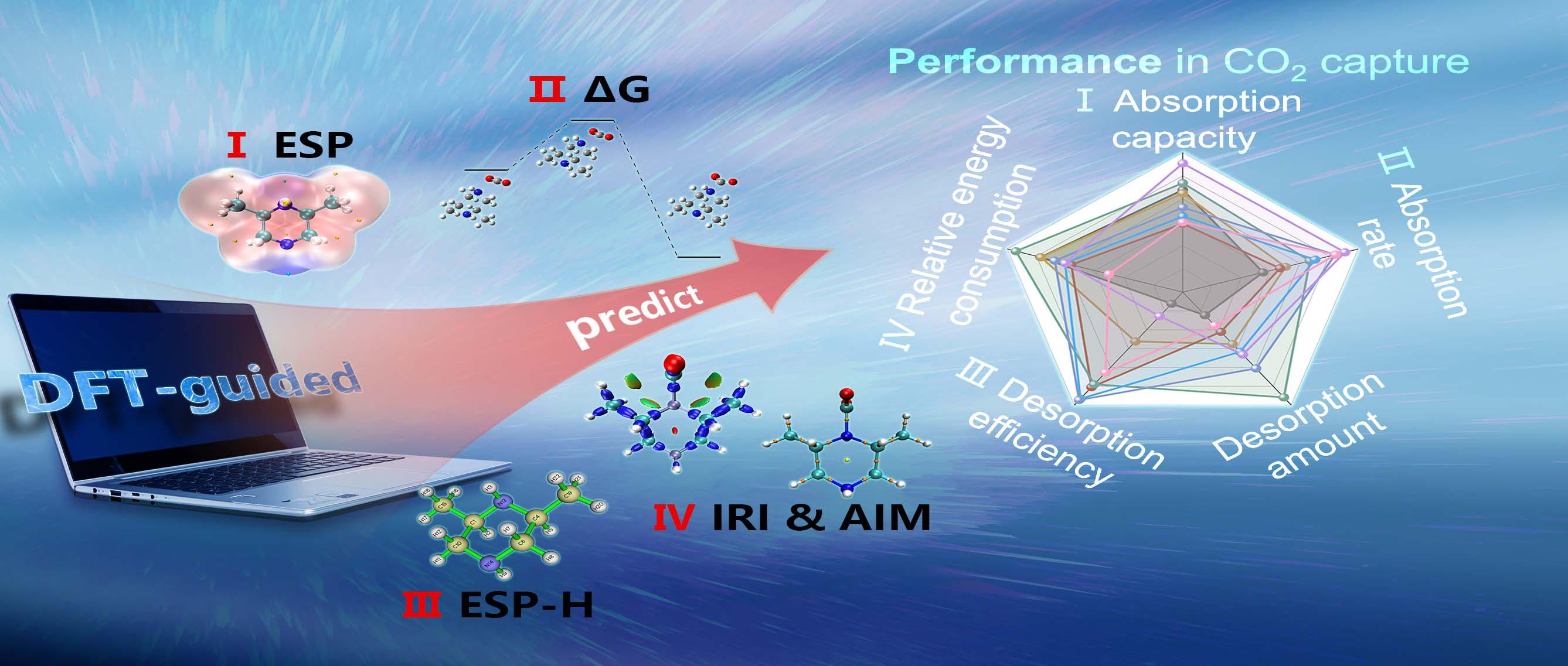
Against the backdrop of rising global CO2 emissions, the development of low-energy and high-efficiency carbon capture technologies has become increasingly urgent. Traditional amine-based absorben
2025-10-21
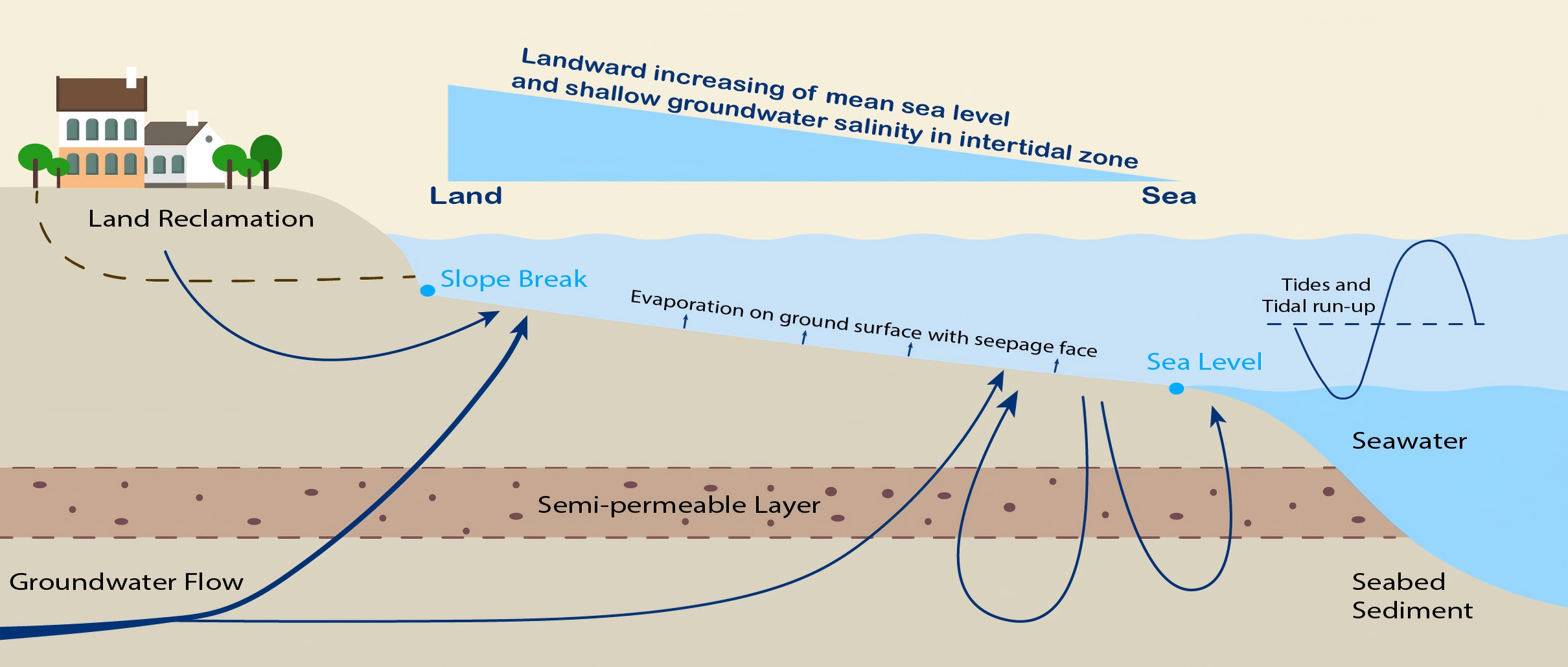
Coastal groundwater acts like an “invisible waterway” connecting land and sea, with its hydrodynamics and salinity patterns directly shaping coastal ecosystems and biogeochemical processes. Yet, the c
2025-09-25
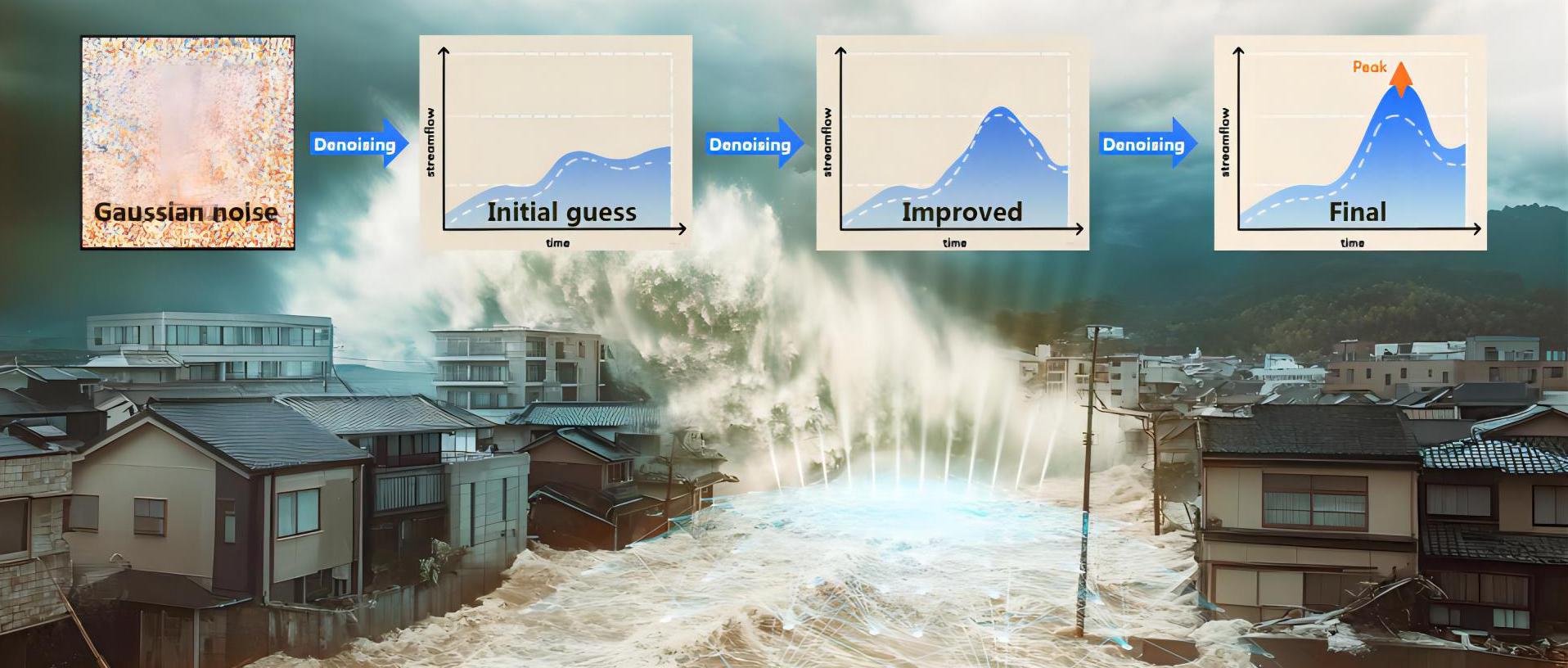
Intensifying climate change has led to increasingly frequent extreme flood events worldwide, posing serious threats to human society. According to the latest data from the United Nations Office for Di
2025-08-18

In recent years, the growing environmental pressures from increasing global meat consumption have become increasingly prominent. Livestock farming currently provides about a quarter of global human pr
2025-06-20
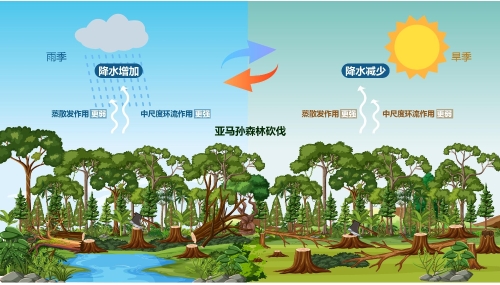
Observations at small spatial scales often show increased precipitation, while significant negative effects on precipitation are only detectable at larger spatial scales. This indicates a clear scale-
2025-03-06
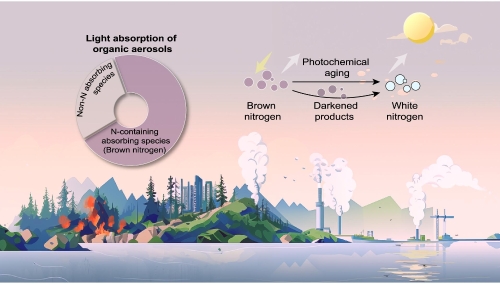
Atmospheric aerosols influence Earth’s climate by absorbing and scattering solar radiation. In particular, organic aerosols (OAs) absorb solar radiation in the near-ultraviolet to visible range. However, assessing their climate effects has been challenging due to the complex composition of organic aerosols and their continuous chemical transformation in the atmosphere. Traditional models only describe the chemical modification of organic aerosols by a uniform treatment of brown carbon contents, which lacks the specificity needed to accurately represent the connections between the sources, compositions, transformations, and light-absorbing properties of organic aerosols.A collaborative research team led by Professor Tzung-May Fu from the Southern University of Science and Technology (SUSTech) and the National Center for Applied Mathematics Shenzhen (NCAMS), along with Professor Jian Zhen Yu from the Hong Kong University of Science and Technology (HKUST), has presented the first global model-based quantification of nitrogen-containing light-absorbing components in organic aerosols, known as brown nitrogen (BrN). The model also tracks how the optical properties of BrN evolve through chemical aging.The study found that BrN is responsible for approximately 70% of the light-absorbing effects of global organic aerosols. Additionally, its chemical evolution plays a key role in regulating the light absorption of organic aerosols. By introducing a nitrogen-centric framework to describe the chemical evolution and light absorption of organic aerosols, the researchers provide a stronger foundation for more accurately assessing the climate impacts of organic aerosols.Their work, titled “Nitrogen Dominates Global Atmospheric Organic Aerosol Absorption”, has been published in the top journal Science.The collaborative team pioneered a novel approach to evaluate the radiative absorption of global organic aerosols by quantifying BrN. They developed a global atmospheric organic nitrogen simulation based on the GEOS-Chem model and categorized organic nitrogen into BrN and white nitrogen (non-light-absorbing organic nitrogen). They also simulated the photochemical transformation of BrN into white nitrogen. By comparing the simulation results with aerosol absorption observations from North America and globally, the study has, for the first time, quantified the global radiative effects of BrN and identified the key factors driving the spatiotemporal variations in its radiative absorption (Figure 1).Figure 1. Schematic representation of the nitrogen-containing components in organic aerosols and the evolution of their light-absorbing propertiesTheir findings found that the absorption coefficients of BrN simulated by the model can explain 76% of the observed surface organic aerosol absorption coefficients in North America (Figure 2). Furthermore, BrN manifested the spatial distribution and seasonal variations in the light-absorbing properties of organic aerosols. In winter, the simulated BrN absorption coefficients accounted for 63% of the observed organic aerosol absorption, while in summer, this proportion increased to 94%. The simulations indicate that the spatiotemporal variations in organic aerosol light absorption mainly reflect differences in the mass absorption efficiency (MAE) and photobleaching sensitivity of organic nitrogen components from various sources.Figure 2. Evaluation of simulated surface BrN absorption coefficients against observed surface BrC absorption coefficients over North AmericaThe study further assessed the contribution of BrN to the global aerosol optical depth (AAOD) of organic aerosols. By comparing simulated BrN AAOD with observations from 175 sites worldwide, the research found that the simulated BrN AAOD explains 61% of the observed organic aerosol AAOD and accurately captures its spatiotemporal variations (Figure 3). Biomass burning is the largest contributor to BrN AAOD (39%), followed by anthropogenic sources (26%), secondary nitroaromatic compounds (20%), and secondary imine-like compounds (15%). Biomass burning emissions are also the main driver of the spatiotemporal variations in organic aerosol AAOD.Figure 3. Comparison of simulated monthly BrN AAOD and observed organic aerosol AAOD at global AERONET sitesBased on these findings, the researchers evaluated the absorptive direct radiative effect (DRE) of BrN and compared it with that of black carbon (BC) (Figure 4). The simulated global average absorptive DRE of BrN was estimated at 0.034 W m⁻² (with an uncertainty range of 0.008 W m⁻² to 0.056 W m⁻²), which is approximately 22% of that of BC. However, in regions with significant biomass burning, the absorptive DRE of BrN can reach up to 120% of that of BC. Globally, biomass burning is the largest contributor to BrN’s absorptive DRE (0.013 W m⁻²), followed by secondary imine-like BrN (0.009 W m⁻²) and anthropogenic BrN (0.009 W m⁻²).Figure 4. Simulated global clear-sky absorptive direct radiative effect of BrN and its source attributions, as well as its ratio relative to the absorptive direct radiative effect of BCIn a future warming climate, biomass burning activities such as wildfires are expected to increase in frequency and severity, which in turn will emit more highly light-absorbing BrN aerosols. These emissions could further amplify climate warming, creating a positive feedback.Moving forward, research should focus on understanding how the optical and hygroscopic properties of different BrN species transform with chemical aging, as well as identifying other light-absorbing organic compounds that do not contain nitrogen. These efforts will ultimately lead to a comprehensive quantitative understanding of the climate effects of organic aerosols. This study provides a new perspective on the climate impacts of atmospheric organic aerosols and holds significant implications for predicting future climate change.Dr. Yumin Li, a graduate of the SUSTech-HKUST joint Ph.D. program, is the first author of the paper. Professors Tzung-May Fu and Jian Zhen Yu are the co-corresponding authors. SUSTech is the first affiliated institution.Paper link: https://www.science.org/doi/10.1126/science.adr4473
2025-02-28
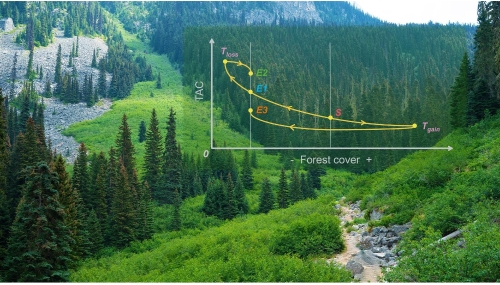
Forest cover is a crucial driver of boreal forest resilience dynamics, with higher forest cover generally associated with enhanced resilience. However, studies isolating the specific impact of forest cover change on resilience dynamics remain limited. In recent decades, boreal forest has experienced substantial changes in forest cover. Forest loss, often triggered by wildfires, deforestation, or forest degradation, causes long-lasting and sometimes irreversible ecological damages. Conversely, forest gain, related to forest recovery and forestation, requires time to gradually restore its properties and functions, often failing to fully reverse these damages. Considering the potential unequal impacts of forest gain and loss on resilience, it is imperative to explore the sensitivity of forest resilience to forest cover change, with a particular focus on the impacts of forest gain and loss separately. Professor Zhenzhong Zeng’s research group from the School of Environmental Science and Engineering at the Southern University of Science and Technology (SUSTech) has recently published a paper highlighting that boreal forest resilience is more sensitive to forest cover losses than to gains, indicating that functional declines due to forest loss outpace improvements following forest recovery.Their work, entitled “Asymmetric sensitivity of boreal forest resilience to forest gain and loss”, has been published in Nature Ecology & Evolution. The research team quantified the sensitivities of boreal forest resilience to forest cover gain and loss using a resilience indicator derived from the temporal autocorrelation (TAC) of the kernel Normalized Difference Vegetation Index (kNDVI) from 2000 to 2020. The results reveal an amplified sensitivity to forest loss, in stark contrast with a lower sensitivity to forest gain (Figure 1). Specifically, a 1% decrease in forest cover leads to a substantially greater decline in resilience compared to the increase in resilience resulting from a 1% forest gain. Locally, approximately 73% of boreal forests exhibit negative sensitivity, indicating enhanced resilience with forest cover gain and vice versa. Figure 1. Asymmetric sensitivity of resilience to boreal forest gain and lossWithin the boreal region, the dynamics of forest cover change are profoundly influenced by management practices, particularly clear-cut harvesting. This study further analyzes the responses of forest resilience to forest cover changes across various forest types. Intact forests exhibit the highest sensitivity of resilience to forest cover change, with the most pronounced asymmetry in responses to forest cover gain and loss. In contrast, managed forests, such as regenerating and planted forests, demonstrated lower sensitivity of resilience to forest cover changes, highlighting the discernible imprint of human influence on forest resilience dynamics.Figure 2. Sensitivity of forest resilience to forest cover change across different forest types The asymmetry in the sensitivity of resilience to forest loss and gain stems primarily from temporal asynchrony in the recovery rates of various ecosystem functions, carrying profound implications for effective forest management. Due to the prolonged restoration of critical ecological functions during forest regrowth, even prompt afforestation following deforestation cannot entirely offset previous resilience loss. This highlights the critical importance of safeguarding forests before loss occurs, emphasizing the need to prioritize conservation over reactive management strategies.Master’s student Xiaoye Liu from the School of Environmental Science and Engineering at SUSTech is the first author of this paper. Professor Zhenzhong Zeng and Research Assistant Professor Dashan Wang from SUSTech are the corresponding authors. Other collaborators to this study include Professor Anping Chen from Colorado State University. Paper link: https://www.nature.com/articles/s41559-024-02631-1
2025-02-12
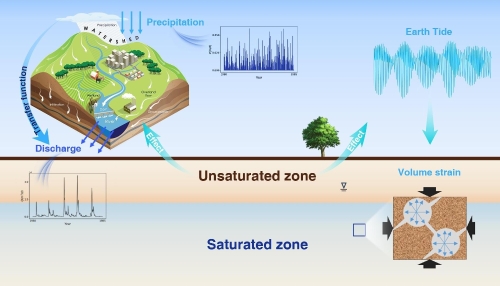
The unsaturated zone, a crucial transition zone linking surface and subsurface flow, plays a significant role in quantifying the hydrological processes of watersheds. However, due to the nonlinearity, traditional groundwater models often neglect its
2024-11-26
 |